
Here’s the thing nobody tells you: the moment you realise you need a tax advisor is usually about six months too late. You’re sitting there with a £2,000 penalty letter from HMRC, wondering how on earth you missed that deadline, and suddenly professional help doesn’t seem quite so expensive after all.
I’ve watched countless business owners wrestle with this question. Should they hire tax advisors? Can they manage alone? What’s the tipping point?
The truth is messier than most articles admit. Sometimes you absolutely need professional help. Other times? You’re throwing money at a problem you could solve yourself with an afternoon’s work and HMRC’s surprisingly decent guidance. The trick is knowing which camp you’re in.
When DIY Tax Management Falls Apart (And It Will)
Let’s start with the uncomfortable reality: self-assessment isn’t rocket science. Thousands of sole traders manage their own returns perfectly well. But there’s a moment—and you’ll know it when it arrives—where things shift from “manageable” to “this is consuming my life.”

You hit one of these situations, and suddenly tax advisors start looking less like a luxury and more like a lifeboat:
- Your income streams multiply. One job? Fine. Two rental properties, freelance work, dividends from that side business, and crypto gains from 2021 you forgot about? That’s when the spreadsheet stops making sense.
- VAT registration looms. Crossing that £90,000 threshold isn’t just administrative—it’s a complete shift in how you track everything. VAT compliance has its own language, its own deadlines, its own penalties.
- You’re losing sleep. Not metaphorically. Actually waking up at 3am wondering if you claimed that expense correctly, or if HMRC will flag your mileage claims.
- HMRC sends enquiry letters. Even the innocent ones. Nothing concentrates the mind quite like official correspondence from Her Majesty’s Revenue & Customs.
Here’s what most people get wrong: they wait until there’s a problem. The HMRC investigation arrives, or the penalty accumulates, or they’ve underpaid for three years straight and now face a £15,000 backdated bill.
Professional tax advisors aren’t firefighters. They’re fire prevention systems.
The “Actually, I Might Be Fine” Checklist
Contrarian take: not everyone needs a tax advisor. There. I said it.
If you tick these boxes, you might genuinely be better off going solo (at least for now):
- Single income source (employment or straightforward sole trader work)
- No employees, no VAT registration, no complex assets
- You’re comfortable with HMRC’s digital systems and actually read the guidance
- Your annual profit sits comfortably below £50,000
- You keep meticulous records (and I mean genuinely meticulous, not “I’ll find that receipt later” meticulous)
Reality check: Even if you match all five criteria, one complicated transaction—selling a property, receiving inheritance, changing business structure—can blow this wide open. That’s when tax advisors earn their fees ten times over.
What Actually Makes Someone a Qualified Tax Advisor?
Plot twist: until recently, literally anyone could call themselves a tax advisor in the UK. No qualifications required. None.
That bloke down the pub who “knows tax”? Could set up shop tomorrow. The changes coming in May 2026 will mandate HMRC registration for tax advisors, but even then, you need to know what separates the professionals from the chancers.
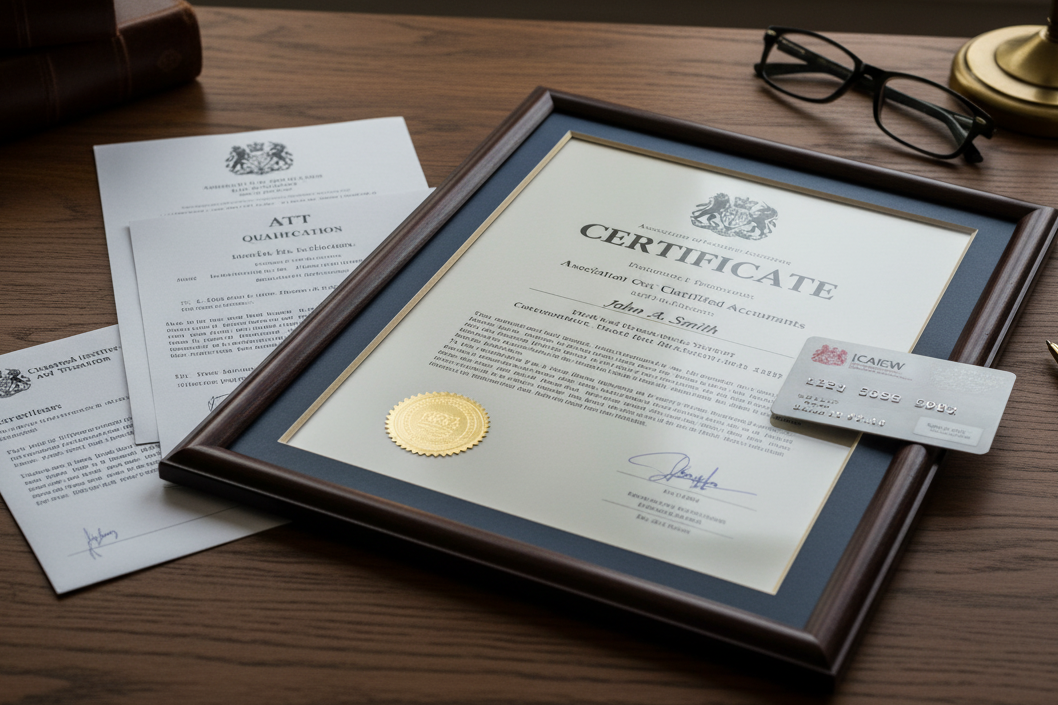
Look for these credentials:
| Qualification | What It Actually Means | Who Should Care |
|---|---|---|
| ACCA (Association of Chartered Certified Accountants) | Full accounting qualification with international recognition. Rigorous exams covering tax, audit, law | Anyone with complex finances or international income |
| ICAEW (Institute of Chartered Accountants) | The gold standard for UK accountants. Members have passed professional exams and maintain CPD | Limited companies, high earners, property portfolios |
| CIOT (Chartered Institute of Taxation) | Specialists in UK tax law. These are the people who actually understand the legislation, not just the forms | Complex tax situations, inheritance planning, disputes with HMRC |
| ATT (Association of Taxation Technicians) | Tax-focused qualification, slightly less comprehensive than CIOT but still very solid for standard cases | Small businesses, sole traders, straightforward returns |
Firms like Ask Accountant maintain teams with these qualifications specifically because modern tax compliance demands it. It’s not just about filling in forms anymore—it’s about navigating legislation that changes with every Budget.
What About Professional Indemnity Insurance?
This matters more than you think. Proper tax advisors carry professional indemnity insurance, which means if they cock up your return and you face penalties, there’s recourse. Ask about it. If they dodge the question, walk away.
The Hidden Costs of Getting It Wrong
Everyone fixates on what tax advisors charge. £500 here, £1,200 there. But what’s the cost of not hiring one when you should?
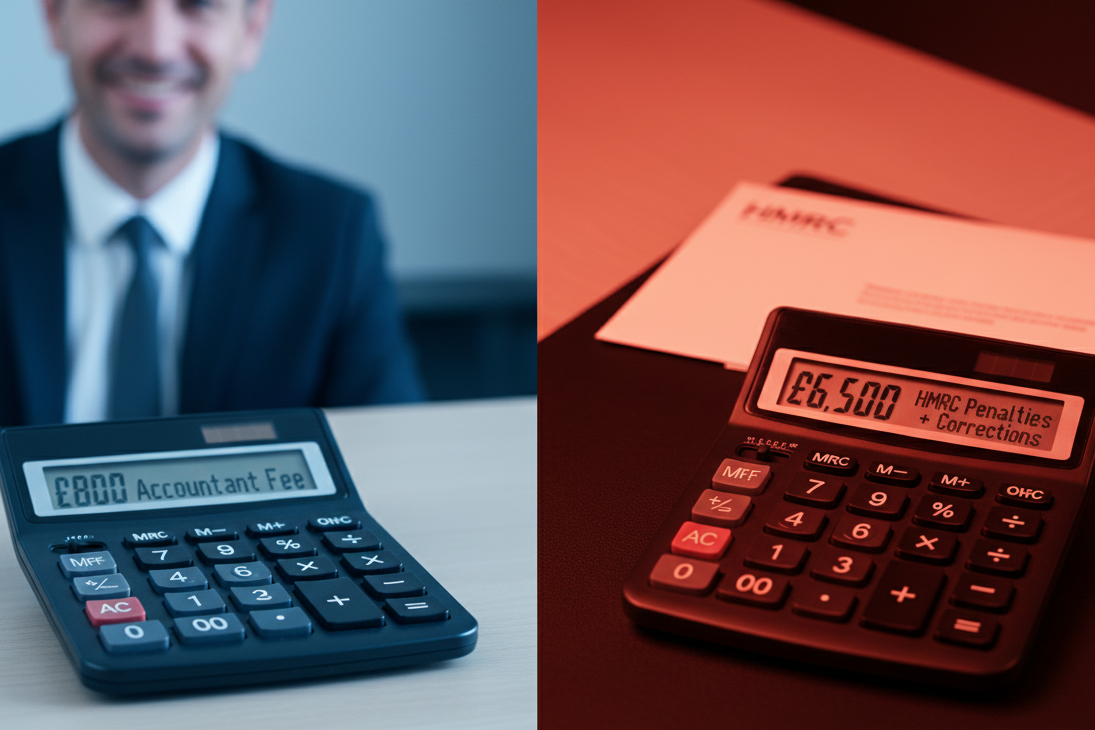
Real examples from the past year (details changed, but the numbers aren’t):
- A freelance designer saved £600 by not hiring an accountant. Then claimed home office expenses incorrectly for three years. HMRC correction: £4,200 in back taxes plus £1,800 in penalties.
- A small restaurant owner thought they understood VAT schemes. They didn’t. Switched to the wrong scheme. Cost: £12,000 in lost cash flow over 18 months.
- An e-commerce seller didn’t realise they needed to register for VAT when selling to EU customers post-Brexit. Discovery: £8,500 backdated VAT bill.
Meanwhile, a proper tax advisor would have spotted these issues in the first conversation. The ROI on professional help isn’t just about what you save in tax—it’s about what you don’t lose to mistakes.
The 3x Rule: If getting your tax wrong could cost you three times what the advisor charges, you probably need the advisor. Simple maths. Uncomfortable truth.
When Your Business Changes, Your Tax Situation Explodes
Business transitions are where DIY tax management goes to die. Not gradually—catastrophically.
Consider these inflection points:
Sole trader to limited company. Everyone talks about “incorporating” like it’s a simple switch. It’s not. You’re changing your entire tax structure, how you pay yourself, your National Insurance obligations, your VAT situation. Get it wrong and you might pay more tax than before, defeating the entire purpose.
Taking on employees. Suddenly you’re dealing with PAYE, National Insurance contributions, workplace pensions (auto-enrolment is mandatory, and the penalties for non-compliance are brutal), and a whole new world of reporting obligations. Payroll management isn’t something you learn on a Tuesday afternoon.
Property investment. Buy-to-let income seems straightforward until you’re juggling mortgage interest relief restrictions, capital gains calculations on sales, and the question of whether to hold properties personally or through a company. The wrong structure can cost tens of thousands.
Inheritance or business sale. These are six-figure decisions. Sometimes seven. The difference between good and bad inheritance tax planning can literally be the family home. Not the time for DIY experimentation.
The Services That Actually Matter (And The Ones That Don’t)
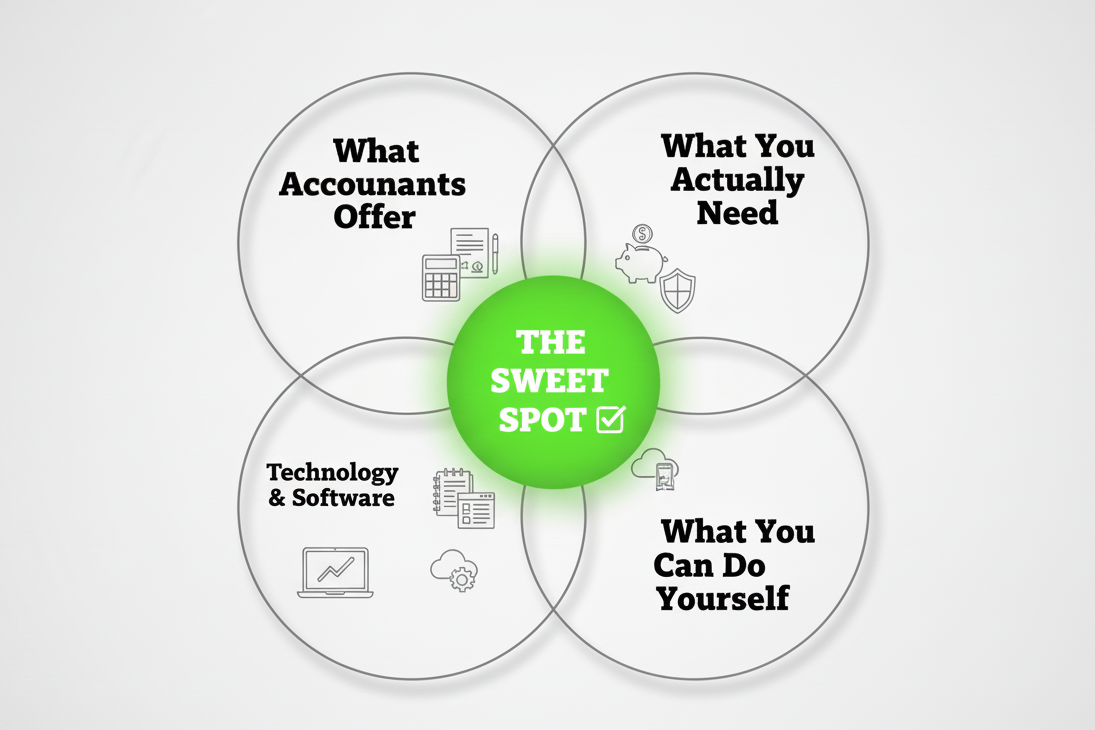
Here’s what you actually need from tax advisors, stripped of the marketing fluff:
Essential Services:
- Tax return preparation and filing. The baseline. If they can’t get your self-assessment filed correctly and on time, nothing else matters.
- Proactive tax planning. This is where the value lives. Good advisors tell you in April what to do by the following January to minimise your tax bill. Bad ones just fill in forms after the fact.
- Correspondence with HMRC. When the brown envelopes arrive, you want someone who speaks their language and knows the system.
- Strategic advice on business structure. Should you incorporate? Stay sole trader? Use a partnership? These decisions have long-term tax implications.
Nice-to-Haves (But Not Deal-Breakers):
- Cloud accounting setup (useful, but you can learn cloud accounting yourself)
- Monthly management accounts (great for growth-focused businesses, overkill for sole traders)
- Business advisory services (valuable if you’re scaling, unnecessary if you’re steady-state)
Things They’ll Try to Sell You That You Probably Don’t Need:
- Weekly bookkeeping if you’ve got three transactions a month
- Complex tax schemes that sound too good to be true (they usually are)
- Five-year financial forecasts when you’re not even sure about next quarter
Red Flags That Scream “Find Someone Else”
Not all tax advisors are created equal. Some are actively dangerous. Watch for these warning signs:
They promise guaranteed tax savings before knowing your situation. Legitimate tax advisors can’t make promises until they’ve reviewed your finances. Anyone who guarantees specific savings upfront is either incompetent or dishonest.
They’re impossible to reach. If getting hold of your advisor requires three attempts and a prayer, find someone else. Tax deadlines don’t wait for callbacks.
They don’t ask questions. Good advisors are nosy. They want to understand your entire financial picture. If they just take your numbers and disappear, they’re not adding value.
They’re not registered for anti-money laundering supervision. This is a legal requirement. If they’re not compliant, they shouldn’t be practising.
They discourage you from contacting HMRC directly. Massive red flag. You should always be able to speak to HMRC if you want to. Advisors who create dependency are trouble.
The Cost Question Everyone Dances Around
Right. Let’s talk money. Because ultimately, that’s what stops most people hiring tax advisors.
UK tax advisor fees for 2024-25 (rough ballpark, London-area focus):
| Service Type | Typical Cost Range | When It’s Worth It |
|---|---|---|
| Basic self-assessment (sole trader) | £150-£400 | Simple income, standard deductions, no complications |
| Self-assessment + simple business accounts | £400-£800 | Small business, straightforward trading |
| Limited company accounts + corporation tax | £800-£1,800 | Most limited companies with decent turnover |
| VAT returns (quarterly) | £80-£200 per quarter | Once you’re VAT-registered (it’s not optional) |
| PAYE/payroll management | £15-£40 per employee/month | The moment you hire anyone |
| Tax planning consultation | £200-£500 | Major business decisions, structure changes |
| Full-service packages | £150-£400/month | Growing businesses that need ongoing support |
These numbers vary wildly based on location, complexity, and firm reputation. A sole practitioner in Leeds will charge less than a central London firm. But you’re not just paying for geography—you’re paying for expertise, availability, and peace of mind.
Money-saving reality: Many advisors offer fixed-fee services. This is almost always better than hourly billing, which can balloon unexpectedly. Get it in writing.
The “Do I Actually Need This Right Now?” Decision Tree
Let’s cut through the noise. Here’s the decision framework I use when people ask me:
You NEED tax advisors if:
- Your turnover exceeds £85,000 (VAT threshold approaching)
- You’re considering incorporating or changing business structure
- You have rental income plus other income streams
- You’ve received any HMRC correspondence you don’t fully understand
- You’re planning to sell a business or property
- Your business is growing fast and tax feels increasingly complex
- You employ people (even one person changes everything)
You PROBABLY need tax advisors if:
- You’re spending more than 2 hours a week on tax-related admin
- You’re not confident about what you can legitimately claim
- You’ve missed a deadline in the past year
- Your income is inconsistent or involves multiple sources
- You find yourself Googling tax questions regularly
You MIGHT be fine without tax advisors if:
- Single employment income under £100,000
- Simple sole trader business with clear-cut expenses
- You’re genuinely organised and deadline-conscious
- You’re comfortable with technology and digital record-keeping
- Your situation hasn’t changed significantly in 2+ years
What Working with Actual Tax Advisors Looks Like
Theory is one thing. Reality is different. Here’s what to expect when you actually engage professional tax advisors:
The initial meeting. Good advisors will spend 60-90 minutes understanding your situation. They’ll ask uncomfortable questions about income, assets, debts, future plans. This isn’t nosiness—it’s due diligence. Firms like Ask Accountant in London (based at 178 Merton High St, SW19 1AY) typically offer this as a free consultation, though some charge £100-£200 against future services.
The information gathering. You’ll need to provide everything. Bank statements, invoices, receipts, previous returns, business records. Yes, it’s tedious. No, there’s no shortcut. The quality of advice you get is directly proportional to the quality of information you provide.
The ongoing relationship. This isn’t transactional. Good advisors check in quarterly, flag upcoming deadlines, suggest proactive moves. Bad ones vanish between January and December.
The communication style. You want advisors who explain things in English, not jargon. If you’re regularly confused by their emails, that’s a them problem, not a you problem.
Alternatives to Full-Service Tax Advisors (That Might Work)
Professional help doesn’t have to be all-or-nothing. Consider these middle-ground options:
Annual review with ad-hoc advice. Pay for one comprehensive session yearly, then handle day-to-day yourself with occasional email questions. Works well for people who are mostly competent but want a safety net.
Tax return only. You keep records throughout the year, advisor just reviews and files your return. Cheapest option that still gives you professional sign-off.
Accounting software with built-in support. Platforms like Xero and QuickBooks offer tax support tiers. Not as good as dedicated advisors but better than going fully solo.
HMRC’s own resources. Underrated. Their helpline is surprisingly helpful for specific questions, and their online guidance is comprehensive if you’re willing to read it.
The Specific Situations Where Tax Advisors Save Your Skin
Let me tell you about scenarios where DIY tax management goes sideways fast:
CIS Refunds and Construction Industry
If you work in construction, the Construction Industry Scheme (CIS) is its own special circle of tax hell. Contractors deduct tax at source, you need to claim it back, but only if you’ve kept perfect records and understand the relief system. Professional CIS claims can recover thousands. DIY claims often miss eligible relief.
Property Accounting
Rental income looks simple until you factor in mortgage interest restrictions, capital allowances on furnishings, the wear-and-tear allowance (or lack thereof), and whether your property is a furnished holiday let. Property accounting is genuinely complex, and the rules change constantly.
Business Growth Planning
When you’re scaling from £50k to £200k turnover, your entire tax strategy needs to evolve. That’s where proper business advice pays for itself many times over—not just in tax saved, but in strategic decisions that don’t accidentally create tax nightmares.
Making The Decision (Finally)
Here’s my honest take after watching hundreds of people wrestle with this question:
If you’re reading this article and have made it this far, you probably need tax advisors. Not because you’re incapable—but because your situation has grown beyond what’s sensible to manage alone.
The people who genuinely don’t need professional help rarely question it. They file their simple return in February, pay their tax, and forget about it for another year. If tax is occupying mental bandwidth you could spend on actually earning money, the equation has already tipped.
Not Sure Where You Stand?
Have a conversation. Most decent advisors offer free initial consultations. Ask Accountant provides exactly this—a no-obligation discussion about whether you actually need their services or can manage independently.
Contact them at +44(0)20 8543 1991 or visit their office at 178 Merton High St, London SW19 1AY.
They specialise in business accounting services, bookkeeping, and tax advisory solutions that actually make sense for UK businesses—not just tax season panic, but year-round strategic support.
Frequently Asked Questions About Tax Advisors
How much do tax advisors typically charge in the UK?
Fees vary dramatically based on complexity and location. Basic self-assessment returns start around £150-£400. Limited company accounts with corporation tax run £800-£1,800 annually. Monthly retainer packages for growing businesses typically cost £150-£400/month. Always get fixed-fee quotes upfront to avoid surprises.
When should a small business hire tax advisors?
The tipping points are clear: when you approach the £90,000 VAT threshold, when you’re considering incorporating, when you take on employees, or when tax admin consistently takes more than 2 hours weekly. If you’re losing sleep over tax compliance, that’s your answer.
What qualifications should I look for in tax advisors?
Look for ACCA, ICAEW, CIOT, or ATT credentials. From May 2026, all tax advisors must register with HMRC—but even before then, professional body membership matters. Also verify they carry professional indemnity insurance and have proper anti-money laundering supervision.
Can I switch tax advisors if I’m not happy?
Absolutely. You’re not trapped. Request your files (they’re legally obliged to provide them), settle any outstanding fees, and move on. The new advisor will handle the transition. Most people wait too long to make this move—if you’re unhappy, switch.
Do tax advisors help with HMRC investigations?
Yes, and this alone can justify their cost. Professional representation during HMRC enquiries significantly improves outcomes. They understand the process, speak HMRC’s language, and know which hills to die on. DIY responses often make situations worse.
How do I know if my tax advisor is doing a good job?
They should: respond within 48 hours, proactively suggest tax-saving strategies, explain things clearly, meet every deadline, and reduce your stress rather than increasing it. If you’re constantly chasing them or confused by their advice, something’s wrong.
Are there free alternatives to hiring tax advisors?
HMRC’s helpline offers free guidance for specific questions. Tax charities like TaxAid help people on low incomes. Citizens Advice provides basic tax support. But these are for simple situations only—complex cases genuinely need professional help. Free advice is worth what you pay for it.
What’s the difference between a tax advisor and an accountant?
Tax advisors specialise exclusively in tax matters—returns, planning, compliance, HMRC negotiations. Accountants handle broader financial services: bookkeeping, financial statements, business advice. Many accountants are also qualified