Most people only start thinking seriously about finding a tax specialist near me when something goes wrong. An unexpected HMRC letter. A looming self-assessment deadline. A business growing faster than anyone anticipated. By then, the pressure is already on — which is precisely the worst time to be making important decisions about who handles your money.
This guide exists so you don’t end up there.
Choosing the right tax specialist isn’t really about finding someone who can file forms. It’s about finding a person (or team) who genuinely understands your financial situation and can stop problems before they become expensive disasters. The difference between a mediocre tax adviser and a brilliant one? It can be thousands of pounds a year. Sometimes tens of thousands.
So. Where do you actually start?
What Even Is a “Tax Specialist”? (The Terminology Is Murkier Than You’d Think)
This is the bit nobody warns you about. Walk into any conversation about tax specialists near me and you’ll encounter a fog of job titles — tax adviser, tax consultant, chartered accountant, certified public accountant, tax agent, financial consultant. They’re not interchangeable, though the industry sometimes behaves as if they are.
In the UK, a chartered accountant is someone who holds a qualification from a recognised body — most commonly the ICAEW (Institute of Chartered Accountants in England and Wales), ACCA, or CIMA. These designations actually mean something. They come with ongoing professional development requirements, ethical standards, and crucially, regulatory oversight. If your chartered accountant behaves badly, there’s somewhere to complain.
A “tax specialist,” by contrast, is not a protected title. Anyone can use it. That’s not necessarily alarming — plenty of highly capable tax professionals operate without chartered status — but it does mean you need to look further than the job title.
The three questions to ask before anything else:
- Are you a member of a professional regulatory body?
- Do you carry professional indemnity insurance?
- Are you registered with HMRC as a tax agent?
If the answer to any of those is no, keep looking. This isn’t being fussy — it’s basic due diligence. The HMRC website maintains guidance on this, and it’s worth a read before you start your search.
The Proximity Question: Does “Near Me” Actually Matter Anymore?
Fair point to raise. Remote accounting has become genuinely sophisticated — cloud platforms, video calls, shared digital workspaces. Plenty of excellent tax specialists near me searches end with someone 200 miles away who handles everything online without a hitch.
But there are real arguments for staying local, especially for certain situations.
If you run a small business, especially one in a particular sector or area, a local tax specialist often brings contextual knowledge that a remote generalist simply doesn’t have. They may know the local business community, understand regional market conditions, and have relationships with other professionals — solicitors, financial advisers, HMRC enquiry specialists — that can matter when things get complicated.
For something like inheritance tax planning, where family circumstances and property values intersect in complicated ways, being able to sit across a table from your adviser and lay out the full picture has a value that’s hard to replicate over video call. Firms like Ask Accountant, based in Merton, South West London, offer exactly this kind of face-to-face advisory service — the sort of hands-on approach that doesn’t translate neatly to an email thread.
And honestly? There’s something to be said for walking into an office. It tells you things a website can’t. Is the reception organised or chaotic? Do the staff seem stretched thin? Does the person you’re meeting actually listen, or are they already formulating their response before you’ve finished speaking?
Matching Specialist to Situation: A Reality Check
Not every tax situation is the same, and the best tax specialist near me for a freelance graphic designer is probably not the right fit for a property developer or a construction subcontractor chasing CIS refunds.
Think about what you actually need before you start making calls.
For self-employed individuals and sole traders: You need someone comfortable with self-assessment, who understands allowable expenses in your specific industry, and who won’t charge chartered-firm rates for what is, fundamentally, a relatively contained tax situation. That said, don’t go too cheap — the cost of errors and missed reliefs will almost always outstrip any saving on fees.
For small and growing businesses: This is where advisory expertise starts to matter as much as compliance. Business accounting isn’t just about getting your returns filed on time — it’s about understanding your numbers well enough to make better decisions. Look for a firm that offers business advisory services, not just accounts preparation.
For landlords and property investors: Property taxation in the UK is a labyrinthine affair — Section 24 interest relief changes, capital gains on disposal, stamp duty land tax, wear and tear allowances (or their replacement). A specialist in property accounting is worth their weight. Generalists often miss things.
For construction industry workers: CIS (Construction Industry Scheme) tax is its own ecosystem. Overpaid deductions are common and recoverable — but only if your adviser actually knows how to pursue them. CIS claims and refunds are a specific skill, not something to hand to someone who handles it occasionally.
For estates and inheritance planning: This is the area where most people are chronically underprepared. Inheritance tax planning isn’t something you do in the last few months before someone dies — it requires years of structured gifting, trust arrangements, and strategic use of reliefs. Understanding inheritance tax thoroughly before you need to act on it is half the battle.
The Credentials Check (Without Getting Lost in the Alphabet Soup)
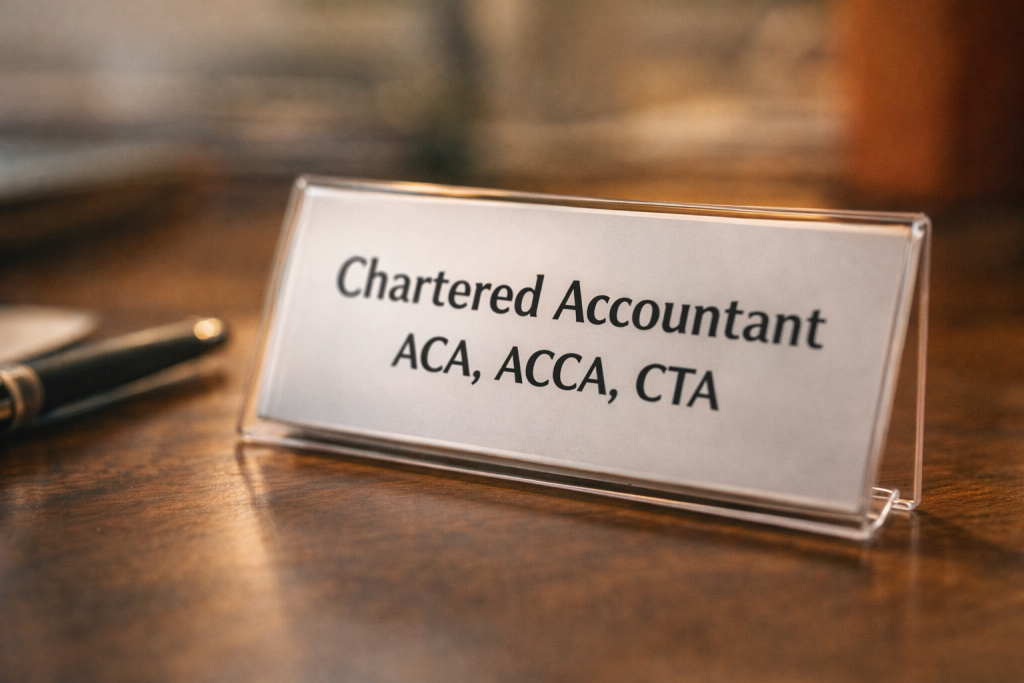
When you start looking for a tax specialist near me, you’ll see a lot of letters after names. Here’s a cheat sheet that cuts through the noise:
| Qualification | Awarding Body | What It Means in Practice |
|---|---|---|
| ACA / FCA | ICAEW | The gold standard in UK accounting. Rigorous qualification, strict ethics code. |
| ACCA | ACCA Global | Globally recognised, strong technical grounding. Very common among UK practices. |
| CTA | CIOT | Chartered Tax Adviser — the specialist tax qualification. Particularly relevant for complex tax work. |
| ATT | ATT | Association of Taxation Technicians. A solid foundation-level tax qualification. |
| No listed quals | — | Proceed with caution. Ask detailed questions about experience and regulation. |
A note: Qualifications matter, but so does experience. Someone with 20 years of hands-on tax work and an ATT often knows more about the realities of HMRC practice than a recently qualified CTA straight from the exam room.
Red Flags That Should Make You Walk Away Immediately
There’s a particular kind of tax specialist who promises you the world, quotes suspiciously low fees, and disappears when HMRC comes asking questions. They’re not common — but they exist, and the consequences of being caught up with one can be severe.
A few patterns worth watching for when you’re searching for a tax specialist near me:
They promise guaranteed refunds before seeing your records. Nobody legitimate does this. Tax refunds depend on your specific circumstances — promising one before reviewing your situation is either a lie or reckless incompetence.
Their fees are tied to your refund amount. This structure is banned by HMRC for certain types of claims for very good reason — it creates exactly the wrong incentives. Some unscrupulous advisers will inflate claims to increase their cut, leaving you exposed.
They discourage you from contacting HMRC directly. A good tax adviser welcomes transparency. If someone seems nervous about you having direct conversations with HMRC, that’s a problem.
No physical presence, no verifiable credentials, no contract. In an age of remote working this isn’t a dealbreaker on its own — but if all three are absent, you’re taking a significant risk.
⚠️ Worth knowing: If HMRC investigates and finds an error your tax specialist made, you are still the one legally responsible for your tax return. Choose accordingly.
The Fee Conversation (Which Nobody Wants to Have, But Really Should)
Tax specialist fees in the UK vary more wildly than you might expect. A simple self-assessment return might cost £150–£400. A full small business accounts package including tax could run from £800 to several thousand pounds annually, depending on complexity and location.
London rates tend to sit higher — that’s just geography. But cost and quality don’t always correlate. Some of the most expensive firms in the City are essentially charging you for the postcode; some smaller local practices deliver genuinely exceptional work at reasonable rates.
Ask specifically:
- Is this an annual fixed fee or hourly?
- What’s included, and what will cost extra?
- How do you charge for ad hoc questions during the year?
- Are VAT returns, payroll, and bookkeeping included or separate?
The cost of small business accounting services has a decent breakdown of what to expect in 2025 — worth checking before your first consultation.
One thing to be clear on: paying slightly more for a proactive adviser who spots opportunities and flags risks before they materialise will almost always save you more than the fee difference. The adviser who calls you in September to say “actually, if you do X before the end of the tax year, you’ll save £2,000” is worth their weight in gold. The one who just files your return and invoices you? Less so.
What “Proactive” Actually Looks Like (And Why It Changes Everything)
The word gets thrown around a lot in accounting firm marketing. But genuinely proactive tax advisory looks like this in practice:
Your adviser reaches out before you need to — not just when a deadline is approaching. They know about changes to Making Tax Digital requirements before you do and are already thinking about what that means for your records. If you’re a business owner, they’re thinking about your exit strategy years ahead of when you might need it. They read the Budget and contact clients whose situations are affected.
Ask Accountant in South West London takes this approach — their work spans not just compliance (the forms and filing) but genuine proactive tax advisory solutions and business growth planning that most clients don’t realise they need until they see the results.
This matters most during transitional moments: when a business is scaling up, when a property is being added or sold, when someone is thinking about succession or retirement. These are the moments where the difference between reactive and proactive advice can be measured in substantial sums.
Questions to Ask at the First Meeting (That Actually Reveal Something)
Most people walk into an initial consultation with a tax specialist and answer questions rather than asking them. Flip that. The first meeting is as much your interview of them as theirs of you.
Some questions that tend to reveal more than the standard “how long have you been in business”:
“Can you walk me through how you handled a situation similar to mine?” If they can give you a concrete, specific answer — even a generalised one that protects client privacy — they have real experience. If they speak only in generalities, that’s telling.
“What does communication look like between meetings?” You want to know if you’ll be chasing them or if they’ll proactively keep you in the loop. Both parties should understand expectations here.
“Who actually handles my account day-to-day?” At larger firms, the partner you meet in the pitch might not be the person doing the work. There’s nothing inherently wrong with that — but you should know who you’re actually working with.
“Have you dealt with HMRC enquiries? How do they go, typically?” HMRC investigations are rare but not impossibly rare — and how your adviser handles them matters enormously. Someone with real experience here is a different proposition from someone who’s only ever handled smooth submissions.
The Digital Question: Cloud Accounting and What It Means for You
Slightly tangential, but relevant. Making Tax Digital (MTD) is expanding — HMRC’s push toward digital record-keeping is not going away, and any tax specialist near me worth considering should be fluent in cloud accounting platforms. QuickBooks, Xero, FreeAgent — these aren’t optional extras anymore for most businesses.
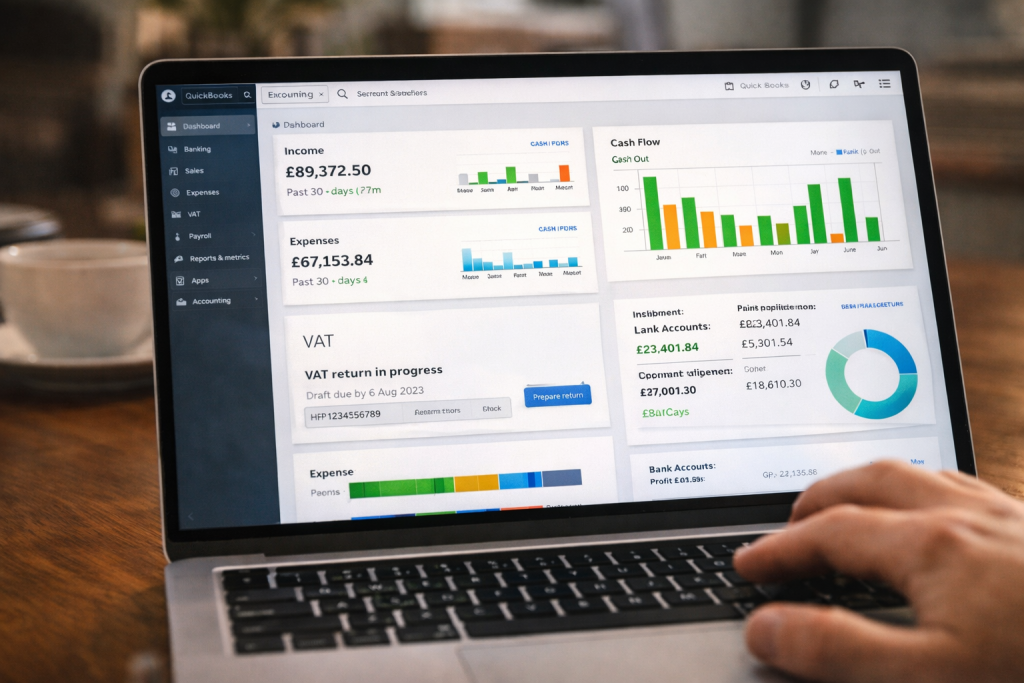
An adviser who pushes back on digital tools or seems resistant to cloud-based bookkeeping isn’t keeping up. That matters not just for compliance but for your own visibility into your finances. Cloud accounting done properly means you — not just your accountant — can see where you stand at any given moment. That’s a significant practical benefit.
A Practical Comparison: Things to Weigh Up
| Factor | Local / In-Person Specialist | Remote / Online Specialist |
|---|---|---|
| Relationship quality | Easier to build face-to-face rapport | Possible but requires more effort |
| Local knowledge | Often stronger — knows your area, sector, market | May lack regional context |
| Cost | Variable — London local can be pricier | Sometimes lower overhead costs |
| Response times | Can drop in; meetings easier to arrange | Email/video — depends on their systems |
| Specialist depth | Smaller firms sometimes more generalist | Some remote specialists are highly focused niche experts |
| HMRC dealings | Local agent relationships can help | Handled remotely — no meaningful difference |
Frequently Asked Questions
How do I find a good tax specialist near me? Start with professional directories: the ICAEW’s Find a Chartered Accountant tool, the CIOT’s adviser search, or ACCA’s public register. Cross-reference with Google reviews — genuine, detailed ones, not suspiciously glowing clusters. Ask other business owners you trust. Word of mouth still beats most other search methods.
What’s the difference between a tax adviser and an accountant? In practice, the lines blur significantly. A chartered accountant typically handles the full range of financial reporting, bookkeeping, and compliance, whereas a tax adviser might focus specifically on tax planning and optimisation. Many practices offer both. For most small businesses and individuals, a good accountant with strong tax expertise is precisely what you need.
How much does a tax specialist near me typically cost? Wildly variable. A basic self-assessment could be £150–£400. A full business accounts and tax package starts around £800–£1,500 annually for a straightforward small company and rises considerably for complexity. Always get a written quote covering what’s included.
Do I need a local tax specialist or can I use someone online? For most standard situations, either works well. For complex personal tax — inheritance planning, property portfolios, business sales — face-to-face meetings often produce better outcomes because the full picture is easier to convey in person.
What qualifications should a tax specialist have in the UK? Look for ICAEW, ACCA, or CIOT membership as a minimum. For complex tax work, a Chartered Tax Adviser (CTA) qualification is particularly relevant. Verify credentials directly with the professional body rather than taking the adviser’s word for it.
Can a tax specialist help if HMRC is already investigating me? Absolutely — and you should get specialist help immediately if that’s the situation. HMRC investigations are stressful and consequential; having a qualified adviser who understands the process can make a significant difference to the outcome.
One Last Thing Before You Start Searching
The instinct when looking for a tax specialist near me is to reach for Google, pick someone from the first page, and assume that’s good enough. Sometimes it is. But the adviser who saves you £3,000 in a year isn’t going to shout about it in their marketing — you find them through considered searching, the right questions, and often through someone who’s already made the mistake of not being careful enough.
If you’re in South West London and want to talk through what kind of support makes sense for your situation, Ask Accountant are based at 178 Merton High St, London SW19 1AY, and are reachable on +44(0)20 8543 1991. They handle everything from bookkeeping and auto-enrolment to inheritance tax and full business advisory — which means when your situation gets more complicated, you’re not starting the search again from scratch.
The right specialist isn’t always the flashiest. Sometimes they’re just the one who picks up the phone and actually helps you think things through.