

Whether you are scaling a fast-growing tech startup, managing a large property portfolio, or navigating the daily complexities of running a small business, getting a grip on your VAT number is rarely the highlight of your week. It often feels like just another heavy administrative burden dropped squarely on your shoulders. Between managing stock, dealing with client expectations, and attempting to find ten minutes for a quick lunch, keeping up with HMRC compliance can feel completely overwhelming. We understand this pressure deeply. At ASK Accountants UK Ltd, we speak with stressed business owners in Wimbledon and South-West London every single day. These hardworking founders simply want to get their accounts sorted so they can get back to growing their businesses in peace.
This comprehensive guide will break down the essential rules surrounding your digital compliance and highlight common pitfalls you must avoid. Our primary goal is to provide clarity so you can manage your tax obligations with absolute confidence.

Understanding the True Value of Your VAT Number
Before we dive into the complex mechanics of thresholds and deadlines, it helps to understand exactly what you are dealing with. A VAT number (Value Added Tax registration number) is a unique nine-digit identifier issued by HMRC. For UK businesses, this identifier is always prefixed with the letters “GB”.
Once you are registered, this unique code must appear on all of your official sales invoices. It tells your customers, your suppliers, and the government that you are legally recognized to charge and collect Value Added Tax on behalf of HMRC. It also allows you to reclaim the tax you pay on allowable business expenses. Treating this nine-digit code with respect is the first step toward building a solid financial foundation for your company.
The UK VAT Registration Threshold Explained
Your very first hurdle as a growing business is determining whether you actually need to register in the first place.
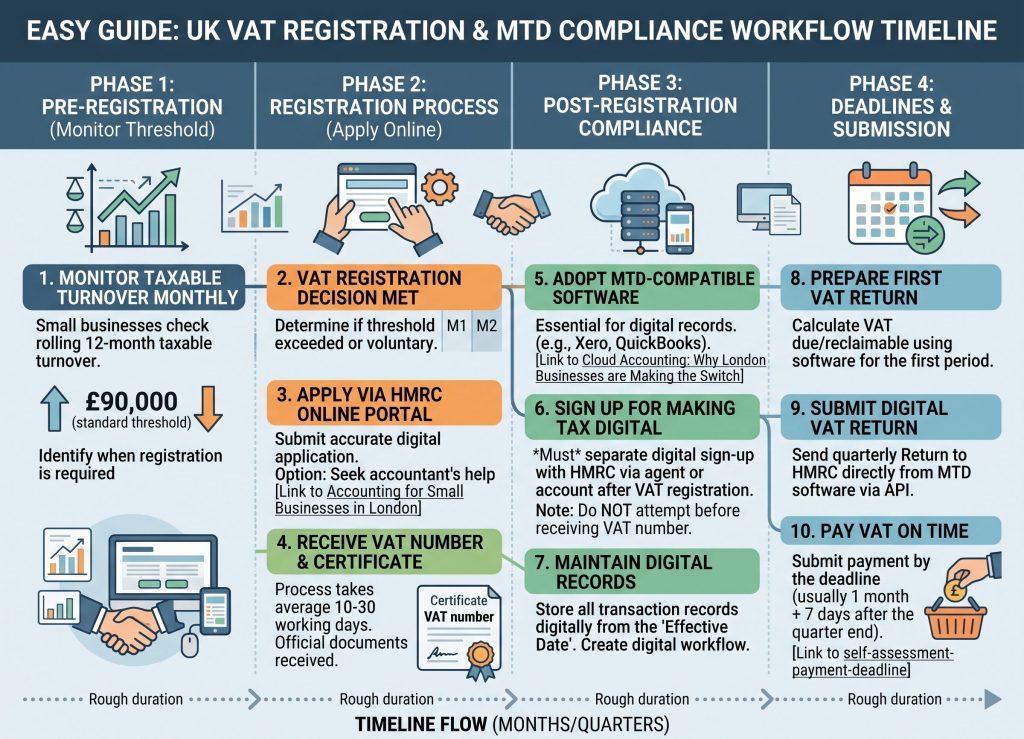
The UK VAT registration threshold for the 2026/27 tax year remains steady at £90,000. However, the most common trap business owners fall into is misunderstanding how this threshold is calculated. It is crucial to understand that this limit is not based on the standard calendar year. It is also not based on your company’s specific financial accounting year. Instead, HMRC assesses your turnover on a strict rolling 12-month basis.
This means you must check your total taxable turnover at the end of every single month. If the total for the preceding 12 months crosses the £90,000 mark, you are generally required to notify HMRC within 30 days. Additionally, if you expect your taxable turnover to exceed £90,000 within the next 30 days alone (perhaps due to landing a massive new contract or launching a highly successful product), you must register immediately.
While mandatory registration applies when you cross this financial threshold, you can also opt for voluntary registration beforehand. Voluntary registration can reduce your administrative burden later on. In certain circumstances, it helps improve your cash flow by allowing you to reclaim input tax on your early business expenses.
Navigating the VAT Registration Process Safely
Once you determine that formal registration is necessary, you must take action promptly. The actual VAT registration process takes place entirely online. You will need to access the official HMRC Government Gateway to submit your application.
To complete this online application smoothly, you will need several pieces of key information at your fingertips. Make sure you have your Unique Taxpayer Reference (UTR), your dedicated business bank account details, and your National Insurance number or company incorporation certificate ready.
So, what is a realistic timeline for this process in 2026? HMRC generally aims to process straightforward applications within 40 working days. However, minor discrepancies, missing documentation, or recently incorporated companies can easily cause frustrating delays. Furthermore, a rejected application will reset the waiting clock entirely. We strongly recommend applying as soon as you realise you will breach the rolling threshold. This proactive approach helps mitigate the risk of errors and late registration complications. Once your application is successfully approved, HMRC will issue your official certificate containing your unique registration code.
Making Tax Digital VAT Penalties in 2026
If you hold a valid VAT number, your business operations are now heavily intertwined with HMRC’s Making Tax Digital (MTD) framework. Most VAT-registered businesses must now keep digital records and submit their returns using MTD-compatible software. Paper records and manual online portal submissions are largely a thing of the past.
It is absolutely vital to understand the recent shifts regarding Making Tax Digital VAT penalties. The current regime operates on a strict points-based system for late submissions. Each time you miss a filing deadline, you accrue a penalty point. If you submit your returns quarterly and you hit four points, you will incur a £200 fine. Further fines will apply for any subsequent delays.
Late payments carry completely separate, percentage-based financial penalties. It is critical to know that late-payment interest begins accumulating on day 1 after the deadline. The first actual penalties arise if the tax remains unpaid at day 15. These penalties then increase again if the balance remains unpaid at day 30. Utilising robust, automated cloud accounting software is the most effective way to monitor these tight deadlines and maintain a healthy compliance record.
Common Errors and Record-Keeping Risks
Managing your tax obligations is not just about filing your returns on time. It is equally about filing those returns accurately. Failing to keep pristine records can lead to stressful inquiries. Here are three common record-keeping risks that frequently catch out hardworking UK SMEs:
1. Misunderstanding Business Entertainment Rules
It is incredibly tempting to try and reclaim the tax when taking a prospective client out for an expensive lunch or buying drinks to seal a deal. However, the business entertainment rules are highly nuanced and exceptionally strict. Generally, HMRC blocks tax recovery on hospitality provided to anyone who is not a direct employee of your business. While there are a few exceptions (such as annual staff parties or entertaining very specific overseas clients), you must tread carefully. You should always seek specific advice from a qualified professional before attempting to reclaim tax on any hospitality expenses.
2. Assuming Full Recovery on Company Vehicles
Reclaiming tax on company vehicles and fuel purchases is another highly complex area fraught with potential errors. If you purchase a new car through the business, the tax is typically only recoverable if the vehicle is used exclusively for business purposes and is completely unavailable for private use. Proving this to HMRC is notoriously difficult. If you lease a qualifying car that has some private use, you can usually only reclaim 50% of the tax on the lease payments. Like business entertainment, exceptions do exist (such as commercial vans or dedicated pool cars). However, partial recovery rules often apply to these situations. Always seek specific advice before making claims related to motor vehicles.
3. Failing to Verify Supplier Details
If you intend to reclaim input tax on a large business purchase, you must ensure your supplier actually holds a valid, active VAT number. Fraudulent invoices and cloned company details are a real risk in today’s digital economy. If you claim tax back on a fake invoice, HMRC will hold you responsible. You can easily use the official government tools to check these details before you authorize payment.
A Practical Workflow for Managing Your VAT Number
To help reduce the general anxiety surrounding your quarterly returns, try implementing this straightforward, step-by-step workflow into your monthly business routine:
- Track Relentlessly: Use automated, MTD-compliant software like Xero or QuickBooks to monitor your rolling 12-month turnover automatically. Do not rely on manual spreadsheets.
- Validate Before You Pay: Run all new supplier details through the official government checker before processing large invoices. Make this a mandatory step for your accounts payable team.
- Segment Your Expenses: Ensure your internal bookkeeping services strictly categorise business entertainment and vehicle costs. This prevents accidental, invalid claims from slipping into your final return.
- Set Early Deadlines: Aim to close your books at least two weeks before the official HMRC deadline. This allows ample time to review the final figures, ask questions, and arrange the cash flow for payment before late-payment interest begins on day 1.
Why Outsourcing Makes Strategic Sense
Managing a VAT number, tracking the ever-shifting registration timeline, and staying updated on complex digital rules requires constant, unwavering vigilance. For a busy startup founder or a landlord managing multiple properties, every single hour spent wrestling with accounting software is an hour taken away from your core business activities.
Outsourcing this specific technical task to an experienced professional is a smart, strategic investment in your company’s future. Working with an expert helps improve accuracy across your financial records. It mitigates the risk of errors regarding complex expense claims and ensures that nuanced rules are applied correctly. Ultimately, outsourcing provides valuable peace of mind. Knowing your compliance is in steady, experienced hands allows you to sleep better at night and focus entirely on generating revenue.
Partner with ASK Accountants UK Ltd
At ASK Accountants UK Ltd, we have spent the last 15 years helping SMEs, ambitious start-ups, and hardworking sole traders across Wimbledon and South-West London turn financial confusion into actionable clarity. We understand the local London business landscape and we know exactly how much stress tax compliance brings to your daily life.
Whether you need hands-on help navigating a new registration, setting up MTD-compliant cloud software, or managing your ongoing quarterly returns, our dedicated team of Chartered Certified Accountants is here to support you every step of the way.
Let us handle the complex numbers so you can focus entirely on growing your business.
Call us today on 020 8543 1991, visit our office at 178 Merton High St, London SW19 1AY, or contact us via our website to arrange a comprehensive consultation.
Frequently Asked Questions
How do I check if a UK VAT number is valid?
You should always verify supplier details to avoid fraudulent claims. You can check any UK VAT number by using the free, official HMRC VAT number checker provided on the GOV.UK website. For European businesses, you should use the VIES validation tool.
Can I reclaim tax on purchases made before I registered?
Yes, you can do this under specific conditions. You can generally reclaim tax on goods you bought up to four years before you registered (provided you still have them in your possession) and services you bought up to six months before registration. These purchases must relate directly to your current business activities.
Do zero-rated sales count towards the registration threshold?
Yes, they do. Zero-rated sales (such as children’s clothing, printed books, or most basic food items) are still considered taxable supplies by HMRC. They must be included when calculating your rolling 12-month turnover to see if you have breached the £90,000 limit.