

Running a recruitment firm is incredibly fast-paced. Between sourcing top talent, managing client expectations, and handling last-minute interview dropouts, your plate is full. The last thing you want to worry about is a complex web of payroll taxes and HMRC compliance. However, staying on top of your finances is the only way to build a sustainable and profitable agency.
Accounting for recruitment agencies requires specialized knowledge. It involves managing fluctuating cash flows, tracking candidate timesheets, and navigating strict employment tax rules. In this guide, we will break down exactly what you need to know to keep your business financially healthy and legally compliant.

The Core Rules of Accounting for recruitment agencies
Handling finances in the recruitment sector is not like standard retail or consulting. You are often dealing with temporary workers, complex payroll cycles, and specific VAT rules. Understanding these fundamentals helps improve accuracy across your entire operation.
Payroll and Intermediaries Legislation
When you supply staff to clients, you must navigate the employment intermediaries rules. If your agency pays the worker, you are usually responsible for operating PAYE (Pay As You Earn) and deducting the correct tax and National Insurance contributions. A robust payroll management system mitigates the risk of errors and ensures your contractors are paid on time.
Making Tax Digital (MTD) for VAT
HMRC requires businesses to maintain digital records and submit VAT returns using compatible software. Most VAT-registered businesses must follow the Making Tax Digital rules, though there are limited exemptions for specific circumstances. By utilizing cloud accounting platforms like Xero or QuickBooks, you can streamline this process and ensure your digital submissions meet HMRC standards.
Managing Late Payments and Cash Flow
Recruitment agencies often face gaps between paying temporary staff and receiving payment from clients. It is critical to understand HMRC penalty structures if cash flow issues delay your tax bills. Late-payment interest begins on day 1; first penalties arise at day 15 and increase at day 30. Having clear credit control policies is essential to avoid these unnecessary costs.
Common errors and record-keeping risks
Even experienced founders can make administrative mistakes when scaling their teams. Here are three common errors and record-keeping risks to watch out for.
1. Misunderstanding IR35 Rules
The off-payroll working rules (IR35) dictate how contractors working through their own limited companies are taxed. Getting this wrong can lead to significant tax liabilities. Whether the responsibility falls on your agency or the end-client depends on the size of the client and the specific contractual chain. You must have clear processes for determining employment status.
2. Disorganized Timesheets and Invoicing
Relying on manual spreadsheets for candidate timesheets is a recipe for disaster. Manual data entry often leads to overpayments, underbilling, and frustrated clients. Using automated software to sync timesheets directly with your invoicing system can reduce administrative burden significantly.
3. Incorrect Expense Claims
Many agency owners ask about claiming costs for business entertainment or company vehicles to win new clients. The rules around these expenses are highly nuanced. There are strict exceptions and partial recovery rules for VAT on entertainment. You should always seek specific professional advice before claiming these costs to ensure you remain compliant.
A Step-by-Step Workflow for Recruitment Finances
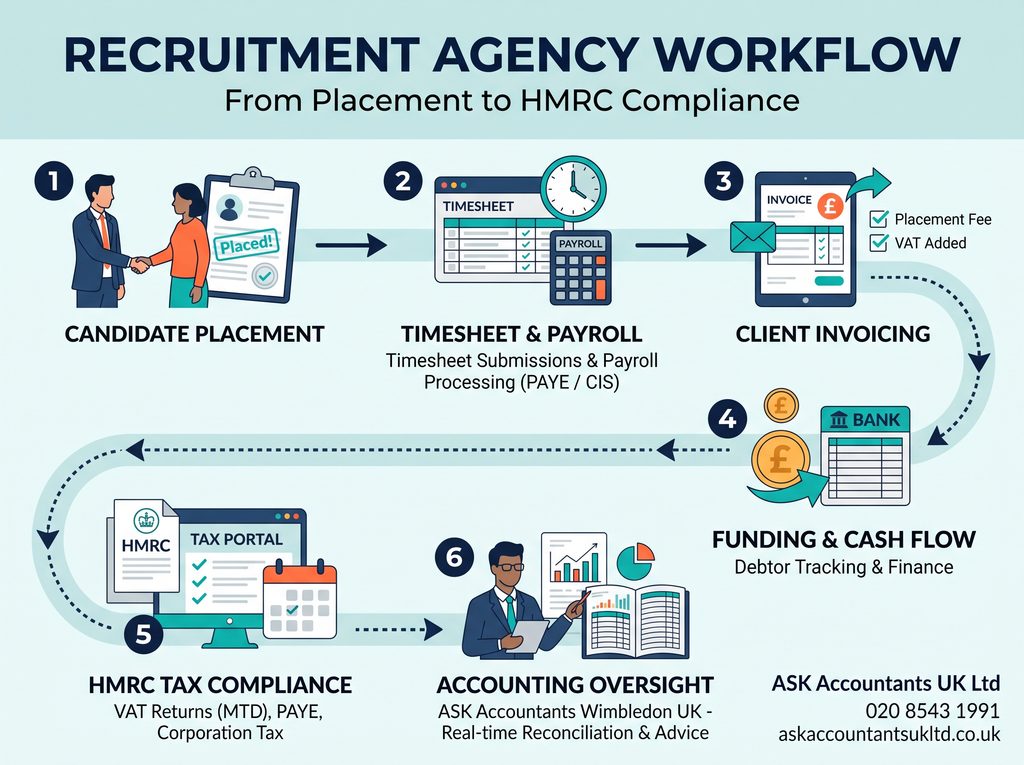
To keep your firm running smoothly, implement this simple financial workflow:
- Separate Your Accounts: Always keep your business funds completely separate from personal finances.
- Go Digital: Adopt cloud software tailored for recruitment agency tax compliance.
- Automate Payroll: Connect your timesheet portals directly to your payroll software.
- Reconcile Weekly: Do not wait until the end of the month. Match your bank transactions weekly to spot missing client payments early.
- Review Cash Flow: Keep a 12-week cash flow forecast to ensure you can always cover temp payroll.
Why Outsourcing Accounting for recruitment agencies Makes Sense
Trying to be a full-time recruiter and a part-time bookkeeper rarely works. Outsourcing your financial tasks to an expert can reduce administrative burden and give you back hours of valuable time each week. A professional will handle your PAYE submissions, monitor your VAT thresholds, and provide strategic advice on scaling your team.
By partnering with a dedicated accountant, you gain peace of mind knowing that someone is monitoring your compliance deadlines. If you are looking for a reliable bookkeeping service, outsourcing is a smart, cost-effective investment.
Expert Accounting for recruitment agencies in London
At ASK Accountants UK Ltd, we bring over 15 years of experience helping SMEs navigate complex financial landscapes. We understand the unique pressures of the recruitment industry. Whether you need help with temporary payroll cycles, IR35 compliance, or strategic business growth, our team in South-West London is here to support you.
Let us handle the numbers so you can focus on making your next big placement. Call us today at 020 8543 1991, visit our office at 178 Merton High St in Wimbledon, or reach out via our contact page to discuss how we can help your agency thrive.
Frequently Asked Questions (FAQs)
Do recruitment agencies charge VAT?
Most recruitment agencies provide taxable services and must register for VAT if their taxable turnover exceeds the current HMRC threshold. Once registered, you must charge VAT on your fees. You can find more details on current thresholds on the GOV.UK VAT guide.
How does IR35 impact accounting for recruitment agencies?
IR35 affects agencies that place contractors working through their own limited companies. The rules determine whether the contractor should be taxed as an employee. Agencies must carefully check the status determination statements provided by medium or large clients.
What software is best for recruitment agency tax compliance?
Cloud accounting platforms like Xero and QuickBooks are highly recommended. They integrate well with specialized recruitment CRM systems and automated timesheet apps. This creates a seamless flow of data from candidate placement to final tax return.