Last updated: January 2026 | Reading time: 12 minutes
Here’s something nobody tells you when you register your first limited company: the paperwork doesn’t end with Companies House. In fact, it’s barely started.
I’ve watched countless business owners stumble through their first year of accounting for small companies, only to face penalty notices because they thought “small” meant “simple.” Spoiler—it doesn’t. The UK has strict filing requirements regardless of whether you’re turning over £50,000 or £5 million. Miss a deadline by even 24 hours? That’s £150 gone, just like that.
What makes this particularly maddening is how the rules keep changing. April 2025 brought updated company size thresholds. April 2026 will usher in Making Tax Digital for Income Tax. And throughout all of this, you’re expected to just… know what’s required?
This guide cuts through the bureaucratic fog. Whether you’re a sole director juggling everything yourself or you’re deciding whether to hire help, you need to understand what accounting for small companies actually entails in 2026.
What Actually Counts as a “Small Company” in the UK Right Now
Let’s start with definitions, because this matters more than you’d think. Your company size determines what you can file, whether you need an audit, and how much disclosure you’re legally obligated to provide.
From 6 April 2025, your company qualifies as “small” if it meets at least two of these three criteria:
- Turnover: Not more than £15.6 million
- Balance sheet total: Not more than £7.8 million
- Number of employees: Not more than 50
Here’s the catch—you need to meet these thresholds for two consecutive years before your classification officially changes. So if your first year puts you just under the small company limits, you’re still considered small for reporting purposes in year two, even if you suddenly grow.
The Micro-Entity Sweet Spot
Even better than “small” is “micro-entity” status. From April 2025, the micro-entity thresholds increased to:
| Criterion | Old Threshold (pre-April 2025) | New Threshold (from April 2025) |
|---|---|---|
| Annual Turnover | £632,000 | £1,000,000 |
| Balance Sheet Total | £316,000 | £500,000 |
| Average Employees | 10 | 10 (unchanged) |
Why does this matter? Micro-entities get the simplest possible reporting requirements. No directors’ report needed. No profit and loss account filed publicly. Just a basic balance sheet and minimal notes. It’s accounting for small companies on easy mode.
Reality Check: These threshold increases mean roughly 113,000 UK companies that were previously classified as “small” can now file as micro-entities. That’s a lot of saved paperwork and accountancy fees.
The Two Filing Deadlines That’ll Cost You If You Miss Them
Right, let’s talk about the bit that actually causes panic at 11pm on a Sunday night.
When it comes to accounting for small companies in the UK, you’re dealing with two separate government departments, two different deadlines, and two completely different penalty structures. Fun, isn’t it?
Companies House: The 9-Month Deadline
Your statutory accounts must reach Companies House within 9 months of your accounting reference date (ARD). For your first accounts after incorporation, you get 21 months from your registration date.
Miss this deadline and here’s what happens:
- Up to 1 month late: £150 penalty
- 1-3 months late: £375
- 3-6 months late: £750
- Over 6 months late: £1,500
File late two years running? They double the penalties. And before you ask—no, there’s no grace period. Not even for weekends or bank holidays.
HMRC: The 12-Month Window (But Pay Tax Earlier)
Your Company Tax Return (CT600) is due 12 months after your accounting period ends. Sounds generous compared to Companies House, right?
Here’s the gotcha: you have to pay your Corporation Tax within 9 months and 1 day of your period end. File the return late? That’s a £100 penalty immediately, another £100 after three months, and then it gets worse—HMRC will estimate your tax bill and add a 10% penalty on top.
Warning: I’ve seen businesses assume that filing with one authority covers them for both. It doesn’t. You must file separately with Companies House and HMRC. Missing one doesn’t give you leeway with the other.
What You Actually Need to Prepare (and What You Can Skip)
The beauty of being a small company is you’re not required to prepare everything that larger companies are. Understanding what’s mandatory versus optional for accounting for small companies can save you time and money.
Statutory Accounts: The Non-Negotiables
Every UK limited company, regardless of size, must prepare statutory accounts. At minimum, this includes:
- Balance Sheet – Your assets, liabilities, and shareholders’ equity
- Profit and Loss Account – Revenue, expenses, and profit (though micro-entities don’t file this publicly)
- Notes to the Accounts – Explaining your accounting policies and providing additional detail
- Directors’ Report – Unless you’re a micro-entity
The accounts must comply with UK accounting standards. For small companies, that typically means either:
- FRS 102 Section 1A – Simplified standard for small entities
- FRS 105 – Even more stripped-down for micro-entities
FRS 105 has become increasingly popular since the 2025 threshold changes. It allows you to prepare accounts with minimal disclosure, no cash flow statement, and simplified treatment of items like investment properties.
The Audit Exemption (Thank Goodness)
Unless your company’s articles of association say otherwise, or unless shareholders holding 10% or more of your shares demand it, small companies are exempt from statutory audit requirements.
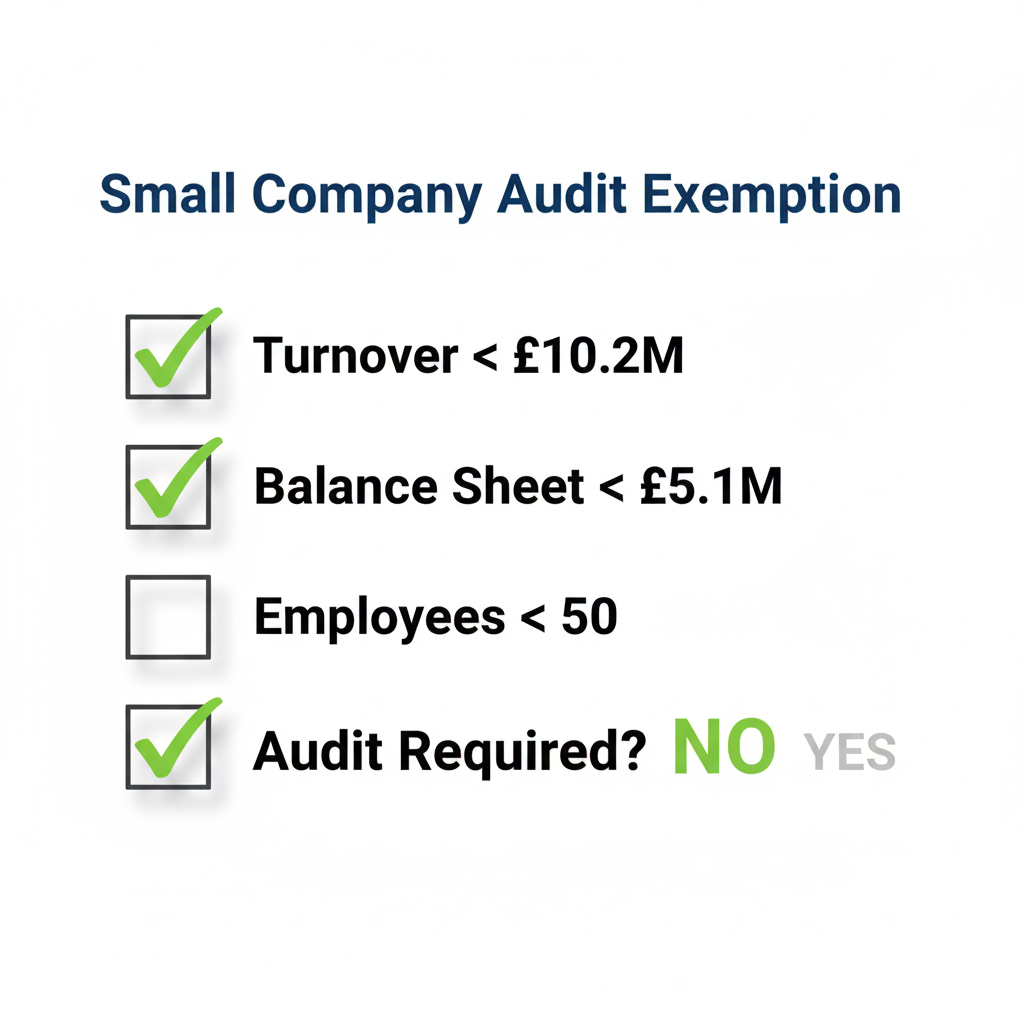
That’s one less expense and one less deadline to worry about when managing accounting for small companies.
Quick Tip: Even if you qualify for audit exemption, you still need to state this fact in your accounts and ensure they’re approved by a director before filing.
Record Keeping: More Important Than You Think
Here’s where a lot of small business owners trip up. They focus so much on the annual accounts that they forget about the underlying records—and that’s where HMRC gets you during an investigation.
Private limited companies must keep accounting records for 3 years from the date they were made. This includes:
- All invoices issued and received
- Bank statements and reconciliations
- Records of money spent and received
- Details of assets and liabilities
- Stock valuations (if applicable)
- Payroll records
If you hold records outside the UK, you must send accounts and returns to a UK address at least every 6 months. (Yes, HMRC thought of that too.)
Digital Record Keeping is Coming: With Making Tax Digital expanding, keeping paper records is becoming increasingly impractical. More on this shortly.
Making Tax Digital: The 2026 Shake-Up You Need to Prepare For
If you thought accounting for small companies was complicated now, wait until you hear about Making Tax Digital (MTD) for Income Tax.
From April 2026, sole traders and landlords with qualifying income over £50,000 must:
- Keep digital records using MTD-compatible software
- Submit quarterly updates to HMRC
- File a final declaration through their MTD software
The threshold drops to £30,000 from April 2027, and potentially £20,000 from April 2028. While limited companies aren’t included in the initial rollout, HMRC has confirmed they’ll eventually be brought into the MTD system.
What This Means for Your Company
Even if MTD doesn’t directly apply to your limited company yet, it’s changing the accounting landscape. If you’re a director taking dividends and salary, and you have other self-employed income, you’ll need MTD-compliant software anyway.
The smart move? Start digitising your records now. Cloud accounting platforms like Xero, QuickBooks, and FreeAgent are all MTD-compliant and, frankly, make accounting for small companies far less painful than spreadsheets ever could.
| MTD Requirement | What It Means | Deadline |
|---|---|---|
| Digital record keeping | No more paper ledgers or basic spreadsheets | From start of first MTD tax year |
| Quarterly updates | Submit income/expense summaries every 3 months | Within 1 month of quarter end |
| Final declaration | Confirm your figures and submit any additional info | By 31 January following tax year |
| Software compliance | Use HMRC-approved software for all submissions | Before your first quarterly update |
Don’t Wait Until 2026: HMRC has confirmed that penalty points won’t apply for late quarterly updates in the first tax year (2026-27), but that grace period won’t last forever. Get your systems sorted early.
Common Mistakes That Cost Small Companies Thousands
After years of helping businesses with their accounts, I’ve seen the same errors crop up repeatedly. Here are the costly mistakes to avoid:
1. Mixing Personal and Business Finances
I know, I know—when you’re the sole director and shareholder, it feels like it’s all your money anyway. But legally, your company is a separate entity. Using your business account for personal expenses (or vice versa) creates a tangled mess that’ll cost you hours of work to unravel come year-end.
Get a dedicated business bank account. It’s not optional for limited companies—it’s a legal requirement.
2. Forgetting About the Confirmation Statement
This isn’t technically part of your annual accounts, but you still need to file it with Companies House at least once every 12 months. Miss it and you face fines up to £5,000, plus your company could be struck off the register.
3. Not Claiming All Allowable Expenses
Small company owners often leave money on the table by not claiming legitimate business expenses. If you’re working from home, using your personal vehicle for business, or paying for professional subscriptions, these are all potential tax deductions.
Proper accounting for small companies means tracking every penny that goes out, not just the big invoices.
4. DIY-ing Your Accounts When You Shouldn’t
Look, I’m all for saving money where you can. But there’s a point where attempting to handle everything yourself becomes a false economy. If you’re spending 20 hours fumbling through accounting software when you could be earning money in your actual business, that’s not saving—that’s losing.
When to Hire an Accountant (and What to Look For)
Speaking of which—when does it make sense to bring in professional help for accounting for small companies?
Generally, you should consider hiring an accountant when:
- Your turnover exceeds £50,000-£75,000 (the exact threshold depends on your business complexity)
- You’re VAT registered
- You employ staff
- You’re spending more than 5 hours per month on bookkeeping
- You’ve received correspondence from HMRC that you don’t fully understand
- You’re planning significant business changes (like incorporating, taking on partners, or purchasing property)
What should you expect to pay? For a small company with straightforward affairs, expect annual fees of £500-£1,500 for accounts preparation and filing. Full-service packages that include monthly bookkeeping, tax planning, and advisory work typically run £100-£300 per month.
Get Expert Help with Your Small Company Accounts
At Ask Accountant, we specialise in small business accounting services for UK companies. Our team handles everything from bookkeeping and tax compliance to proactive business advice.
Located at 178 Merton High St, London SW19 1AY, we work with small companies across London and throughout the UK. Whether you need help with year-end accounts, Making Tax Digital preparation, or ongoing tax advisory solutions, we’re here to help.
Call us on +44(0)20 8543 1991 or get in touch online to discuss how we can support your business.
Software vs Spreadsheets: The Great Debate
Can you manage accounting for small companies with Excel? Technically, yes. Should you? That’s becoming increasingly difficult to justify.
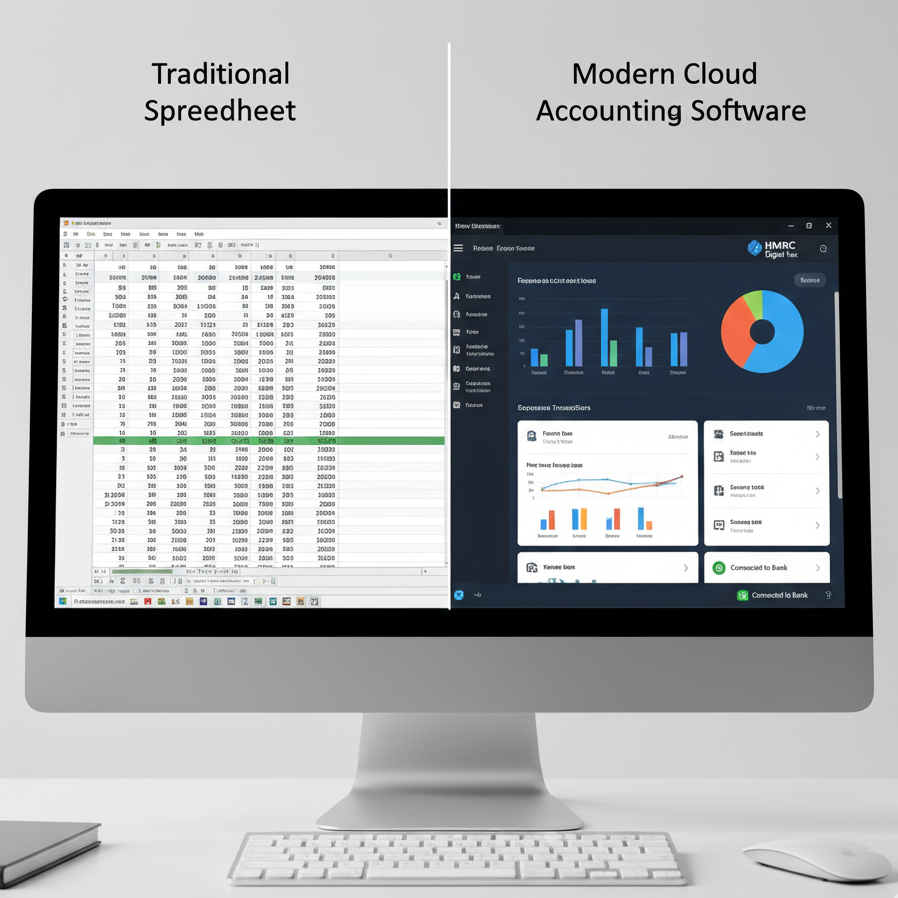
Here’s why cloud accounting software has become the standard:
- Real-time bank feeds: Transactions import automatically, no manual entry
- Automatic backups: Your data is safe even if your laptop dies
- Multi-device access: Check your finances from your phone, tablet, or computer
- MTD compliance: Essential for when (not if) you need to comply with Making Tax Digital
- Easier collaboration: Your accountant can access your records without you emailing spreadsheets back and forth
- Built-in reporting: Generate profit and loss, balance sheet, and cash flow reports with a few clicks
Popular options for small UK companies include:
- Xero – £13-£39/month, excellent for growing businesses
- QuickBooks – £15-£42/month, user-friendly interface
- FreeAgent – £19-£34/month, popular with contractors and freelancers
- Sage Business Cloud – £13-£32/month, long-established UK provider
Most offer free trials, so you can test-drive before committing. And yes, the software subscription is a tax-deductible business expense.
VAT: The Extra Layer You Might Need to Handle
Once your taxable turnover hits £90,000 in any 12-month period, you must register for VAT. This adds another dimension to accounting for small companies.
VAT registration means:
- Charging VAT on your sales (usually 20%, but some goods/services qualify for reduced rates)
- Reclaiming VAT on your business purchases
- Submitting VAT returns quarterly (or annually if you use the Annual Accounting Scheme)
- Keeping detailed VAT records for at least 6 years
The good news? Making Tax Digital for VAT has been in place since 2019, so the systems are mature and stable. You’ll need MTD-compatible software, but chances are you’re already using it if you’ve modernised your bookkeeping.
Want to understand VAT better? Check out our guide on how VAT accounting works in the UK.
Payroll Considerations for Small Companies
As soon as you employ anyone—including yourself as a director taking salary—you become an employer with HMRC. This means running payroll, which adds another compliance layer to accounting for small companies.
You’ll need to:
- Register as an employer before your first payday
- Calculate PAYE tax and National Insurance contributions
- Submit Full Payment Submissions (FPS) to HMRC every time you pay staff
- Provide payslips to employees
- File Employment Payment Summaries (EPS) when needed
- Handle auto-enrolment workplace pensions if you have eligible employees
For many small companies, outsourcing payroll makes sense. It’s one of those tasks that’s easy to get wrong and expensive when you do. Professional payroll services typically cost £5-£15 per employee per month.
Dealing with HMRC Investigations
Nobody likes to think about this, but it happens. HMRC conducts random compliance checks as well as targeted investigations when they suspect errors.
If you receive a letter from HMRC about an investigation or compliance check, don’t panic—but don’t ignore it either. You typically have 30 days to respond.
What they’ll want to see:
- Your accounting records and supporting documentation
- Proof that you’ve declared all income
- Evidence for claimed expenses
- VAT records (if registered)
- Payroll records (if you employ staff)
This is where good record keeping pays off. If you can provide clear, organised records that support your tax returns, most investigations wrap up quickly with no issues.
Need help with an HMRC investigation? Professional representation can make a significant difference to the outcome.
Year-End Planning: Getting Ahead of the Game
The smartest approach to accounting for small companies is to think beyond just meeting deadlines. Strategic year-end planning can save you significant tax and reduce stress.
Consider these moves before your year-end:
- Review your pension contributions: Both personal and employer contributions reduce your Corporation Tax bill
- Accelerate or delay income: Depending on your tax situation, you might want to invoice late December work in January instead
- Purchase necessary assets: Capital allowances can reduce your taxable profit
- Review director remuneration: The optimal mix of salary and dividends changes with tax rates
- Write off bad debts: If customers aren’t paying, formally writing off debts provides tax relief
None of this happens automatically. You need to plan ahead and, ideally, work with someone who understands the bigger picture of tax planning alongside compliance. Our business advisory team helps small companies optimise their tax position legally and ethically.
FAQs About Accounting for Small Companies
Do I need an accountant for a small limited company?
Legally, no. You can prepare and file your own accounts if you’re confident in your abilities. However, most small company directors find that hiring an accountant saves them time, reduces errors, and often pays for itself through tax savings and efficiency gains. If your company’s affairs are straightforward and your turnover is under £50,000, you might manage with accounting software and occasional professional advice.
How much does small company accounting cost?
Expect to pay £500-£1,500 annually for year-end accounts preparation and filing, depending on your turnover and complexity. Monthly packages including bookkeeping typically range from £100-£300. Prices vary significantly based on location (London tends to be pricier), the accountant’s qualifications, and the services included.
What happens if I file my accounts late?
Companies House imposes automatic penalties starting at £150 for being up to one month late, rising to £1,500 if you’re over six months late. File late two years running and these penalties double. HMRC has separate penalties for late Corporation Tax returns, starting at £100 and increasing over time. Late filing can also damage your credit rating and affect your ability to secure business funding.
Can I claim working from home expenses?
Yes, if you genuinely use part of your home exclusively for business. You can claim a proportion of your mortgage interest/rent, utility bills, council tax, and home insurance. Alternatively, use HMRC’s simplified flat rate of £6 per week for 25-50 hours of home working, £18 per week for 51-100 hours, or £26 per week for 100+ hours.
Do I need separate bank accounts for my limited company?
Absolutely yes. Your limited company is a separate legal entity from you personally, and mixing personal and business finances creates significant complications. Most banks offer business accounts with reasonable fee structures, and the cost is tax-deductible as a business expense.
What’s the difference between FRS 102 and FRS 105?
FRS 102 Section 1A is the accounting standard for small entities, while FRS 105 is an even simpler standard for micro-entities. FRS 105 has fewer disclosure requirements, doesn’t require revaluation of investment properties, and results in shorter, simpler financial statements. If you qualify as a micro-entity (turnover under £1 million), FRS 105 is usually the better choice.
When should I register for VAT?
You must register when your taxable turnover exceeds £90,000 in any rolling 12-month period, or when you expect it to exceed this threshold in the next 30 days. You can also register voluntarily if your turnover is below the threshold, which makes sense if you can reclaim significant VAT on your business purchases or if you want to appear more established to clients.
How long should I keep company records?
Private limited companies must keep accounting records for at least 3 years from the date they were made. However, HMRC can go back further in cases of suspected fraud, and you’ll need historical records if you ever sell your company. Most accountants recommend keeping records for at least 6 years to be safe.