
Summarize this blog post with: ChatGPT | Perplexity | Claude | Grok
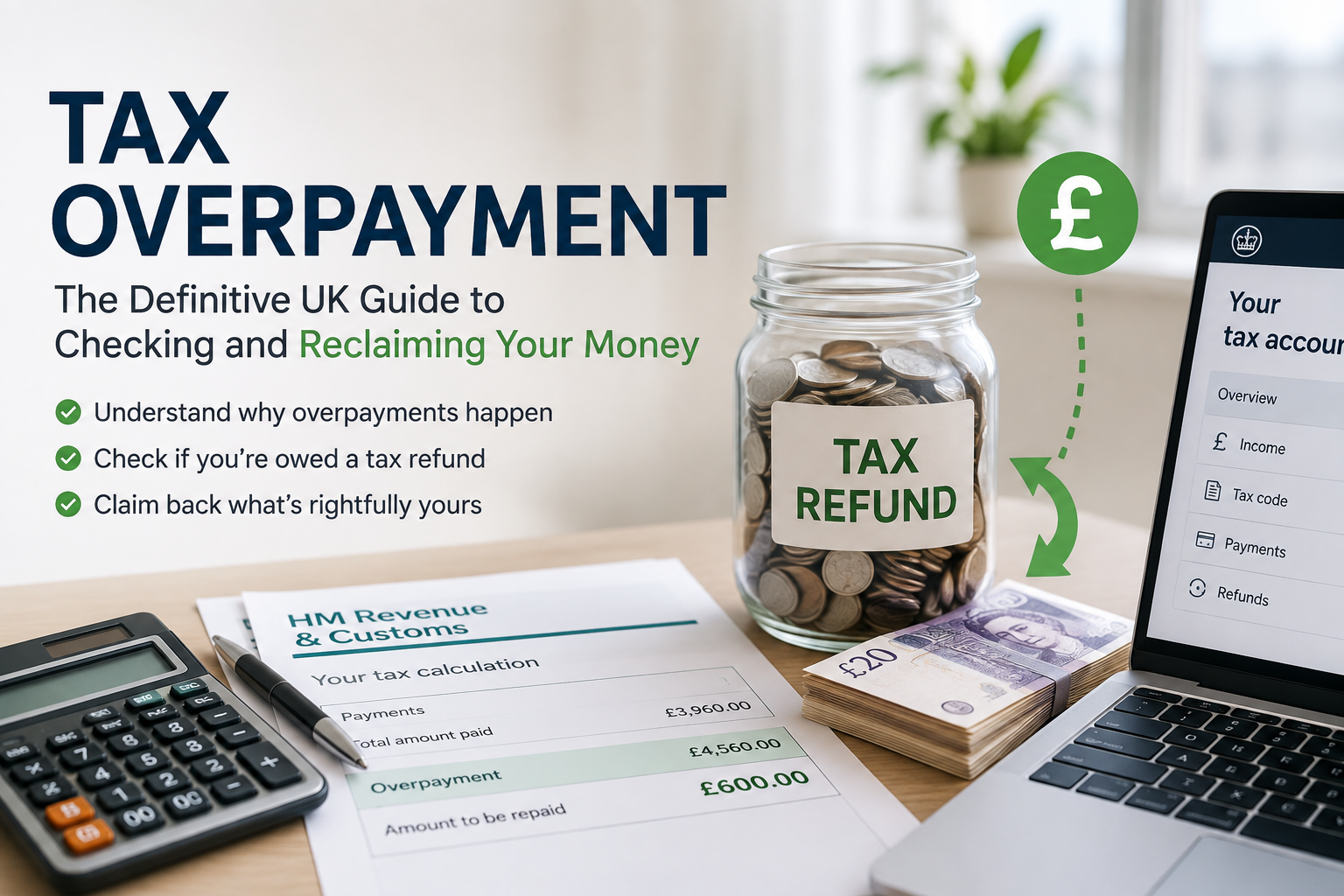
You probably check your payslip to see how much you have earned, but you may not always check whether the amount of tax deducted is actually correct. An incorrect tax code, job change or payment error can mean you have paid more than necessary. In this guide, we’ll explain what a tax overpayment is, how to identify one and the steps you can take to claim back tax you may be owed.
Key Takeaways
- Tax overpayments occur when you pay more tax than you are legally required to pay for the relevant tax period.
- Incorrect tax codes, job changes and emergency taxation are common reasons why employees overpay income tax.
- HMRC records, payslips, P60s, P45s and Self Assessment calculations can help you check whether too much tax has been paid.
- Tax refund processes vary depending on whether the overpayment relates to PAYE, Self Assessment or another HMRC liability.
- Supporting records are essential when checking or challenging a possible tax overpayment.
- Professional tax advice can be useful when multiple income sources, previous tax years or complex HMRC calculations are involved.
What Is a Tax Overpayment?
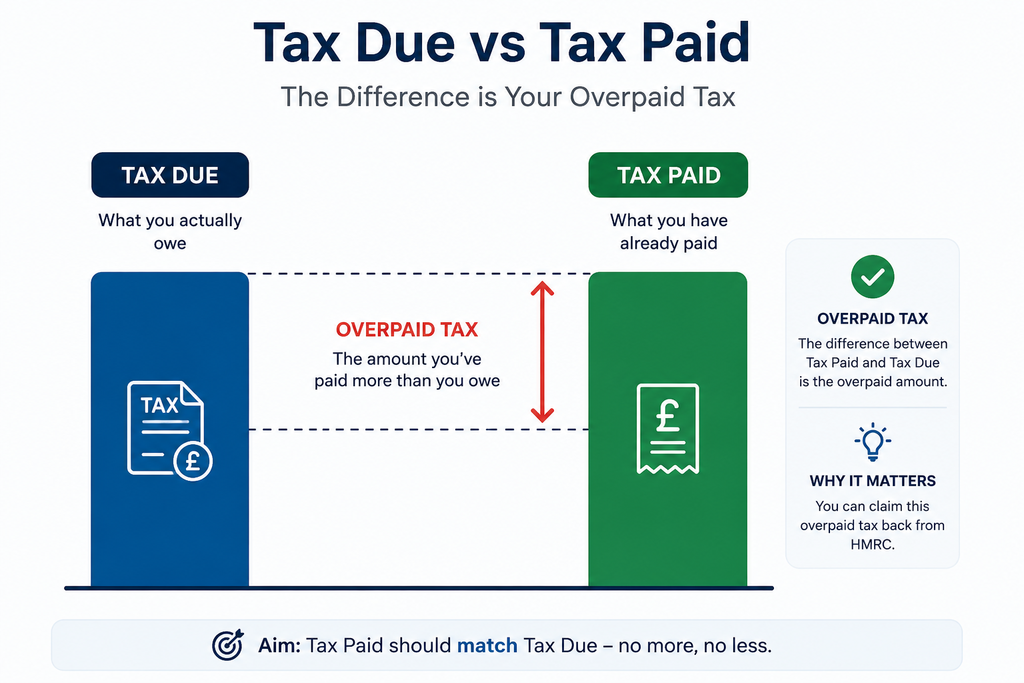
A tax overpayment occurs when a taxpayer pays more tax than they are legally required to pay for the relevant tax period. The overpayment may arise because too much tax was deducted from income, too much was paid directly to HMRC, or an allowance or relief was not correctly reflected in the calculation.
For example, an employee could move to a new job without their payroll information being transferred immediately. If the new employer applies a temporary tax code, more income tax may be deducted than is ultimately due.
In the same way, a Self Assessment taxpayer might make a payment based on an estimate and later discover that their final tax liability is lower. A tax overpayment does not automatically mean HMRC has made a mistake, because the cause may be incorrect information, a duplicate payment or a change in your circumstances.
Tax records determine whether an apparent overpayment is genuine. Before requesting money back, you should compare the amount of tax paid with your income, tax code, allowances and final tax calculation.
Why Does a Tax Overpayment Matter?
A tax overpayment matters because money paid unnecessarily to HMRC can affect your personal or business cash flow until your tax position is corrected. Even a relatively small deduction repeated over several months can add up to a meaningful amount.
For example, if an incorrect tax code causes an additional £100 of tax to be deducted each month, the total apparent overpayment could reach £1,200 over a year. Checking your tax position regularly can help identify problems before they continue for longer than necessary.
Moreover, an overpayment can also indicate that your HMRC records need updating. A change in employment, pension income or other taxable income may require HMRC to reassess your circumstances.
Correct tax records help prevent both overpayments and unexpected underpayments. For a clearer understanding of deductions from employment income, add an internal link here:
What Are the Most Common Reasons for Overpaying Tax?
The most common reasons for overpaying tax include incorrect tax codes, employment changes, emergency taxation, multiple income sources, missed reliefs and payment errors. The cause determines how you should check your records and claim any repayment.
| Common cause | How an overpayment can happen | What to check |
|---|---|---|
| Incorrect tax code | Too much tax is deducted from earnings | Current tax code and HMRC records |
| Changing jobs | Payroll information is incomplete or delayed | P45, payslips and cumulative pay |
| Emergency tax | A temporary code is applied | Payslip and HMRC tax code |
| Multiple jobs or pensions | Allowances may not be allocated as expected | All income sources and tax codes |
| Leaving work | Tax may be deducted based on annual assumptions | Final payslip and employment details |
| Self Assessment payment | Too much or duplicate payment is made | Tax calculation and payment history |
| Missed relief | An eligible deduction or relief is not claimed | Tax return and available reliefs |
Can an Incorrect Tax Code Cause Me to Overpay Tax?
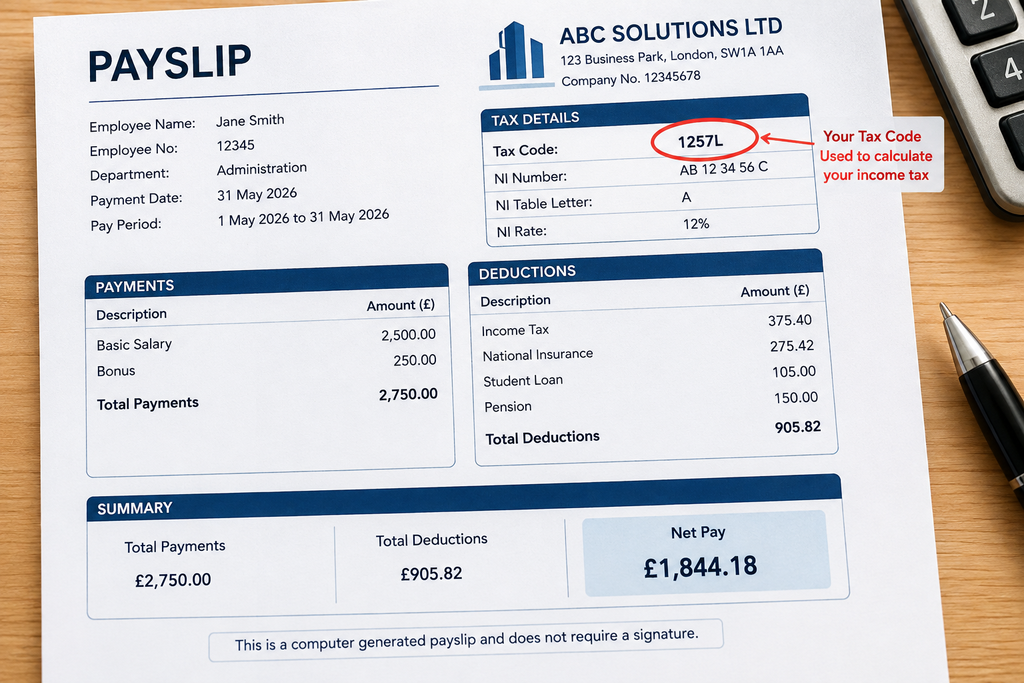
An incorrect tax code can cause you to overpay tax when your employer deducts income tax using information that does not accurately reflect your tax position. Your tax code helps determine how your earnings are taxed through payroll.
For example, a new employer may initially receive incomplete information about your previous employment. PAYE tax overpayments can occur when an incorrect or temporary tax code causes too much income tax to be deducted from earnings.
That said, a tax code that looks unusual is not automatically wrong. Codes can change because of benefits, untaxed income, estimated adjustments or other circumstances, so you should check the reason before assuming an overpayment.
Can Changing or Leaving a Job Cause a Tax Overpayment?
Changing or leaving a job can cause a tax overpayment when payroll calculations do not immediately reflect your full income and tax history. This is particularly common when P45 information is delayed or when temporary tax treatment is applied.
For example, an employee who leaves work halfway through the tax year may have paid tax based on earnings that would normally be spread across a full year. If they do not return to work, their final tax position may show that too much income tax was deducted.
Similarly, starting a new role can result in temporary deductions while payroll information is being updated. Your P45, final payslip and HMRC records can help establish whether the deductions were correct.
Can Self Assessment Errors Lead to a Tax Overpayment?
A Self Assessment tax overpayment can occur when the amount paid to HMRC exceeds your final tax liability. This may happen because of duplicate payments, amended returns or an incorrect estimate of the amount due.
For example, a taxpayer might make an online payment and then accidentally pay the same bill again through another method. Your Self Assessment payment history should show both payments and help identify whether your account is in credit.
In addition, missed deductions or incorrect figures on a return can affect the final liability. Reviewing your calculation carefully can help you identify whether the overpayment arose from the return itself or from the payment made afterward.
How Can I Check if I Have Overpaid Tax?
Checking a potential tax overpayment involves comparing your income, tax paid, tax code and available allowances against your HMRC tax records and supporting documents. You should start with the documents that apply to your particular source of income.
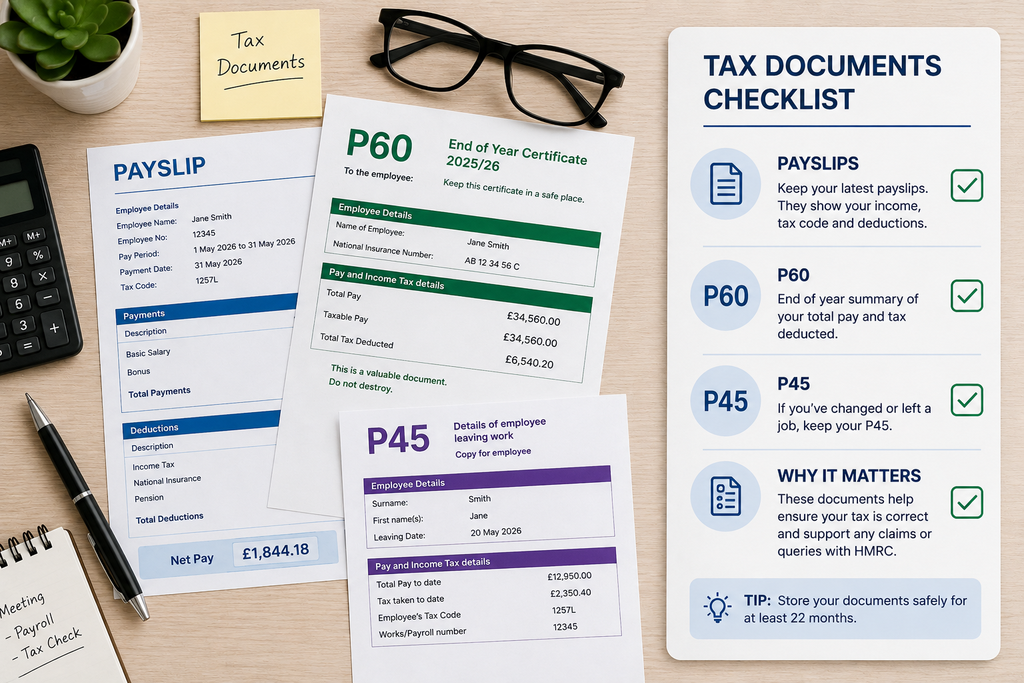
First, gather the following records:
- Recent payslips
- Your P60
- Your P45, if you changed or left a job
- Details of your current tax code
- HMRC account information
- Self Assessment tax calculations and payment records, where relevant
- Evidence of any tax reliefs or allowances you believe apply
Second, compare your gross income with the tax deducted. A difference between your expected and actual tax does not prove an overpayment, because your personal circumstances and tax code can affect the calculation.
For example, an employee with more than one job may see different tax codes across their income sources. You need to review the complete position rather than judging one payslip in isolation.
Third, check whether any allowances or reliefs have been missed. Eligible claims can reduce the amount of tax ultimately due, so an unclaimed relief may contribute to an apparent overpayment.
How Do I Claim Back Overpaid Tax From HMRC?
Claiming back overpaid tax depends on the type of tax involved, with different processes applying to PAYE deductions, Self Assessment payments and other HMRC liabilities. The correct route depends on why the overpayment happened.
How Do I Claim Back Overpaid PAYE Tax?
Overpaid PAYE tax can often be corrected through your tax record, payroll or an HMRC repayment process, depending on your employment circumstances. You should first confirm that the tax code and income details held by HMRC are correct.
For example, if you are still employed and the problem is caused by an incorrect tax code, correcting the code may allow payroll to adjust future deductions. In other situations, particularly after leaving work, a separate repayment process may be required.
Keep copies of payslips, your P45 and P60 because these documents can support your claim. The exact process can depend on when you stopped working and whether you received taxable benefits or other income.
How Do I Get a Refund for a Self Assessment Tax Overpayment?
A Self Assessment refund is generally requested or processed through your tax account when your recorded payments exceed your final tax liability. Before requesting repayment, make sure all relevant returns and amendments have been submitted.
For example, if you paid £5,000 but your completed Self Assessment calculation shows that only £4,200 was due, your account may show a credit of £800, subject to any other outstanding liabilities or adjustments.
However, you should not assume every account credit will be immediately repayable. HMRC may use a credit against other amounts due, and additional checks may be required.
What Are Common Tax Overpayment Examples?
Common tax overpayment examples show how employment changes, temporary tax treatment and payment mistakes can result in more tax being paid than is ultimately due. Reviewing realistic scenarios can help you identify patterns in your own records.
Emergency Tax After Starting a New Job
Emergency or temporary taxation can result in an overpayment when payroll does not have complete information about your previous earnings and tax deductions. Once the correct information is available, the tax position may be recalculated.
For example, Sarah starts a new job in November but her employer does not initially have the correct payroll information. A temporary code is applied, and more tax is deducted than her final annual position requires.
Temporary tax treatment should be checked rather than ignored. A corrected tax code can prevent the issue from continuing.
Leaving Work Before the End of the Tax Year
Stopping work during the tax year can create a tax overpayment when deductions made earlier in the year exceed the tax due on your final annual income. The outcome depends on your total income and other taxable sources.
For example, James works from April until September and then does not work for the remainder of the tax year. If his deductions assumed a continuing level of earnings, his final annual tax calculation may differ from the amount already paid.
A change in employment can change your final annual tax position. Your final payslip and P45 provide important evidence when checking the calculation.
Paying Too Much Through Self Assessment
A Self Assessment overpayment can result from duplicate payments, amended calculations or payments that exceed the final amount due. Your online account and payment records should be checked together.
For example, a taxpayer makes a bank transfer before the deadline and later makes a second payment after mistakenly believing the first had failed. Payment records can reveal whether the same liability was paid twice.
How Long Does an HMRC Tax Refund Take?
The time an HMRC tax refund takes varies according to the type of overpayment, the repayment route and whether additional checks or information are required. There is no single processing period that applies to every tax refund.
For example, a straightforward overpayment with complete and consistent records may be resolved more quickly than a claim involving multiple jobs or amended tax returns. Incorrect bank details, missing documents and conflicting income information can delay a repayment.
At the same time, HMRC may need to carry out checks before releasing funds. You should keep copies of submissions, payment confirmations and correspondence so that you can respond promptly if further information is requested.
Accurate records reduce avoidable delays in tax refund claims. Before submitting a request, check that your personal and payment details are current.
Can HMRC Automatically Refund Overpaid Tax?
HMRC can identify and process some overpayments automatically, but taxpayers should not assume that every potential overpayment will be corrected without checking their records. Automatic adjustments depend on the tax type, available information and your individual circumstances.
For example, HMRC may update a PAYE record after receiving corrected payroll information. In other cases, you may need to provide details, submit a claim or complete a tax return before the overpayment can be fully assessed.
A suspected tax overpayment should be checked using official tax records before a refund claim is made, because the amount due and the repayment process depend on the taxpayer’s individual circumstances.
Can You Receive Interest on a Tax Overpayment?
Interest on a tax overpayment may be payable in some circumstances, but the rules depend on the type of tax, the reason for the overpayment and the relevant HMRC legislation. You should avoid assuming that every refund automatically includes interest.
For example, an overpayment arising from a payment made before the final liability was established may be treated differently from an overpayment resulting from an HMRC adjustment. Interest rules can also change, so the applicable position should be checked for the relevant tax and period.
That being said, the safest approach is to confirm the specific treatment that applies to your situation. Complex or historic cases may require professional advice.
How Far Back Can I Claim Overpaid Tax?
The time limit for claiming overpaid tax depends on the type of tax, the reason for the overpayment and the specific HMRC rules that apply to the claim. Different taxes and claim routes can have different statutory deadlines.
For example, a missed tax relief may be subject to a different claim deadline from a repayment resulting from a duplicate Self Assessment payment. You should check the relevant deadline before delaying action, particularly where the overpayment relates to a previous tax year.
As such, gather the supporting records as early as possible. Older payslips, P60s, tax returns and payment confirmations may be essential when reviewing a historic position.
What Tools and Documents Can Help You Check a Tax Overpayment?
The most useful tools for checking a tax overpayment are your HMRC tax records, employment documents, payment records and calculations for the relevant tax year. These resources allow you to compare what you earned, what tax was deducted and what you ultimately owed.
You can organise your review using the following checklist:
- HMRC Personal Tax Account or relevant tax account — check recorded income, tax codes and available information.
- Payslips — compare gross pay with tax deducted over time.
- P60 — review your annual employment income and deductions.
- P45 — confirm details when you changed or left employment.
- Self Assessment records — compare your calculation with the payments made.
- Professional accounting support — use expert help where multiple income sources or historic issues make the calculation difficult.
You can also use a spreadsheet to list each income source and payment. A simple comparison table can make duplicate payments and unexplained differences easier to identify.
What Should You Do if You Think You Have Overpaid Tax?
If you think you have overpaid tax, you should confirm the type of tax involved, check the calculation and gather evidence before contacting HMRC or submitting a repayment claim. A structured approach can reduce delays and prevent you from pursuing an incorrect refund amount.
First, follow these steps:
- Identify the tax involved. Determine whether the issue relates to PAYE, Self Assessment, pension income or another tax liability.
- Gather your records. Collect payslips, P60s, P45s, tax calculations and payment confirmations.
- Check the figures. Compare your income, tax deducted and final liability.
- Correct incorrect information. Update or challenge inaccurate tax records where necessary.
- Use the appropriate HMRC route. Submit the relevant claim or repayment request for your circumstances.
- Keep evidence. Save correspondence, calculations and proof of payment.
- Seek advice when needed. Get professional support if several tax years or income sources are involved.
By checking your records before making a claim, you can establish whether a genuine overpayment exists and choose the correct route for recovering it.
In addition, review [Internal link: “important UK tax deadlines” → Tax deadlines calendar] so that you do not miss a relevant claim or filing deadline.
Conclusion
A tax overpayment is money paid to HMRC above the amount you were legally required to pay for the relevant tax period, and it should be checked rather than simply assumed to be correct. Incorrect tax codes, job changes, emergency taxation, missed reliefs and duplicate Self Assessment payments can all contribute to an overpayment.
Moreover, the best starting point is to review your HMRC records, payslips, P60, P45 and tax calculations before deciding how to proceed. Once you understand why the overpayment occurred, you can use the appropriate process to correct your tax position or request a refund.
Checking your tax records could help you recover money that is genuinely yours. If your situation involves multiple income sources, previous tax years or a complex HMRC calculation, consider seeking professional support.
Written by ASK Accountants UK — Tax and accounting specialists providing practical guidance on UK tax, compliance and financial matters.
Reviewed by ASK Accountants UK Tax Team — Experienced professionals with expertise in UK taxation, HMRC compliance and tax calculations.
Disclaimer: This article was initially drafted using AI assistance. However, the content has undergone thorough revisions, editing, and fact-checking by human editors and subject matter experts to ensure accuracy.