
Summarize this blog post with: ChatGPT | Perplexity | Claude | Grok
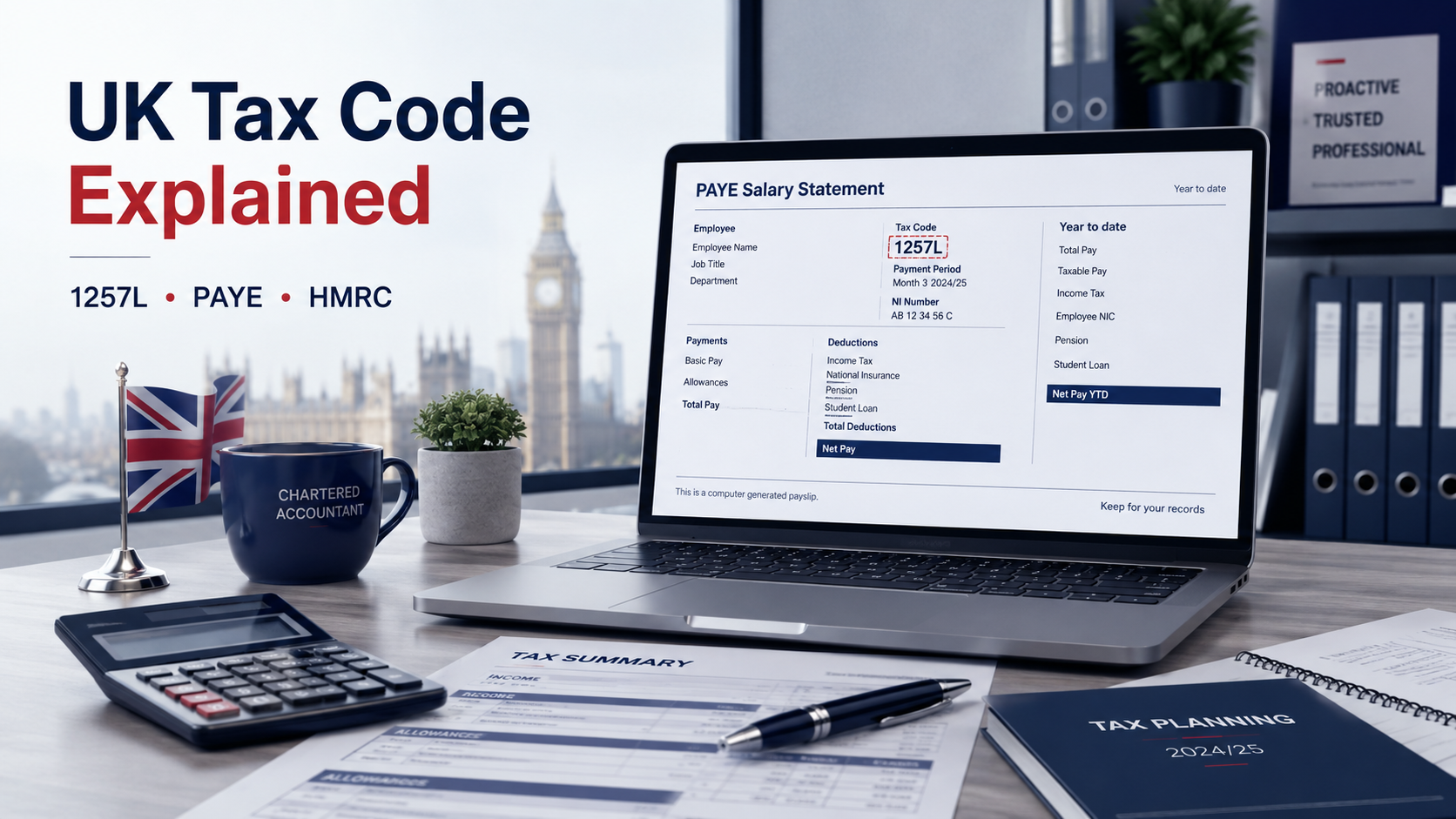
You’ve probably already seen a tax code on your payslip, but the numbers and letters may not mean much at first glance. An incorrect code can affect how much Income Tax your employer deducts, so it is worth understanding what yours means. In this guide, we’ll explain UK PAYE codes, including 1257L, BR, D0, 0T and emergency codes, and show you how to check and correct yours.
Key Takeaways
- UK PAYE codes tell employers and pension providers how much Income Tax to deduct from your income.
- The numbers generally indicate the amount of tax-free income allocated to that source during the tax year.
- 1257L is the standard code used for most people with one job or pension and the standard Personal Allowance.
- Emergency codes such as 1257L W1, 1257L M1 and 1257L X can apply when HMRC does not yet have complete information.
- Incorrect coding can result in too much or too little Income Tax being deducted.
- HMRC’s online services let you review your code, income details and other information used in your PAYE calculation.
- PAYE refunds may be made through payroll when HMRC establishes that you have paid too much tax.
What Is a Tax Code in the UK?
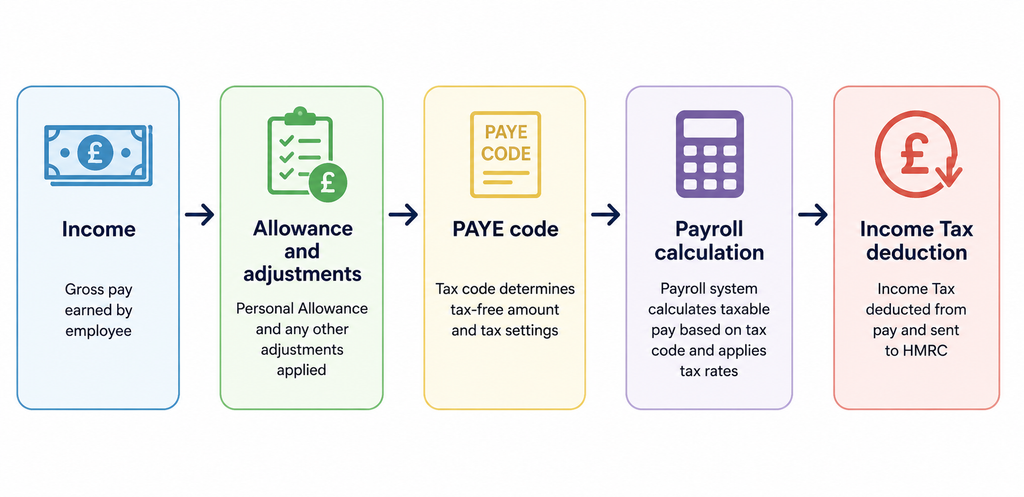
A tax code is a set of numbers and letters that HMRC uses to tell an employer or pension provider how much Income Tax to deduct from PAYE income. Your employer applies the code through payroll, while HMRC normally determines which code should be used.
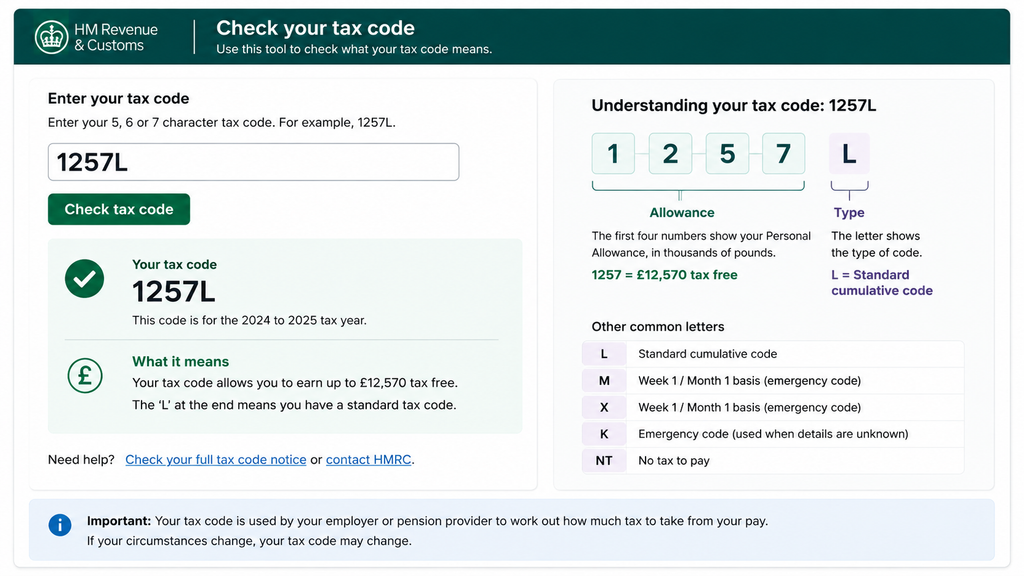
First, most standard codes contain a number followed by a letter, such as 1257L. The number relates to the tax-free income allocated through the code, while the letter indicates particular circumstances affecting the calculation.
For example, 1257L is currently used for most people who have one job or pension. It generally reflects the standard £12,570 Personal Allowance for the 2026/27 tax year.
Why Does Your Tax Code Matter?
A tax code matters because it affects how much Income Tax is deducted from your pay or pension throughout the tax year. A suitable code helps PAYE collect the expected amount without requiring unnecessary corrections later.
For example, someone who starts a second job may have their Personal Allowance allocated to their main employment, while the second source may use a different code.
Moreover, HMRC can change your code when your employment, income, pension, taxable benefits or other circumstances change. Starting a new job, receiving taxable benefits or beginning another pension can all affect the information used to calculate your code.
For 2026/27, the standard Personal Allowance is £12,570, with a PAYE threshold of £242 per week or £1,048 per month. — Source: HMRC, 2026
An incorrect code can therefore lead to overpayment or underpayment of Income Tax. Checking your information promptly can make it easier to correct an error before it becomes complicated.
How Does a UK Tax Code Work?
A PAYE code works by translating your available tax-free allowance and relevant adjustments into payroll instructions. Your employer then uses that information when calculating deductions from each payment.
What Does the Number in a Tax Code Mean?
The number in a standard code generally represents the amount of tax-free income available through that source during the tax year. HMRC normally works out the number by considering your Personal Allowance and then making relevant adjustments.
For example, HMRC explains that the number in 1257L can be multiplied by 10 to represent £12,570 of tax-free income. If an employee earns £27,000, the simple calculation would leave £14,430 before considering the applicable Income Tax rates.
However, the number does not always simply equal your Personal Allowance. Untaxed income, taxable benefits and other adjustments can reduce the amount represented by the code.
What Do the Letters in a Tax Code Mean?
The letters in a code indicate circumstances that affect how your PAYE income is taxed. Different letters can identify the standard Personal Allowance, Marriage Allowance transfers, Scottish taxation, Welsh taxation and other situations.
For example, L indicates entitlement to the standard Personal Allowance, while M means you have received a transfer of 10% of your partner’s Personal Allowance through Marriage Allowance.
Similarly, N indicates that you have transferred 10% of your Personal Allowance to your partner. A T code means HMRC has included other calculations when working out your Personal Allowance.
What Does 1257L Mean?
The 1257L code normally means that the standard £12,570 Personal Allowance is available through that PAYE source. HMRC says it is currently used for most people who have one job or pension.
First, the 1257 represents £12,570 of tax-free income under the standard allowance. The L indicates entitlement to the standard Personal Allowance.
For 2026/27, the standard Personal Allowance is £12,570 throughout the UK.
However, 1257L is not automatically correct for every taxpayer. Multiple jobs, taxable benefits, untaxed income, pension income or other adjustments can result in a different code.
Which PAYE Codes Are Most Common?
The most common PAYE codes include 1257L, BR, D0, D1, 0T and K codes, with other letters used for specific circumstances. HMRC publishes separate explanations for these codes because each one can produce a different PAYE calculation.
| Code | What it generally means | Example situation |
|---|---|---|
| 1257L | Standard Personal Allowance | One main job or pension |
| BR | Basic-rate tax on all income from that source | Second job or pension |
| D0 | Higher-rate tax on all income from that source | Additional employment or pension |
| D1 | Additional-rate tax on all income from that source | Higher overall taxable income |
| 0T | No Personal Allowance available | Allowance used or insufficient information |
| K code | Taxable deductions exceed available allowance | Benefits or other taxable income |
| M | Marriage Allowance received | Partner transferred part of allowance |
| N | Marriage Allowance transferred | You transferred part of your allowance |
| T | Other calculations affect allowance | HMRC needs additional calculations |
What Does BR Mean?
A BR code means all income from that particular employment or pension is normally taxed at the basic rate. HMRC commonly uses BR where someone has more than one job or pension and their Personal Allowance is being used elsewhere.
For example, you could have 1257L against your main employment and BR against a second job. The second job would then have Income Tax deducted at the basic rate rather than receiving another Personal Allowance.
For 2026/27, the basic Income Tax rate in England and Northern Ireland is 20%.
What Does D0 Mean?
A D0 code means all income from that particular job or pension is taxed at the higher rate. It can be used where an additional source of income falls into the higher-rate tax position.
For example, someone with substantial income from a main employment may have D0 applied to another taxable employment or pension.
What Does D1 Mean?
A D1 code means all income from that particular job or pension is taxed at the additional rate. It is generally relevant where the individual’s overall circumstances put that income into the additional-rate band.
For 2026/27, the additional Income Tax rate in England and Northern Ireland is 45% above £125,140 of taxable income.
What Does 0T Mean?
A 0T code means no Personal Allowance is available through that source. HMRC may use it where the allowance has been used elsewhere or there is insufficient information to give the employer another code.
For example, a new employee whose previous income details are unavailable may temporarily receive a 0T code depending on the circumstances.
What Is a K Code?
A K code applies when taxable deductions affecting your PAYE calculation are greater than your available tax-free allowance. This can happen because of taxable benefits, State Pension income or tax that needs to be collected through PAYE.
For example, a K code can effectively add an amount to taxable pay for PAYE purposes rather than giving you a tax-free allowance.
What Is an Emergency Tax Code?
An emergency tax code is a temporary code used when HMRC or an employer does not yet have all the information needed for the normal PAYE calculation. Current emergency codes can end in W1, M1 or X, and a payslip can also show NONCUM.
For example, a new employee who does not have their previous employment information may initially receive 1257L M1 if paid monthly.
The key difference is that emergency taxation normally calculates PAYE using the current pay period rather than the accumulated position for the tax year. This can temporarily result in too much or too little tax being deducted.
HMRC’s emergency codes for 2026/27 are 1257L W1, 1257L M1 and 1257L X.
If you have recently changed jobs, providing your P45 to your new employer can help HMRC obtain the information needed to establish the correct position. HMRC says it can take up to 35 days from starting a job for the code to be updated when the necessary information is received.
How Can You Check Your Code With HMRC?
You can check your PAYE code through HMRC’s online Income Tax service, the HMRC app, your payslip or your tax-code notice. HMRC’s official checker can also explain what the numbers and letters mean and help identify information that needs updating.
First, find the code on your latest payslip. Next, compare it with the code shown in your HMRC records.
Then review the information HMRC holds about your:
- Current employment
- Previous employment
- Estimated annual income
- Pension income
- Company benefits
- Personal Allowance
- Other taxable income
For example, if an old employer still appears as an active employment, your PAYE information may need updating.
Why Has HMRC Changed Your Code?
HMRC can change your PAYE code when new information indicates that a different amount of tax should be collected. Changes can happen after employment, pension, benefit or income information is updated.
For example, HMRC lists starting a new job, receiving taxable State benefits, getting income from another job or pension, receiving taxable employment benefits and claiming Marriage Allowance among circumstances that can affect coding.
Moreover, HMRC may change the code if it believes you have previously paid too little tax and needs to collect the amount through PAYE.
A change does not automatically mean something has gone wrong. The important step is to check the reason for the change and confirm that HMRC’s underlying information is accurate.
How Do You Know If Your Code Is Wrong?
Your code may be wrong if the employment, income, pension or benefit information used by HMRC does not match your actual circumstances. Comparing your payslip with your HMRC records is a practical first check.
First, check whether your current employer is listed correctly. Next, check your estimated income and any pension or taxable benefit information.
For example, if you left an old job months ago but HMRC still shows income from that employer, the information may need correcting.
Also check your P45, P60 and recent payslips. These documents can help you identify differences between your actual income and the information used for PAYE.
How Can You Correct an Incorrect Code?
You can correct an incorrect PAYE code by updating inaccurate information with HMRC and making sure your employer has the correct details. HMRC’s tax-code service allows you to review information and make certain updates online.
Use this process:
- Check the code on your latest payslip.
- Sign in to HMRC and review your employment and income information.
- Correct outdated details where the online service allows you to do so.
- Give your P45 to your new employer if you have recently changed jobs.
- Check your next payslip after the revised code has been issued.
- Contact HMRC if the information cannot be corrected online.
For more complicated circumstances, professional guidance can help you determine whether the problem relates to PAYE, another source of income or a wider personal tax position.
Can an Incorrect Code Give You a Tax Refund?
An incorrect PAYE code can result in a tax refund when HMRC determines that you have paid more Income Tax than you should have. HMRC can calculate the difference and ask your employer or pension provider to return it through payroll when the necessary information is available.
For example, if HMRC corrects your code during the tax year and has enough information about your income, the overpayment can normally be reflected in a later payslip.
HMRC says that when a revised code is received, a monthly-paid employee should generally see the adjustment in their next or following pay, while a weekly-paid employee should generally see it by their third pay.
However, a refund cannot normally be calculated until HMRC has the income information it needs. If you have changed jobs, your P45 can help provide relevant details.
What Tools Can You Use to Check Your PAYE Details?
HMRC’s official tax-code checker can explain your code, estimate your Income Tax position and identify information that may need updating. The tool was updated for the 2026/27 tax year.
You can use several resources:
- HMRC tax-code checker — Understand the numbers and letters and review deductions.
- HMRC Income Tax service — Review your current tax information.
- HMRC app — Access your tax information digitally.
- Payslip — Confirm the code actually being used by your employer.
- P45 and P60 — Check employment income and tax already deducted.
The official HMRC tax code checker requires information such as your code, annual income, company benefits and State Pension amount.
What Should You Do Next?
The best next step is to compare the code on your latest payslip with the information HMRC holds about your income and employment. This simple review can help you spot errors before they create a larger adjustment.
Use this checklist:
- Find the code on your latest payslip.
- Compare it with HMRC’s online records.
- Check your current and previous employers.
- Review your estimated annual income.
- Check pension and taxable benefit information.
- Look for W1, M1, X or NONCUM if you have recently started a job.
- Keep your P45, P60 and payslips.
- Update incorrect information with HMRC.
- Check a later payslip after a coding change.
- Seek professional advice if your circumstances are complicated.
Additionally, review your PAYE information whenever you start or leave a job, receive a pension, take another job or experience a significant change in income. HMRC specifically identifies these types of changes as reasons your code may need to be updated.
If you have income that is not fully dealt with through PAYE, you may also need to consider.
Conclusion
A UK PAYE code tells your employer or pension provider how much Income Tax to deduct from your income, making it an important part of the PAYE system.
The numbers generally relate to tax-free income, while the letters indicate circumstances that affect your calculation. 1257L is currently the standard code for most people with one job or pension, but other codes such as BR, D0, D1, 0T and K can apply in different circumstances.
Emergency codes such as 1257L W1, 1257L M1 and 1257L X can be temporary, particularly after starting a new job when HMRC does not yet have complete information.
Finally, checking your code is straightforward: find it on your payslip, compare it with HMRC’s records and correct any inaccurate information. If you have paid too much tax because of an incorrect code, HMRC may arrange a refund through your payroll once it has the information needed to calculate the adjustment.
Written by ASK Accountants UK Ltd — Chartered Certified Accountants providing UK tax and accounting support to individuals, sole traders, company directors and businesses.
Reviewed by ASK Accountants UK Ltd Tax & Accounting Review Team — UK company accounts, Corporation Tax and compliance specialists.
Disclaimer: This article was initially drafted using AI assistance. However, the content has undergone thorough revisions, editing, and fact-checking by human editors and subject matter experts to ensure accuracy.