
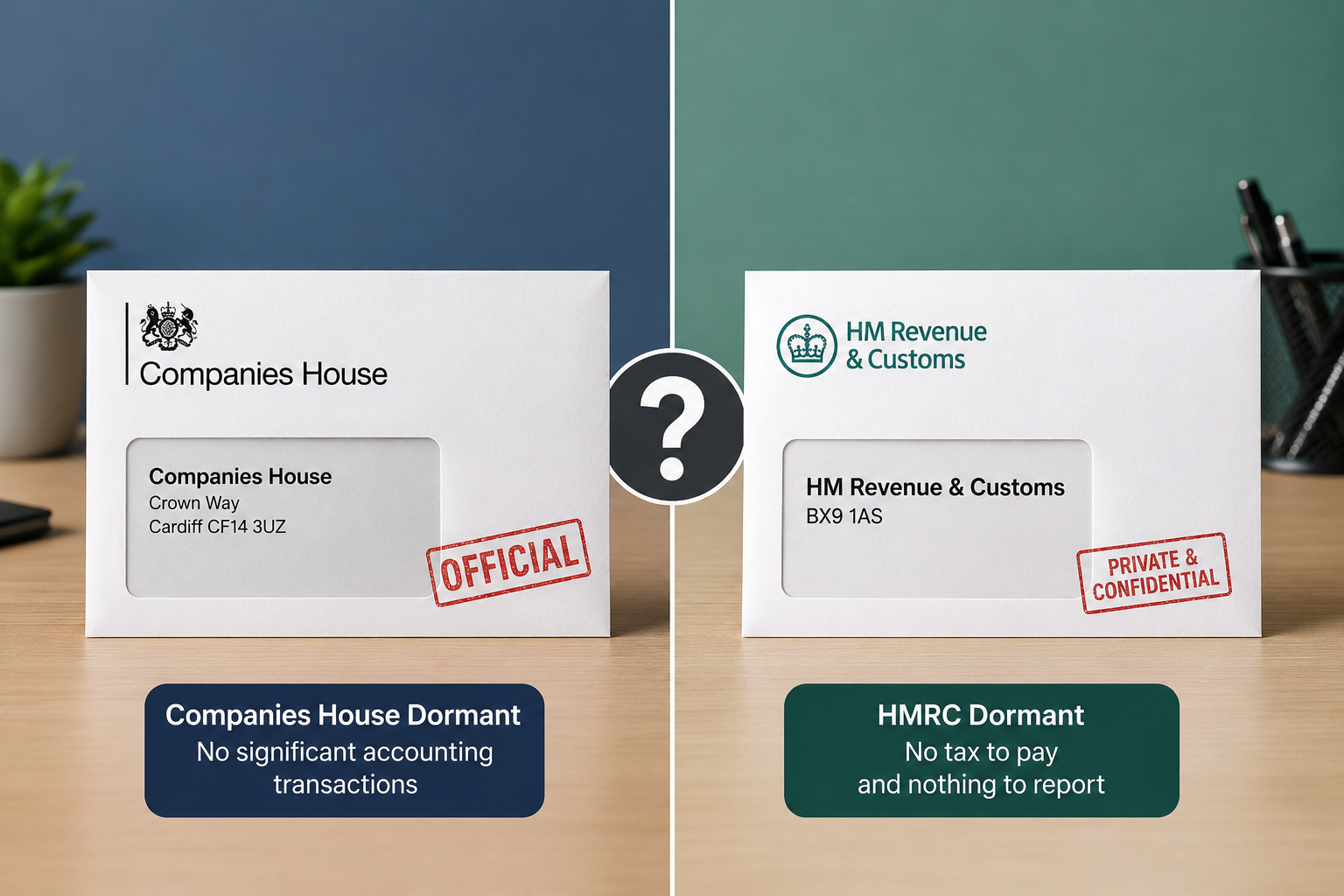
Somewhere in London right now, a director is staring at a Companies House email with the subject line “Accounts overdue” and thinking: but my company hasn’t done anything. That’s the trap. Dormant company accounts exist precisely for businesses that haven’t traded — and yet the filing obligation doesn’t care that nothing happened. Companies House still wants paperwork. Every year. Without fail. If you’ve formed a limited company and parked it, or you’ve wound trading down but kept the entity alive “just in case,” dormant company accounts are the thing standing between you and a penalty notice you didn’t see coming.
I’ve lost count of how many directors assume dormancy means invisibility. It doesn’t. It means simplified reporting, not optional reporting — and that distinction trips people up constantly.
So What Actually Makes a Company “Dormant”?
Companies House has a specific, slightly pedantic definition: a company is dormant if it’s had no “significant accounting transactions” during its financial year. Not no activity whatsoever — significant accounting transactions, a term with real legal weight behind it.
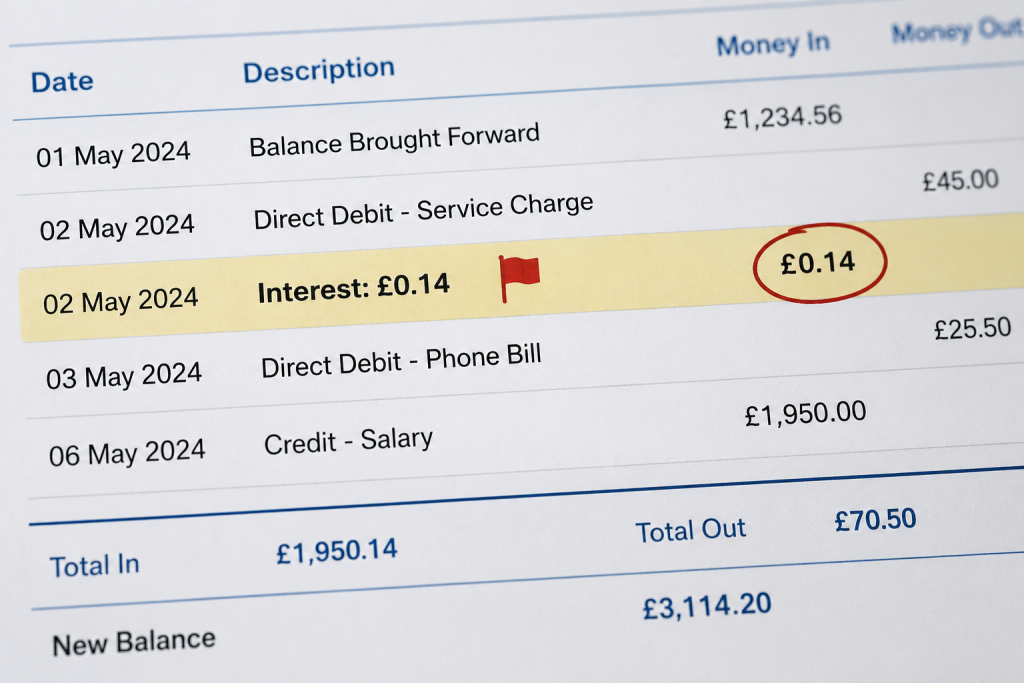
What counts? Pretty much anything that would need entering into the accounting records: sales, purchases, wages, bank interest earned, even a subscription payment ticking through the account. What doesn’t count is narrower than you’d think — filing fees paid to Companies House, and the money received for shares taken by subscribers when the company was first set up, are specifically excluded.
Here’s the bit that catches people out constantly: a bank account earning a few pence of interest a month can technically end your dormant status. Yes, really. A handful of pence. If HMRC or Companies House ever queries it, “but it was only £1.40 in interest” won’t save you — the transaction still needs recording, which means it’s no longer nothing, which means dormant company accounts may not be the right filing after all.
Quick warning, before you skim past it: if your “dormant” company’s bank account has racked up interest, don’t just assume you’re fine. Check it. It’s a five-minute job that avoids a much longer conversation with HMRC later.
Why Bother Keeping a Non-Trading Company Alive?
Fair question. Plenty of reasons, actually:
- You’ve registered a name to stop a competitor grabbing it
- You’re between ventures and don’t want to lose the company number, VAT history, or trading history
- A subsidiary exists on paper for group structure reasons but does nothing operationally
- You paused trading — illness, a career pivot, a slow year — and plan to restart
None of these situations require you to trade. All of them require dormant company accounts to be filed anyway. Companies House doesn’t distinguish between “dormant on purpose” and “dormant because life happened.”
The Filing Deadline Nobody Reads Until It’s Nearly Missed
Your Accounting Reference Date (ARD) governs everything. It’s the anniversary of the last day of the month your company was incorporated, and it marks the end of your financial year. From there:
- First set of accounts: due 21 months after incorporation
- Every year after: due 9 months after your ARD
Miss it, and the penalties are automatic — there’s no human deciding whether to be lenient. Late filing penalties start small and escalate the longer you leave it, and they double if you’re late two years in a row. Persistent non-filing can eventually lead Companies House to strike the company off the register entirely, which sounds convenient until you realise it can also freeze any assets or bank balance sitting in the company’s name.
| Filing Requirement | Who It Applies To | Standard Deadline |
|---|---|---|
| Dormant company accounts (form AA02) | Companies with no significant transactions | 9 months after ARD |
| Confirmation statement (CS01) | Every registered company, dormant or not | Once every 12 months, 14 days to file after the review period ends |
| Corporation Tax return | Only if HMRC hasn’t confirmed dormancy | 12 months after end of accounting period |
| Notifying HMRC of dormancy | All companies not trading | As soon as trading stops — no fixed deadline, but don’t dawdle |
Notice something: filing dormant company accounts with Companies House and telling HMRC your company is dormant are two separate jobs. Doing one doesn’t automatically do the other. This is the single most common mix-up I see, and it’s an easy one to fix — a quick email or online notification to HMRC once trading genuinely stops.

Companies House vs HMRC: Two Different Definitions, Same Word
This is where dormant company accounts get needlessly confusing, because the word “dormant” means slightly different things depending on who’s asking.
| Body | Definition of Dormant | What You Must Do |
|---|---|---|
| Companies House | No significant accounting transactions in the year | File simplified dormant company accounts (AA02) |
| HMRC | Not trading, not receiving income | Notify HMRC directly; no Corporation Tax return needed once confirmed |
| Confirmation statement | N/A — applies regardless of dormancy | Still file annually, no exceptions |
(Yes, that table’s a little untidy compared to the one above — deliberately so, because that’s roughly how these two definitions sit next to each other in real life: related, overlapping, never quite lined up.)
What Actually Goes Into Dormant Company Accounts
Nowhere near as much as full statutory accounts. A dormant filing (Companies House form AA02) typically needs:
- Company name and registration number
- The balance sheet date
- Called-up share capital not paid
- Cash at bank and in hand
- Net assets
- A director’s statement confirming exemption from audit under Section 480 of the Companies Act 2006
- A signature
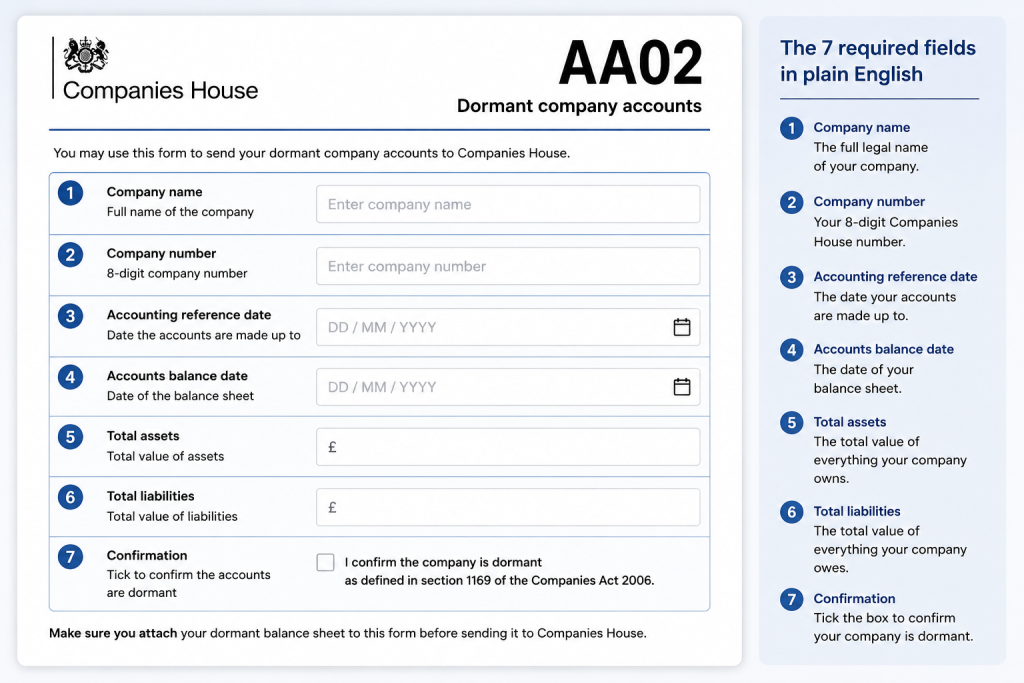
That’s genuinely most of it. No profit and loss account, because — by definition — there’s no profit or loss to report. It’s one of the reasons dormant company accounts feel almost anticlimactic to prepare once you know the drill, though the first time doing it can feel oddly nerve-wracking. (Directors tell us this constantly: “Is that really all it needs?” Yes. Really.)
The Software Filing Shift Worth Knowing About
Something’s changing that’s easy to miss if you’re not paying attention to Companies House announcements. The free joint filing service, which let some dormant companies submit accounts to Companies House and HMRC together at no cost, is being phased out — and from 1 April 2027, all companies, dormant ones included, will need to file accounts using approved commercial software rather than the old paper or basic web-portal routes. If you’ve been filing dormant company accounts manually or via WebFiling out of habit, it’s worth getting ahead of this rather than discovering it the week your accounts are due. For the practicalities of moving to digital-first bookkeeping generally (not just for dormant entities), our piece on why cloud accounting is the future of finance covers the shift in plainer terms.
Common Mistakes That Turn a Simple Filing Into a Headache
- Forgetting the confirmation statement. Dormancy has nothing to do with it — this one’s compulsory regardless.
- Assuming a closed bank account and a dormant one are the same thing. They’re not; an account can sit open and dormant simultaneously, provided nothing moves through it.
- Missing the HMRC notification entirely. Companies House accepting your dormant company accounts doesn’t tell HMRC anything. You have to do that separately.
- Letting two years slip by unfiled. Penalties don’t just repeat — they compound.
- Assuming a dormant subsidiary within a group automatically qualifies for exemption. Some do, under specific conditions; plenty don’t, and it needs checking rather than assuming.
If any of that sounds like it’s already happened to you, it’s genuinely fixable — Companies House would generally rather see a late filing than no filing at all, and getting proper business advice early tends to be far cheaper than untangling a strike-off later.
When Dormant Stops Being the Right Answer
Sometimes a company that’s technically still dormant on paper has, in practice, quietly started doing things — a director’s taken a small consultancy payment through it, or stock’s been bought ready for a launch that then stalled. The moment that happens, dormant company accounts are no longer appropriate, and you’ll need proper small business accounting services instead, along with a Corporation Tax return. This is also usually the point where working out the cost of an accountant for a limited company becomes a genuinely useful thing to know, rather than an abstract question for “someday.”
For companies edging closer to trading again, it’s worth reading up on corporate tax return deadlines before that first invoice goes out, and on how to reduce Corporation Tax legally once income actually starts flowing.
Where This Gets Genuinely Fiddly
Group structures. Subsidiaries. Companies with slightly-more-than-nothing going on. This is where the line between “still dormant” and “should be filing properly” gets blurry enough that guessing wrong is expensive. We handle dormant company accounts alongside the fuller picture — accounts and tax, bookkeeping, company secretarial work, and the CIS side for anyone in construction who’s paused trading but still needs refunds sorted. If your situation doesn’t map neatly onto “definitely dormant” or “definitely trading,” that’s usually worth a proper conversation rather than a guess, and it’s exactly the kind of thing Ask Accountants UK Ltd gets asked fairly often from the office on Merton High Street.
Frequently Asked Questions
Do all dormant companies need to file dormant company accounts? Yes. Every company registered at Companies House must file annual accounts, dormant or not. Dormancy simplifies what’s required; it doesn’t remove the requirement.
Can a dormant company still have a bank account? Yes, provided absolutely nothing moves through it — no interest, no charges, no deposits. The moment something does, dormant status is at risk.
What happens if I miss the deadline for dormant company accounts? Automatic financial penalties apply, increasing the longer the delay continues, and they double for a second consecutive late filing. Persistent failure can lead to the company being struck off.
Is filing dormant company accounts the same as telling HMRC I’m dormant? No. They’re separate processes with separate bodies. You need to do both.
Can I file dormant company accounts myself? Technically, yes, via Companies House WebFiling or approved software. Practically, given the 2027 software-only shift and the ease of accidentally breaking dormant status, many directors find it simpler to have it checked professionally.
How long can a company legally stay dormant? There’s no time limit. Companies have remained dormant for years, even decades, as long as accounts and confirmation statements keep being filed on schedule.