

Let’s be honest. For most people, the 2025/26 self assessment tax return lands somewhere between “root canal” and “sorting out the garden shed” on the list of things they’d cheerfully put off indefinitely. And yet, every January, millions of people in the UK find themselves hunched over a laptop at 11pm on the 31st, wondering why they didn’t just do this in October.
There’s a better way. Not a dramatically life-changing, podcast-worthy better way — just a quieter, less stressful one that keeps HMRC off your back and your bank account intact. This guide lays out every key date for the 2025/26 tax year, what you’ll actually need to gather, and a few things that catch people out every single time. Whether you’re a sole trader, a landlord collecting rent from a buy-to-let, or someone who received income outside of PAYE last year, this is the reading you probably should have done three months ago.
Who Actually Needs to File a 2025/26 Self Assessment Return?
More people than think they do, frankly. HMRC’s threshold for self assessment catches a surprisingly wide net. You’ll need to file a 2025/26 self assessment tax return if any of the following applied to you during the tax year running 6 April 2025 to 5 April 2026:
- You were self-employed and earned more than £1,000 (the trading allowance)
- You received rental income from a property
- Your total income exceeded £100,000
- You (or your partner) received Child Benefit and one of you earned over £60,000 — yes, the threshold changed in April 2024
- You earned taxable income from savings, investments or dividends above the relevant allowances
- You received income from abroad
- You’re a partner in a business partnership
- You had capital gains from selling assets (shares, property, etc.)
- You’re a company director with untaxed income
That Child Benefit one still catches people out. The High Income Child Benefit Charge threshold shifted from £50,000 to £60,000 back in April 2024, which means some people who were previously filing no longer need to — but equally, plenty are still unaware they ever needed to start.
The Dates That Actually Matter (Don’t Screenshot and Forget These)
There are really five dates worth knowing cold. Everything else is noise.
| Date | What Happens | Who It Affects |
|---|---|---|
| 5 April 2026 | End of the 2025/26 tax year | Everyone |
| 6 April 2026 | New tax year begins; HMRC self assessment portal opens for 2025/26 returns | Everyone |
| 31 July 2026 | Second payment on account due (for those making advance payments) | Self assessment taxpayers with payments on account |
| 31 October 2026 | Deadline for paper self assessment tax returns | Anyone filing on paper |
| 31 January 2027 ⚡ | Online return deadline AND balancing payment due | All self assessment taxpayers |
A word on the 5 October 2026 date that didn’t make the table above — if this is your first time filing a 2025/26 self assessment tax return and you haven’t registered with HMRC yet, that’s your registration deadline. Miss it, and you’re already on the back foot before you’ve typed a single figure.
Payments on Account: The Thing That Blindsides First-Timers
Payments on account are probably the single biggest shock for people filing self assessment for the first time. Here’s the short version: if your tax bill exceeds £1,000 (and you don’t already pay more than 80% of your tax at source via PAYE), HMRC expects you to pre-pay half of next year’s estimated bill in January, and the other half the following July.
So when you sit down to pay your January tax bill, you might find yourself paying not just what you owe for 2025/26 — but also an additional 50% on top as the first instalment toward 2026/27. It’s not a penalty or a mistake. It’s just how the system works. And it catches people catastrophically underprepared every year.
If your 2025/26 tax bill lands at £4,000, HMRC will ask for £6,000 in January — £4,000 owed, plus £2,000 as your first payment on account. That’s not a typo.
The Paper Mountain You’ll Need to Climb: What to Actually Gather
One reason people leave their 2025/26 self assessment tax return so late is that they tell themselves they’ll wait until they’ve “got everything.” Which is a lovely idea, except “everything” is a moving target that mysteriously keeps receding. Here’s a reasonably comprehensive list of what you’re actually likely to need, sorted by income type:
If You’re Self-Employed
- Total income (sales/fees received, not invoiced — cash basis matters here)
- Business expenses: mileage, equipment, software subscriptions, professional fees, home office costs
- Your Unique Taxpayer Reference (UTR) — a 10-digit number HMRC sent when you registered
- National Insurance Class 2 and Class 4 figures (calculated automatically in the online return, but good to understand)
- Any COVID support grants received that weren’t already taxed
If You Have Rental Income
This is where things get genuinely complicated, especially if you’ve done any repairs, had void periods, or remortgaged. You’ll need:
- Total rental income received (all properties combined)
- Allowable expenses: mortgage interest (note: only basic rate relief applies for residential landlords now), letting agent fees, insurance, repairs and maintenance, service charges, ground rent
- Any wear and tear or replacement furniture costs
- Details of any property sold during the year if capital gains tax applies
Employment Income (Beyond Your Main Job)
- P60 from each employer
- P11D if you received any benefits in kind (company car, private medical etc.)
- P45 if you left a job during the year
Savings, Investments and Dividends
- Bank and building society interest statements (any interest above the Personal Savings Allowance — £500 for higher rate, £1,000 for basic rate — is taxable)
- Dividend income statements (the dividend allowance dropped to £500 in April 2024)
- ISA income doesn’t count — that stays tax-free
- Any pension income or lump sums received
Capital Gains: The Section Everyone Skips Until They Shouldn’t
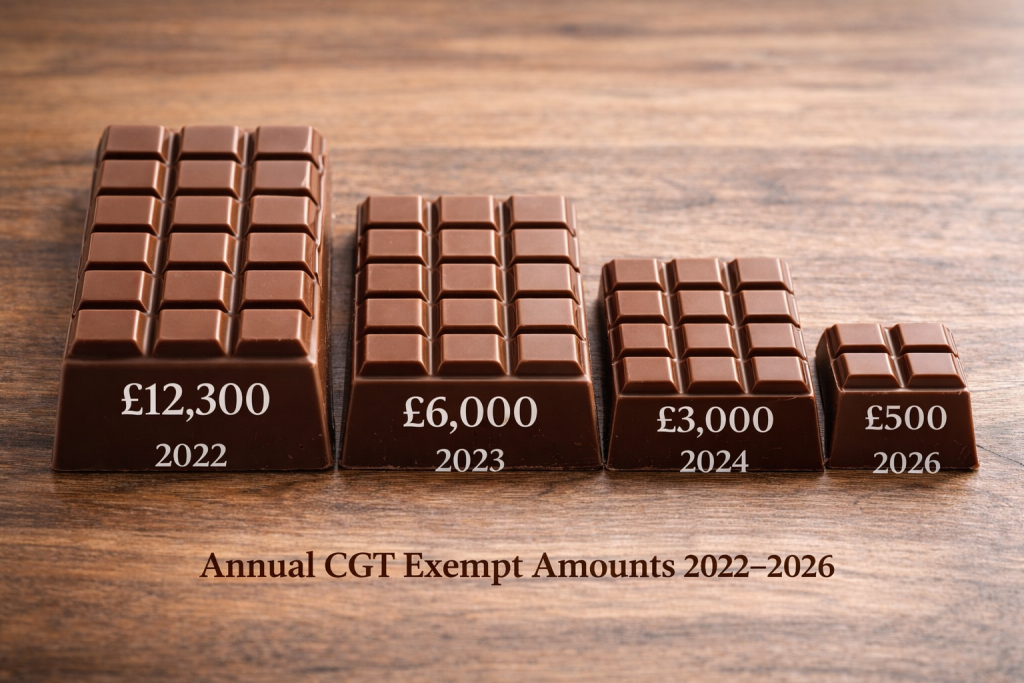
If you sold shares, a second property, or other chargeable assets between 6 April 2025 and 5 April 2026, capital gains tax (CGT) will need reporting on your 2025/26 self assessment tax return. The annual exempt amount — the slice of gains you can realise tax-free — has been steadily reduced in recent years. As of 2024/25 it stood at just £3,000, down from the £12,300 it was in 2022/23. Always worth checking the current figure directly with HMRC or an adviser, given the pace of changes.
One important distinction: if you sold a residential property (other than your main home) and made a gain, you were required to report and pay CGT within 60 days of completion — not just via self assessment. If you did this, the gain still needs to appear on your tax return, but the tax should already be partly paid.
Expenses You’re Probably Leaving on the Table
The single most common reason self-employed people overpay tax is failing to claim legitimate business expenses. Not through any dishonesty — just through not knowing what counts. A few that regularly go unclaimed:
| Expense Type | What You Can Claim | Common Mistake | Claimed Often? |
|---|---|---|---|
| Home Office | HMRC flat rate (£6/week) or calculated proportion of household costs | Claiming entire mortgage or rent (not allowed) | Rarely |
| Mileage | 45p/mile for first 10,000 business miles; 25p/mile after | Not keeping a mileage log | Sometimes |
| Professional Subscriptions | Trade association fees, professional memberships relevant to your work | Forgetting annual renewals paid by card | No |
| Training & CPD | Courses that update existing skills — not ones to acquire new skills | Claiming courses unrelated to current trade | Rarely |
| Phone & Broadband | Business proportion of usage | Claiming 100% of a personal phone contract | Sometimes |
| Accountancy Fees | Fully deductible — yes, you can claim the cost of getting help with this very return | Not claiming it at all | No |
That last one is genuinely underappreciated. The fee you pay an accountant to handle your self assessment tax return is itself a deductible business expense. So a portion of their fee effectively pays for itself.
What HMRC’s Penalties Actually Look Like (They’re Not Trivial)
People assume HMRC will be lenient if you’re a little late. Sometimes they are. But the automatic penalty structure for a late online return starts at £100 — even if you owe nothing. After that, it compounds:
- 3 months late: additional £10 per day, up to 90 days (that’s another £900)
- 6 months late: 5% of the tax owed, or £300 — whichever is greater
- 12 months late: another 5% or £300
And that’s before interest on unpaid tax, which HMRC charges at the Bank of England base rate plus 2.5%. There’s a reason advisers at firms like Ask Accountant recommend filing well before January — the closer you get to the deadline, the higher the risk of something going wrong at the last moment.
⚠️ Don’t make this mistake: Many people file their return on time but forget that payment is also due on 31 January. Filing and paying are two separate actions in HMRC’s system. You can receive a penalty for late payment even if your return was submitted perfectly on time.
Making Tax Digital and What It Means for This Cycle
Making Tax Digital for Income Tax Self Assessment (MTD for ITSA) has been a topic of conversation — and delay — for years. The current confirmed rollout timeline brings sole traders and landlords with income over £50,000 into MTD for ITSA from April 2026. Those earning over £30,000 follow in April 2027.
For the 2025/26 self assessment tax return, most people are still on the traditional annual return system. But if you’re in the higher-income bracket and not already thinking about MTD-compatible software, now’s the time. Quarterly digital updates to HMRC will replace the single annual return under the new system — a significant shift in how tax reporting actually works.
The team at Ask Accountant offer cloud accounting services specifically designed to ease that transition, which is worth exploring if you’re coming up on the threshold.
The Pension Angle People Miss
Pension contributions are one of the quieter tax-planning tools available through self assessment, and one of the most underused. If you made personal pension contributions during 2025/26, you can claim higher or additional rate tax relief through your return — relief that basic rate taxpayers get automatically through their pension provider but which higher earners have to actively claim.
The annual pension allowance — currently £60,000 for most people — also allows for “carry forward” of unused allowance from the previous three tax years. So if you had a particularly good income year and want to make a large lump sum contribution, there may be more room than you think. This is the kind of territory where personal tax planning advice pays for itself several times over.
A Realistic Timeline for Getting This Done Without Losing Your Mind
April–June: Pull together your records as they arrive — P60s, bank statements, invoices. Don’t wait. Set up a simple folder (digital or physical) and throw things in as they land.
July–September: Reconcile your figures. If you’re self-employed, check your bookkeeping. If you use accounting software, now’s the time to ensure everything is categorised and nothing’s fallen through the gaps, and if you rent property, gather your letting agent statements and any maintenance receipts from the year.
October: The paper return deadline (31 October) is a good psychological prompt to have everything ready, even if you’re filing online. Treat it as your own personal soft deadline. If you use an accountant, this is when they need your information to turn around the return before the January rush.
November–December: Review your draft return. Check that your expenses are complete. If you anticipate a large tax bill, check your cash flow — January arrives faster than it should.
31 January 2027: The hard deadline. Online submission and payment both due. File by midnight. Pay by midnight.
If This Is Your First Time: Registering for Self Assessment
New to self assessment? You can’t just go to HMRC’s portal and start filling things in — you need to register first, and registration takes time. HMRC recommends allowing 20 working days to receive your UTR by post after registration (though in practice it can take longer during busy periods).
For a new self-employed person, the registration deadline for the 2025/26 tax year is 5 October 2026. Go to HMRC’s website, sign in to your Government Gateway account (or create one), and follow the steps to register for self assessment. You’ll need your National Insurance number and some basic personal details.
If HMRC has sent you a notice to complete a return, you’re already registered — but you still need to file even if you think you don’t owe anything.
What Ask Accountant Can Do That Your Spreadsheet Can’t
There’s a particular type of taxpayer who convinces themselves that their affairs are simple enough to handle alone — right up until they discover their rental income interacts awkwardly with their PAYE code, or a one-off consultancy fee pushes them into the higher rate band, or they realise they could have been claiming relief on pension contributions for three years and didn’t.
The self assessment service at Ask Accountant — based at 178 Merton High St, London SW19 1AY — covers the full range of return types, from sole trader accounts and landlord income to capital gains reporting and CIS refund claims. Their personal tax planning approach means they’re not just filing numbers — they’re looking for things you might have missed.
If you want to talk through your 2025/26 self assessment situation before things get hectic, you can reach them on +44(0)20 8543 1991.
💡 Good to know: Ask Accountant also handles bookkeeping, business advice, and auto-enrolment — so if your tax return opens up wider questions about your business finances, you’re already in the right place.
Frequently Asked Questions About the 2025/26 Self Assessment Tax Return
What is the deadline for the 2025/26 self assessment tax return?
The online filing deadline for the 2025/26 self assessment tax return is 31 January 2027. If you prefer to submit a paper return, the earlier deadline of 31 October 2026 applies. Both dates also coincide with (or precede) payment deadlines, so missing them has financial consequences beyond just the return itself.
Do I need to register for self assessment if I’m new to it?
Yes. If you haven’t filed a self assessment return before, you need to register with HMRC by 5 October 2026 to file for the 2025/26 tax year. Registration happens through your Government Gateway account on the HMRC website, and you should expect to wait up to 20 working days for your UTR to arrive in the post.
What happens if I miss the self assessment deadline?
An immediate £100 penalty applies the moment you miss the 31 January 2027 online deadline — even if you owe no tax. Further daily penalties of £10 kick in after three months, and percentage-based surcharges apply at six and twelve months. Interest also accrues on any unpaid tax. The best outcome is to file on time, even if you can’t pay immediately — HMRC has payment arrangements available, but penalties for late filing are separate from late payment and both can apply simultaneously.
Can I file my 2025/26 self assessment tax return early?
Absolutely, and it’s often a good idea. The HMRC self assessment portal opens for 2025/26 returns on 6 April 2026 — the first day of the new tax year. Filing early means you know your tax bill sooner, can plan your cash flow, and avoid the January rush when HMRC’s helplines are busiest. There’s no advantage to waiting.
What income is included in a self assessment return?
The 2025/26 self assessment tax return covers all sources of income that weren’t fully taxed through PAYE: self-employment income, rental income, foreign income, dividends above the allowance, interest above the Personal Savings Allowance, capital gains, and other miscellaneous income. Employment income from a salaried job is typically included to reconcile tax already paid, and pension contributions or Gift Aid donations made during the year can reduce your final bill.
How does Making Tax Digital affect my 2025/26 tax return?
For most individuals, the 2025/26 self assessment tax return will still be filed through the traditional annual return process. MTD for Income Tax Self Assessment applies to those with income over £50,000 from April 2026 onward. However, if you’re approaching that threshold, it’s worth beginning to use MTD-compatible software now. See Ask Accountant’s cloud accounting page for more detail on making the switch.
What are payments on account?
Payments on account are advance payments toward your next year’s tax bill. If your self assessment tax liability exceeds £1,000 (and less than 80% was deducted at source), HMRC requires you to pay 50% of the current year’s bill as a deposit toward the following year — due in January with your main bill, and another 50% the following July. First-time filers are frequently blindsided by this; understanding it in advance makes the January payment far less shocking.
Start Early. Keep Your Receipts. Ask for Help When It Gets Complicated.
The 2025/26 self assessment tax return is, in the end, a piece of bureaucracy — but bureaucracy with teeth. File late, and it costs you money. Miss expenses, and it costs you more money. Treat it as an annual ritual to be dispatched efficiently rather than an ordeal to be avoided, and it genuinely does become manageable. The records you keep between now and April 2026 are what make the difference between a two-hour job and a January nightmare.
Start early. Keep your receipts. And if it’s getting complicated — or you just don’t want the hassle — professional help is a deductible expense. Always has been.