
Running a limited company in the UK is incredibly rewarding. It can also be incredibly stressful. You are juggling clients, managing cash flow, marketing your services, and trying to decipher complex tax legislation all at once. Sometimes you might need to take a short-term loan from your business to cover a personal emergency. This is where many company directors first encounter Section 455 tax.
If your accountant just mentioned this term, you might be feeling a bit panicked. A 33.75 percent tax charge sounds terrifying to any hardworking founder. Take a deep breath. We are here to help you understand exactly how Section 455 tax works. It is a highly specific rule designed to prevent directors from using company funds tax-free indefinitely. However, with careful planning and good advice, it is often entirely manageable.
In this comprehensive guide, we will break down the rules in plain English. We will cover the strict deadlines, the common pitfalls, and exactly how you can reclaim your money. Whether you are a local SME owner, a tech startup founder, or a property landlord, this guide will give you the clarity you need.

What Exactly is Section 455 Tax?
To understand this tax, you first need to understand the director’s loan account. When you take money out of your limited company that is not a processed salary, not a formal dividend, and not an allowable business expense, it is classed as a director’s loan. Your company is effectively lending you money.
HMRC created Section 455 tax to stop company owners from taking perpetual loans instead of taking a taxable salary or dividend. If your director’s loan account is overdrawn at the end of your company financial year, you might have to pay this tax. The current rate is 33.75 percent. This aligns exactly with the higher rate of dividend tax.
It is important to remember that this is a temporary tax. It acts more like a security deposit held by HMRC. Once you eventually repay the loan to your company, or if the company formally writes off the loan, you can claim the tax back. The repayment from HMRC usually happens nine months and one day after the end of the accounting period in which you cleared the loan. This means you could be waiting a very long time to get your cash back. Managing your cash flow proactively is absolutely vital here.
The Core Rules and Deadlines for Section 455 Tax
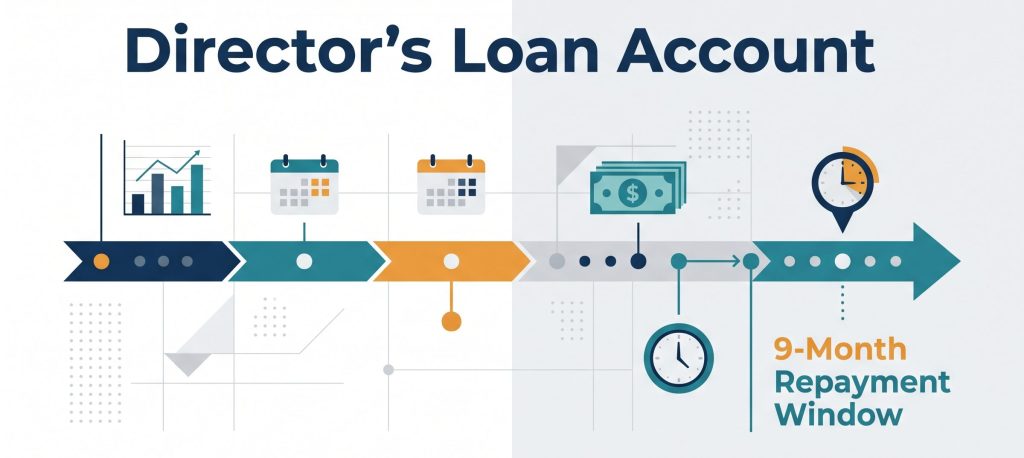
Let us look closely at the timeline. You do not have to pay the tax the very second your account becomes overdrawn. HMRC gives you a helpful grace period. You have nine months and one day after your company accounting period ends to repay the loan in full.
If you repay the entire amount within this nine-month window, you will not owe any Section 455 tax at all. If you do not repay it, the tax becomes due alongside your normal corporation tax payment. Expert corporate tax planning can help you navigate this window efficiently.
Reclaiming Section 455 tax is not an automatic process. You have to actively request it from HMRC. You can do this by completing form L2P if your corporation tax return has already been filed for that period. If you are claiming it back while filing your current return, your accountant will include it directly in the calculations. This administrative process can be quite tedious and slow. It is always better to avoid the charge in the first place if possible. Working closely with a professional can reduce administrative burden and help improve accuracy across all your statutory filings.
Common Errors and Record-Keeping Risks with Section 455 Tax
Business owners often make innocent mistakes that lead to unexpected tax bills. Running a business is distracting. It is easy to let financial administration slip. Here are three common errors you should watch out for to maintain perfect HMRC compliance.
1. The Bed and Breakfasting Trap
Some directors think they can outsmart the system. They repay their loan just before the nine-month deadline to avoid Section 455 tax. Then they immediately withdraw the money again a few days later to pay for personal items. HMRC is very aware of this tactic. They introduced strict rules to stop it.
If you repay a loan of more than £5,000 and take out another loan of £5,000 or more within 30 days, the repayment is basically ignored for tax purposes. The original tax charge will still apply. You must navigate these rules carefully. Attempting a quick workaround usually results in an unwelcome letter from the tax authorities.
2. Misunderstanding Limited Company Expenses
Many directors accidentally overdraw their loan accounts by putting personal expenses through the business account. It is incredibly easy to accidentally use the wrong debit card when buying lunch or paying a personal utility bill. When your bookkeeper reconciles the accounts, these personal items are correctly allocated to your director’s loan account.
Over a full year, small personal purchases can add up to a heavily overdrawn account. Please remember that the rules around business entertainment and company vehicles are highly nuanced. There are specific exceptions and partial recovery rules. You should always seek specific advice before assuming an expense is fully deductible. Treating company money as a personal wallet is the fastest way to trigger a large tax bill.
3. Missing the Corporation Tax Return Deadlines
If you owe Section 455 tax, it must be accurately reported on your CT600 corporation tax return. Missing your filing or payment deadlines is a significant risk for any business. If you pay late, HMRC late-payment interest begins accruing on day one. For other types of tax compliance, first penalties usually arise at day 15 and increase at day 30. While we do not want to use alarmist language, it is a factual reality that ignoring deadlines costs your business money. Accurate reporting helps mitigate the risk of errors and keeps your company in great standing.

The Benefit in Kind Complication
There is another layer of complexity to consider. If your director’s loan account is overdrawn by more than £10,000 at any point in the tax year, another set of rules kicks in. HMRC treats this large loan as an employment benefit. This is widely known as a Benefit in Kind.
Your company must report this on a P11D form. You will also have to pay personal income tax on the official rate of interest set by HMRC. Furthermore, the company must pay Class 1A National Insurance on the benefit. This is entirely separate from Section 455 tax but equally important to monitor. Managing this effectively prevents nasty surprises in July when P11D forms are due.
How to Manage Section 455 Tax: A Step-by-Step Workflow
You can take total control of your financial position by following a clear routine. Here is a practical checklist to help you manage your director’s loan account effectively throughout the year.
- Step 1: Separate Business and Personal Finances Completely Stop using the company bank account for personal purchases today. If you need money, declare a formal dividend or run a bonus through payroll. Keeping your transactions clean makes everything easier for you and your accountant.
- Step 2: Monitor Your Balance Monthly Do not wait until the end of the financial year to check your director’s loan account. Look at your balance every single month. Utilizing cloud accounting software makes this incredibly simple. If you see the balance creeping up into the red, you can take action immediately before it crosses the £10,000 threshold.
- Step 3: Plan Your Repayments Proactively If you are overdrawn at the year-end, mark the nine-month deadline clearly on your calendar. Work out exactly how you will clear the balance. You might choose to pay personal cash back into the business bank account. Alternatively, you could declare a formal dividend if your company has sufficient retained profits. The dividend is then credited directly to your loan account to clear the debt.
- Step 4: Consult Your Accountant Early Speak to your accounting team at least two months before your company year-end. This gives you plenty of time to declare dividends or run a bonus through payroll before the accounting period closes. Proactive tax planning is always cheaper and less stressful than reactive tax fixing. Check out our bookkeeping service to see how we can keep your records flawless all year round.
Why Outsourcing Your Tax Compliance is a Smart Investment
Dealing with complex HMRC legislation takes precious time away from growing your business. You are an expert in your specific industry. You should not have to become an expert in corporate taxation just to survive. Outsourcing your financial management to a professional is a very smart business move.
Working with a qualified accountant helps improve accuracy across your entire enterprise. We stay updated on every minor change in tax law so you do not have to. When you let us handle your corporation tax return and monitor your director’s loan account, you can sleep much better at night. We will make sure everything is filed correctly. We will alert you well before any payment deadlines approach.
Most VAT-registered businesses must comply with strict digital rules anyway. Letting an expert manage your digital records ensures everything flows perfectly into your year-end tax returns. You gain peace of mind and win back hours of your week.
How ASK Accountants UK Ltd Can Help You
At ASK Accountants UK Ltd, we deeply understand the daily pressures of running a business. We have spent 15 years helping SMEs, startup founders, and landlords in Wimbledon and South-West London achieve complete financial clarity. We know exactly how to handle Section 455 tax efficiently and painlessly.
Our team will review your accounts, advise you on the most tax-efficient ways to extract money from your company, and ensure your reporting is spotless. We do not just crunch numbers in the background. We provide strategic, human-led advice to help your business thrive in a tough economy.
If you are worried about an overdrawn loan account or just need a highly proactive accountant in your corner, please reach out to us today.
- Call our friendly team: 020 8543 1991
- Visit our office: 178 Merton High St, London
- Book online: Visit our contact page to schedule a free consultation.
Frequently Asked Questions About Section 455 Tax
Does Section 455 tax apply to sole traders? No. This specific tax only applies to “close companies” which are typically limited companies controlled by five or fewer participating directors. Sole traders and standard partnerships are taxed entirely differently because there is no legal separation between the individual owner and the business entity.
How do I get my Section 455 tax refunded? You must actively claim the refund from HMRC after you have fully repaid the director’s loan to your company. You can claim this via your company tax return if you are filing for the current year. If the return is already filed, you must submit form L2P. You can read more about this exact process on the official GOV.UK guidance on director’s loans. The refund is usually issued nine months and one day after the end of the accounting period in which the loan was formally repaid.
Can I just write off the director’s loan to avoid the tax? If the company formally writes off the loan, the Section 455 tax is indeed repayable to the company by HMRC. However, the amount written off is automatically treated as a deemed dividend for the director. You will have to declare this on your personal Self Assessment tax return. You will likely pay heavy personal income tax on that exact amount. It is rarely a tax-free solution. Always consult your accountant before writing off any corporate balances.