Running a business takes all your energy, focus, and time. Whether you are a stressed SME owner juggling clients, a startup founder trying to scale, or a busy landlord managing property accounting, your plate is already full. The last thing you want is a letter from Companies House or HMRC about missing deadlines. We understand that figuring out your Company annual return requirements can feel like learning a completely different language.
You did not start your business to spend your evenings buried in spreadsheets. However, staying on top of your statutory duties is vital for keeping your company in good standing. This guide will break down the rules, deadlines, and digital steps you need to know. We will cut through the complex jargon so you can get back to doing what you do best.
Understanding your Company annual return requirements in the UK
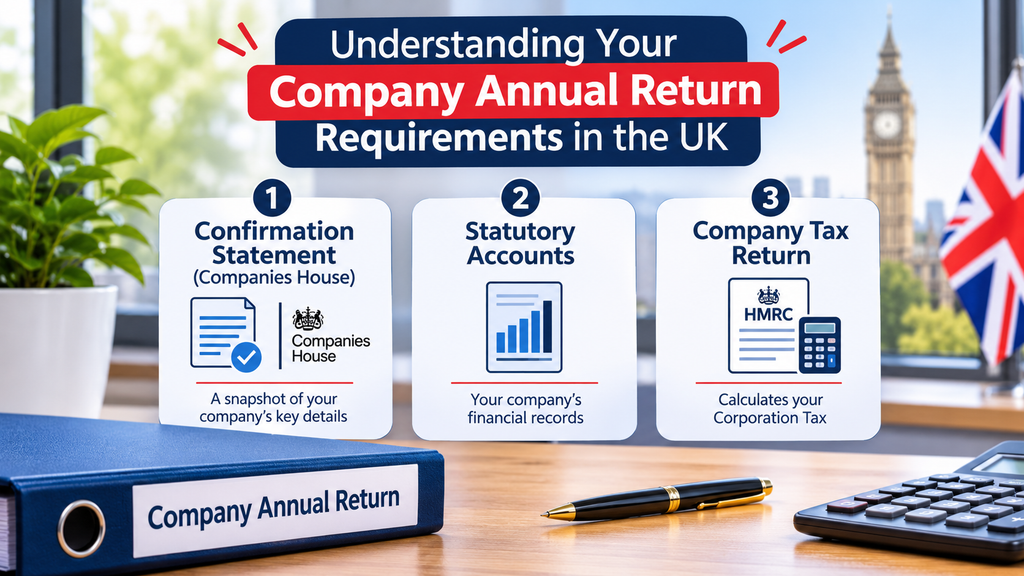
When people talk about these obligations, they often mix up a few different tasks. In the UK, the phrase typically covers three main areas of tax compliance that you must handle every year.
First, there is the confirmation statement rules at Companies House. This used to be officially called the annual return. It is a snapshot of general information about your company. It confirms your registered office address, details of your directors, and your shareholder structure.
Second, you have your UK statutory accounts filing. These are the formal financial performance records of your company. You must prepare them at the end of your financial year and send them to Companies House.
Third, you must submit a Company Tax Return to HMRC. This calculates how much Corporation Tax you owe based on the profits shown in your statutory accounts.
The shift to digital compliance
You also need to keep digital rules in mind. The government is pushing towards a fully digital tax system. For example, most VAT-registered businesses must now keep digital records and follow Making Tax Digital rules to submit their returns. There are limited exemptions to this rule for specific circumstances, but the vast majority of companies must comply. Preparing for these digital changes helps improve accuracy across all your financial reporting.
Key deadlines for Company annual return requirements
Missing deadlines is one of the biggest sources of stress for business owners. It also leads to unnecessary fines. Knowing your exact timeline is half the battle when managing your Company annual return requirements.
Your Companies House confirmation statement deadline is usually a year after your company was incorporated, or a year after the date you last filed the statement. You have 14 days after this review period to submit the form.
Your annual accounts deadline for Companies House is generally nine months after your company financial year ends. For example, if your financial year ends on 31 March, you must check your corporate tax return deadlines and file your accounts by 31 December.
Paying your Corporation Tax has a slightly different timeline. You usually need to pay this tax nine months and one day after your accounting period ends. It is vital to be punctual here. Late-payment interest begins on day 1. First penalties arise at day 15 and increase at day 30. We always advise setting calendar reminders well in advance to avoid these extra costs.
Balancing director responsibilities with Company annual return requirements
Taking on the role of a company director comes with specific legal duties. Your director responsibilities mean you are personally accountable for ensuring the company maintains accurate records. You cannot simply hand a box of receipts to an accountant at the end of the year and hope for the best.
Also, you must keep records of all money received and spent by the company. You also need records of assets owned and debts owed. Using cloud-based software like Xero or QuickBooks can reduce administrative burden significantly. These platforms link directly to your bank account and make it much easier to track everything in real time.
Common errors and record-keeping risks
Even the most careful business owners can slip up when managing their books. When you are rushing to meet deadlines, mistakes happen. We want to highlight a few common errors and record-keeping risks so you can proactively avoid them.
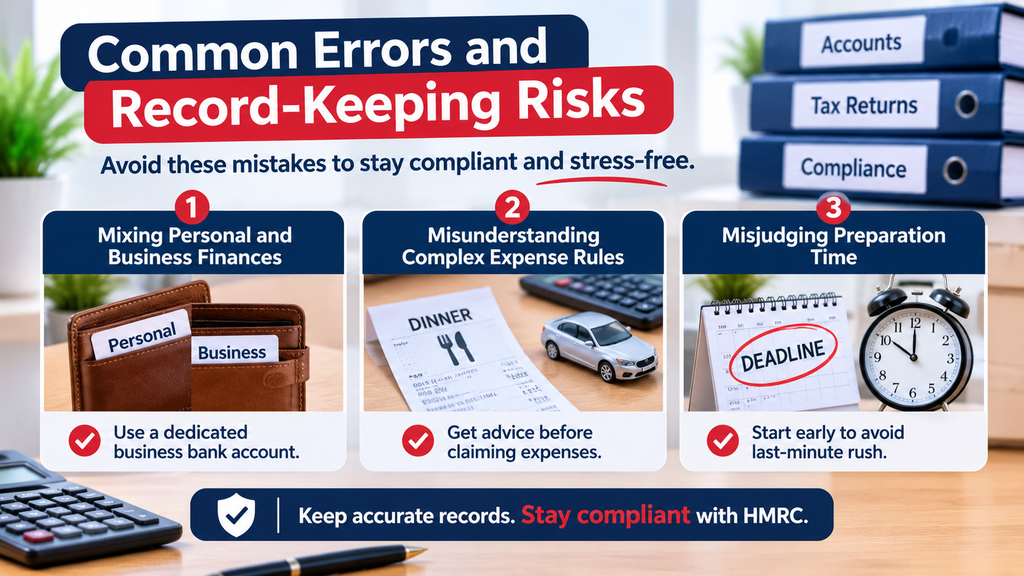
1. Mixing personal and business finances
It is incredibly common for new founders to pay for business items from a personal bank account. This creates a messy paper trail. It makes your UK statutory accounts filing much more difficult than it needs to be. Always use a dedicated business bank account for every single company transaction.
2. Misunderstanding complex expense rules
Many business owners assume they can claim back the cost of taking a client out to dinner or buying a car through the company. The rules around business entertainment and company vehicles are highly nuanced. There are strict exceptions and partial recovery rules that apply. You should always seek specific advice before assuming an expense is fully deductible for tax purposes.
3. Misjudging the time needed for preparation
Another major risk is leaving everything to the final week before your annual accounts deadline. Rushing leads to missed expenses, incorrect categorisation, and heightened stress. Starting early mitigates the risk of errors and gives you time to review your numbers properly.
A step-by-step workflow to manage your Company annual return requirements
Having a clear system in place takes the panic out of the filing season. Here is a practical workflow you can implement today to stay organised and meet your Company annual return requirements efficiently.
- Reconcile weekly: Dedicate twenty minutes every Friday to match your bank transactions in your accounting software.
- Snap and save receipts: Do not let paper receipts fade in your wallet. Use an app to take a photo and upload it directly to your cloud software immediately.
- Monitor director loan accounts: Keep a close eye on any money you borrow from or lend to the company. These balances must be reported accurately.
- Plan for your tax bill: Open a separate savings account. Transfer a percentage of your monthly income into this account to cover your future Corporation Tax payment.
- Schedule a pre-year-end review: Meet with a professional about two months before your financial year ends. This allows you to review your profit levels and plan efficiently.
- Gather documents early: As soon as your financial year ends, begin compiling your final bank statements, payroll summaries, and stock valuations.
Why outsourcing your Company annual return requirements is a smart investment
You wear many hats as a business owner. You are the head of sales, the marketing director, and the customer service manager. Adding amateur accountant to that list is rarely a good use of your time.
Outsourcing your financial compliance to a professional can reduce administrative burden immensely. A qualified accountant understands the subtle changes in legislation. They know how to format your UK statutory accounts filing correctly. Bringing in an expert helps improve accuracy and ensures you claim all the allowances you are entitled to.
Moreover, having a professional handle your Bookkeeping Service frees you up to focus on growth. You can spend your time winning new clients or improving your services instead of wrestling with tax forms at midnight. It is an investment in your peace of mind.
How ASK Accountants UK Ltd can help
At ASK Accountants UK Ltd, we take the stress out of compliance. Based in Wimbledon, we have 15 years of experience helping SMEs, startup founders, and landlords across South-West London thrive. We understand the local business landscape and the unique pressures you face every day.
Also, we do more than just crunch numbers. We work alongside you as trusted advisors. Whether you need help streamlining your daily bookkeeping, navigating your company secretarial work, or preparing your statutory accounts, we are here to support you. We explain your Company annual return requirements in plain English so you always know exactly where your business stands.
Are you ready to stop worrying about your financial paperwork? Let us handle the heavy lifting. Call us today on 020 8543 1991 or visit our office at 178 Merton High St. You can also reach out through our Contact Page to schedule a friendly consultation.

Frequently Asked Questions about Company annual return requirements
Is the annual return the exact same thing as annual accounts? No, they are different. The annual return (now officially the confirmation statement) verifies your company management and structure details. Annual accounts are the financial reports detailing your profit, loss, and balance sheet. You must complete both to satisfy your Company annual return requirements.
What happens if I miss my annual accounts deadline? Companies House applies late filing penalties automatically. These penalties start at £150 for being up to one month late and increase significantly the longer you delay. You can read the official GOV.UK guidance on penalties for full details.
Can I manage my Company annual return requirements by myself? Yes, it is possible to file everything yourself if your business is very small and simple. However, as your business grows, the tax laws become more complex. Working with an expert mitigates the risk of errors and saves you highly valuable time.