
Running a business in the UK is incredibly rewarding. It can also be incredibly exhausting. If you are a stressed SME owner, a startup founder looking to pivot, or a landlord restructuring a property portfolio, you might be considering pressing pause. Taking a break to reassess your strategy is a smart and completely normal business decision. However, achieving and maintaining Company dormant status is not as simple as locking your office door and walking away.
You have strict legal obligations to both Companies House and HMRC. Failing to meet these obligations can result in unnecessary stress and financial penalties. This guide will walk you through everything you need to know about putting your business to sleep the right way. We want to help you lift the administrative weight off your shoulders so you can focus on your next big move.

Understanding Company dormant status vs Active Trading
Before you can take a break, you need to understand the terminology. The legal definition of a dormant business depends entirely on who is asking. Companies House and HMRC have different rules. This is where many business owners get confused.
When you look at a dormant vs active company, the main difference lies in trading activity. An active company is carrying on business, buying goods, selling services, or earning interest. A dormant company is essentially frozen in time. It is a legal entity that exists on paper but is completely inactive in the real world.
To satisfy Companies House, your business must have no “significant accounting transactions” during the financial year. A significant accounting transaction is any transaction that the company should enter into its accounting records.
There are only a few very specific exceptions to this rule. You are allowed to pay fees to Companies House for changing your company name. You can pay penalties imposed by Companies House. You can also take money paid for shares when the company was first incorporated. If your business does anything else, it is no longer dormant.
Companies House Rules for Company dormant status
If you want to keep your company on the register without trading, you must follow the strict guidelines set by Companies House. A business in this state is still a registered corporate entity. This means the directors still have legal responsibilities.
First, you must file a confirmation statement every single year. This document confirms that the basic details of your company are up to date. It checks your registered office address, director details, and shareholder information. You must file this even if the company has not traded for years. You can read more about maintaining compliance on our dedicated tax compliance service page.
Second, you must file dormant company accounts annually. You cannot simply ignore your filing deadline just because you made no money. Fortunately, the process for filing these accounts is much simpler than filing full statutory accounts for an active trading business. Most companies that have never traded can use a form called the AA02. This form lets you report your status quickly. For a deeper dive into this specific filing, check out our complete UK guide to dormant company accounts.
Failing to file your annual accounts or your confirmation statement can lead to severe consequences. Companies House might assume your business is no longer needed and begin the process of striking it off the register. If your company is struck off, its assets become the property of the Crown.
Navigating the HMRC dormant company Rules
HMRC looks at dormancy through a different lens. While Companies House looks for accounting transactions, HMRC looks for tax liabilities. An HMRC dormant company is one that is not active for Corporation Tax purposes.
Your company is considered dormant for Corporation Tax if it has stopped trading and has no other income. For example, if you close your consultancy business but leave your company bank account open and it earns a few pounds in interest, HMRC will consider your company active. You would technically need to pay Corporation Tax on that interest.
If your company has never traded, you must tell HMRC that it is dormant. If your company has been trading and you decide to stop, you must pay any outstanding tax bills and inform HMRC of the date you ceased trading. Once HMRC agrees that your company is dormant, they will send you a letter confirming that you no longer need to pay Corporation Tax or file Company Tax Returns.
Keep in mind that you must still manage your other tax obligations before you transition. Most VAT-registered businesses must comply with Making Tax Digital rules for their active periods. If you are putting the business to sleep, you will likely need to deregister for VAT and close your PAYE scheme if you no longer have employees. You can verify these official guidelines on the GOV.UK guidance on dormant companies.
Common errors and record-keeping risks
Many directors believe that once a company stops trading, they can simply ignore the paperwork. This is a dangerous misconception. Here are three common errors and record-keeping risks that directors face when trying to manage their Company dormant status.
1. Accidental Trading Through Bank Charges
The most frequent mistake business owners make is forgetting about the company bank account. If your bank charges a monthly account fee, or if a forgotten direct debit is paid out of the account, this constitutes a significant accounting transaction. The moment that fee leaves your account, Companies House no longer considers you dormant. To prevent this, you must either close the bank account entirely or pay all upcoming bank charges from a personal account before the new financial year begins.
2. Failing to Pay Final Tax Bills
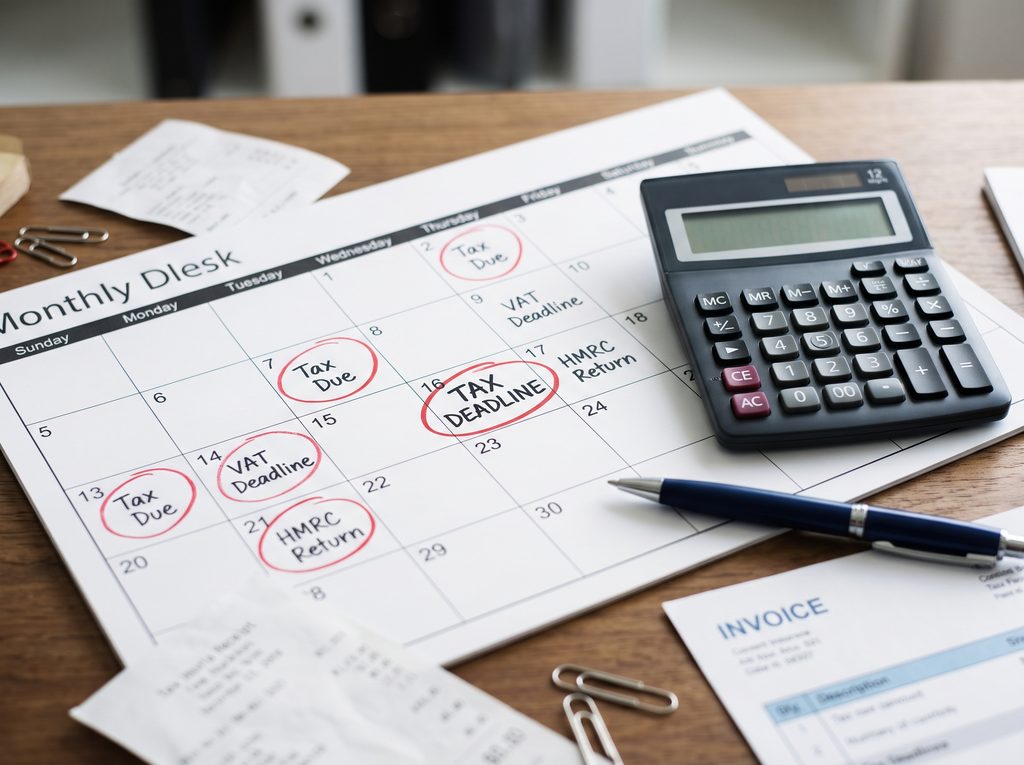
You cannot declare your company dormant if you still owe HMRC money for your active trading period. You must calculate and pay your final Corporation Tax bill. If you miss your payment deadlines, the financial consequences accumulate rapidly. Remember that late-payment interest begins on day 1; first penalties arise at day 15 and increase at day 30. You must settle these balances completely to avoid escalating debt. Learn more about proactive strategies on our corporate tax planning page.
3. Claiming Complex Final Expenses Incorrectly
Before you close your doors, you might be trying to process final business expenses to reduce your closing tax bill. This is an area full of pitfalls. When discussing expenses like business entertainment or company vehicles, always note that the rules are highly nuanced. There are exceptions and partial recovery rules. You should always seek specific advice from a professional before claiming these on your final active tax return. Getting this wrong can lead to serious compliance issues down the road.
A Step-by-Step Workflow for Company dormant status
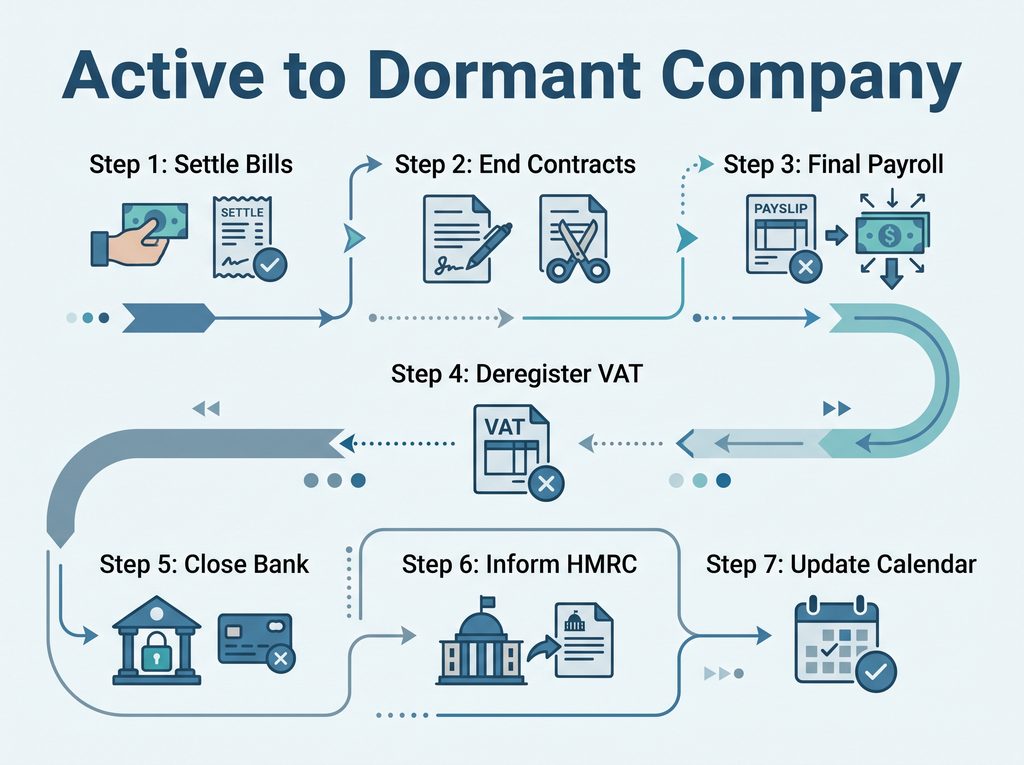
Taking the right steps in the right order can save you a massive amount of time. If you are ready to pause your business operations, follow this practical workflow to secure your Company dormant status safely.
- Step 1: Settle all outstanding bills and collect debts. Before you can pause the business, you need a clean slate. Pay your suppliers, settle your utility bills, and chase down any clients who still owe you money. Reconciling your final active transactions in software like Xero or QuickBooks is essential.
- Step 2: Terminate contracts and agreements. Cancel your software subscriptions, end your office lease, and terminate any ongoing supplier agreements. You cannot have automated payments leaving your business account once the new financial year starts.
- Step 3: Process your final payroll. If you have employees, you must pay their final wages, issue P45s, and close your PAYE scheme with HMRC. If you need help wrapping up your payroll obligations, explore our payroll management services.
- Step 4: Deregister for VAT. If you are VAT registered, you need to cancel your registration. You will have to submit a final VAT return covering your last period of trading.
- Step 5: Empty and close the company bank account. To avoid accidental bank fees triggering an accounting transaction, the safest route is to close the business bank account. Transfer any remaining funds to the shareholders as a final dividend (ensuring you follow the correct legal procedures for dividends).
- Step 6: Inform HMRC. Write to HMRC or use their online portal to inform them that your company is now dormant for Corporation Tax.
- Step 7: Update your calendar. Even when you are dormant, you must file your annual confirmation statement and your dormant accounts with Companies House. Put these deadlines in your calendar so you do not forget them.
Why Outsourcing is a Smart Investment
Navigating the transition from an active business to a sleeping one is stressful. You are already dealing with the emotional and financial impact of pausing your operations. The last thing you need is a compliance headache.
Outsourcing this specific task to a professional is a smart investment. Having an expert handle the paperwork can reduce administrative burden and free up your time. A qualified accountant understands the exact sequence of events required to inform HMRC and Companies House properly.
Using a professional service helps improve accuracy across your final tax returns and your future dormant filings. While nobody can control every variable in business, working with a chartered accountant mitigates the risk of errors in your final filings. We take the heavy lifting off your desk, allowing you to walk away with total peace of mind. You will not have to worry about missing a hidden deadline or triggering an accidental transaction. To see how we can assist, view our bookkeeping service.
Let ASK Accountants UK Ltd Handle the Heavy Lifting
If you are a business owner in South-West London looking to pause your company, you do not have to manage the paperwork alone. At ASK Accountants UK Ltd, we have 15 years of experience helping SMEs, startups, and landlords navigate complex accounting challenges. We understand the local business landscape and the stress that comes with restructuring.
We offer clear, empathetic, and professional support tailored to your unique situation. Whether you need help submitting your final active accounts or you want us to manage your ongoing dormant filings, our team is ready to step in.
Stop worrying about HMRC deadlines and Companies House forms. Let us handle the compliance so you can focus on your future.
Contact us today to discuss your business. Call our team directly at 020 8543 1991 or visit us in person at 178 Merton High St, London. You can also reach out through our Contact Page.
Frequently Asked Questions About Company dormant status
1. How long can I maintain my Company dormant status? There is no time limit. You can keep your company dormant for as long as you like. Many entrepreneurs keep a company dormant for years to protect a specific brand name or to hold an entity for a future project. As long as you continue to file your annual confirmation statement and your dormant accounts, your status remains intact.
2. What happens if I want to end my Company dormant status and start trading again? Waking your company up is very straightforward. The moment you begin trading or receive income, your company is active again. You must inform HMRC within three months of starting to trade so they can set up your Corporation Tax records. You will also need to re-register for VAT and PAYE if those apply to your new operations. You can read more about restarting operations on GOV.UK.
3. Do I still need a registered office address? Yes. Every limited company in the UK must have a registered office address, regardless of whether it is active or dormant. This is the address where Companies House and HMRC will send official correspondence. If you gave up your commercial office space when you paused the business, you can change your registered office to your home address or use a professional registered office service provided by your accountant.