Summarize this blog post with: ChatGPT | Perplexity | Claude | Grok
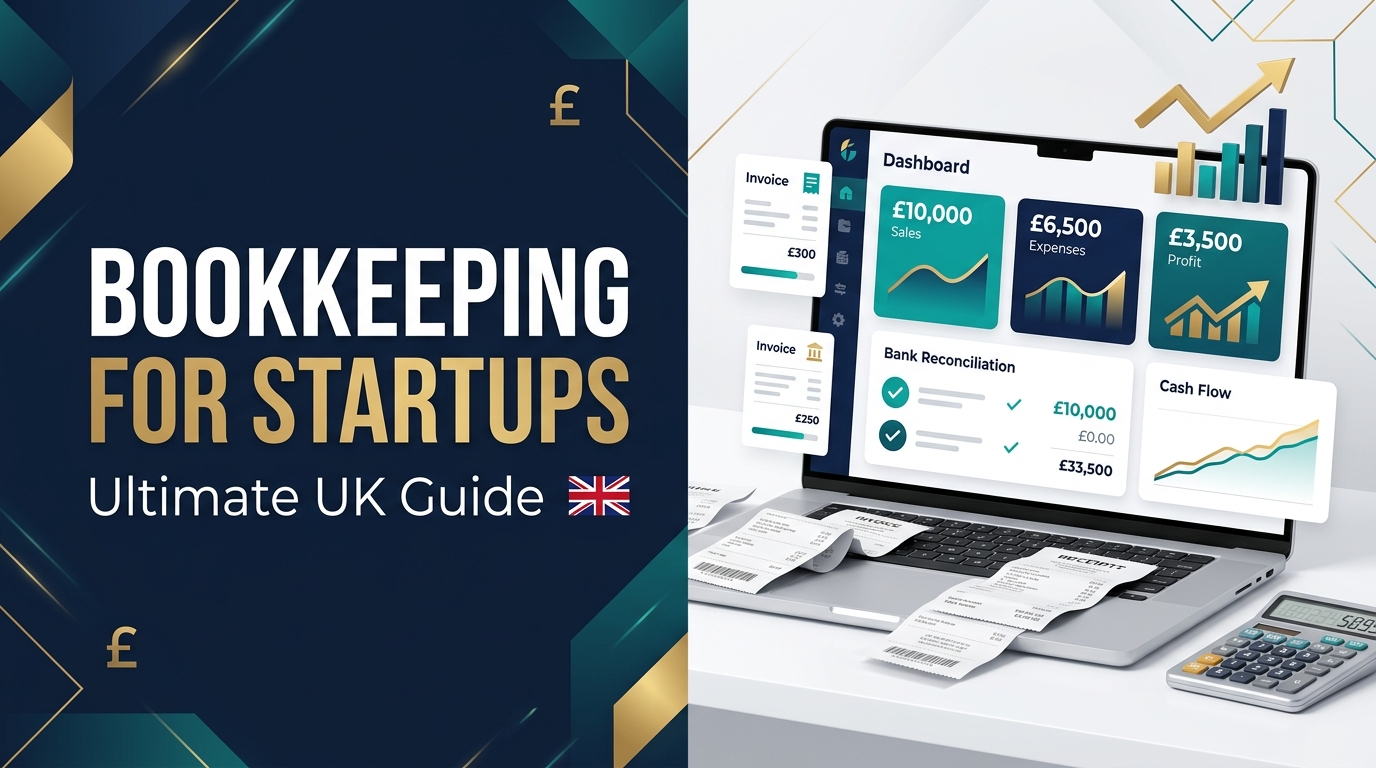
Most startup founders know they need to track sales, expenses and business payments, but bookkeeping often gets pushed aside while they focus on growth. The problem is that messy financial records can make it difficult to understand cash flow, prepare taxes or know whether the business is actually profitable. In this guide, we’ll explain bookkeeping for startups, how to build a simple system, which records to keep, which tools to use and when professional support makes sense.
Key Takeaways
- Startup bookkeeping records and organises financial transactions, including income, expenses, invoices, payments and other business activity.
- Accurate records give founders clearer visibility into cash flow, profitability, expenses and overall financial performance.
- A bookkeeping system should separate business and personal finances, reconcile transactions regularly and retain supporting documents.
- Cloud bookkeeping software can automate bank reconciliation, invoicing, expense tracking and financial reporting.
- Regular bookkeeping helps startups prepare for tax and reporting obligations while reducing the risk of missing important financial information.
- Common mistakes include mixing finances, losing receipts, delaying reconciliations and failing to monitor cash flow.
- Professional support can become valuable when transactions, payroll, VAT, tax compliance or reporting requirements become harder to manage accurately.
What Is Bookkeeping for Startups?
Startup bookkeeping is the process of recording, organising and reconciling a startup’s financial transactions so the business can track income, expenses, cash flow and financial performance.
First, bookkeeping creates an organised record of what money enters and leaves your business. For example, if your startup receives £10,000 in customer sales, pays £2,000 for software and marketing, and spends £1,500 on contractors, each transaction should be recorded correctly.
Second, startup bookkeeping typically covers:
- Sales and customer payments
- Business expenses and supplier bills
- Invoices and outstanding payments
- Bank and card transactions
- Payroll records
- Assets and liabilities
- VAT and other tax records where applicable
Bookkeeping records transactions, while accounting interprets financial information and uses it for reporting, tax planning and decision-making. For example, a bookkeeper may categorise a £500 software payment, while an accountant may use the completed records to prepare accounts and advise on tax.
For more detailed guidance, consider linking here to small business bookkeeping and limited company bookkeeping.
Why Is Bookkeeping Important for Startups?
Bookkeeping is important for startups because accurate financial records help founders manage cash, measure performance, meet compliance obligations and make informed decisions.
First, bookkeeping shows you whether the business is generating profit, but it also reveals whether enough cash is available to pay upcoming bills. For example, a startup may report £20,000 in sales while still struggling to pay suppliers because several customers have not yet paid their invoices.
Moreover, clean financial records can make it easier to provide information to lenders, investors and advisers. UK SMEs accounted for 99.8% of the business population at the start of 2025, highlighting how important effective financial management is across the UK’s small-business economy — Source: Department for Business and Trade, 2025.
At the same time, bookkeeping supports accurate tax reporting. Regular bookkeeping helps startups understand their cash position, monitor profitability, prepare accurate tax records and make better financial decisions.
For broader financial planning, link here to accounting for startups.
How Do You Set Up Bookkeeping for a Startup?
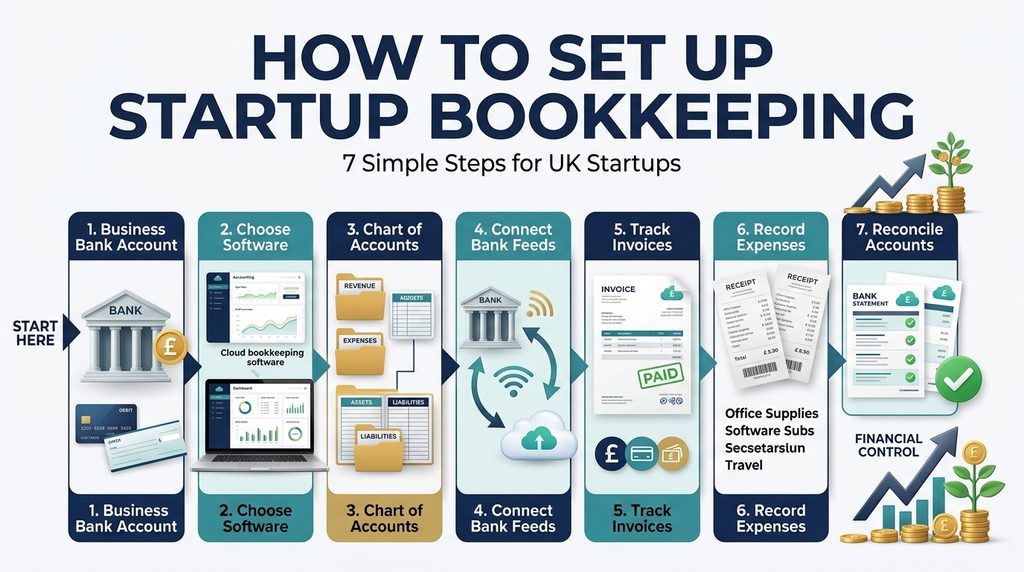
You can set up bookkeeping for a startup by separating business finances, choosing a recording method, creating clear categories and establishing a regular process for recording and reconciling transactions.
1. Open and Use a Dedicated Business Bank Account
First, a dedicated account keeps business transactions separate from personal spending. For example, paying for groceries and software subscriptions from the same account makes later categorisation far more difficult.
Separating finances reduces bookkeeping errors and makes your business activity easier to review.
2. Choose an Accounting Method and Create Categories
Second, decide how transactions will be recorded and create a basic chart of accounts. Typical categories include sales, marketing, software, travel, professional fees, payroll, equipment, loans and taxes.
For example, a £100 monthly design subscription should not be grouped with a £2,000 laptop purchase because they affect your records differently.
3. Connect Bank Feeds and Create an Invoice Process
Moreover, connecting your bank to bookkeeping software can reduce manual data entry. For example, transactions can be imported regularly and matched against invoices or receipts.
You should also establish a clear invoice process: create the invoice, send it promptly, record payment when received and follow up on overdue balances.
4. Reconcile Transactions Regularly
Finally, bank reconciliation means comparing your bookkeeping records with your actual bank transactions. Bank reconciliation helps startups identify missing, duplicated or incorrectly recorded transactions before they become larger problems.
For example, if your records show £5,000 in the bank but your actual balance is £4,600, reconciliation helps identify the £400 difference.
What Bookkeeping Records Should a Startup Keep?
A startup should keep records that support its income, expenses, banking, payroll, tax and other financial transactions.
In the UK, HMRC requires businesses to keep records that support their tax returns, with the exact requirements depending on the business structure and tax obligations. For example, a VAT-registered business must maintain records relevant to its VAT accounting and submissions.
A practical bookkeeping checklist for startups includes:
| Record | What to Keep |
|---|---|
| Sales | Invoices, sales reports and customer payment records |
| Expenses | Supplier invoices, receipts and business expense claims |
| Banking | Bank statements, card statements and reconciliation records |
| Payroll | Employee pay, deductions and PAYE information |
| VAT | VAT invoices, transaction records and VAT return information |
| Loans | Loan agreements, repayment schedules and interest records |
| Assets | Purchase documents for equipment, vehicles and other assets |
| Taxes | Records supporting Corporation Tax, Self Assessment and other returns |
In addition, UK startups should organise payroll records if they employ staff. You can direct readers to PAYE payroll for employers.
You should also retain documents relating to VAT where relevant.
How Often Should a Startup Do Its Bookkeeping?
A startup should record transactions continuously or weekly, reconcile accounts at least monthly and complete more detailed reviews before tax or year-end reporting deadlines.
First, a small startup with limited transactions may spend 30 minutes each week categorising sales and expenses. For example, recording five transactions every Friday is easier than sorting through six months of bank statements.
Second, monthly bookkeeping should include:
- Reconciling bank and card accounts
- Reviewing unpaid customer invoices
- Checking supplier bills
- Reviewing recurring expenses
- Monitoring cash balances
- Setting aside money for tax where appropriate
Consistent bookkeeping prevents small errors from becoming expensive year-end problems.
How Should Startups Track Business Expenses?
Startups should track business expenses by recording each genuine business cost promptly, assigning it to the correct category and keeping supporting documentation.
First, expense tracking shows where your money is going. For example, a founder may discover that £800 per month is being spent across several unused software subscriptions.
Moreover, recording expenses promptly can improve accuracy because you are less likely to forget what a payment was for. A receipt uploaded immediately through an expense app is usually easier to categorise than an unexplained card payment three months later.
You should also understand which costs may qualify as allowable expenses under applicable tax rules. Consider adding business expenses you can claim.
An expense is not automatically tax-deductible simply because it was paid from a business account, so founders should classify transactions carefully and seek advice when uncertain.
How Can Startups Manage Cash Flow Through Bookkeeping?
Bookkeeping helps startups manage cash flow by showing how much cash is available, what money is expected to arrive and which payments are due next.
First, founders should understand that revenue, profit and cash flow are different measures. Revenue is money earned from sales, profit is what remains after relevant costs, and cash flow tracks the movement of money into and out of the business.
For example, your startup could invoice £15,000 in January but receive only £6,000 in cash because the remaining invoices are unpaid. The business may look profitable on paper while still facing a short-term cash shortage.
Monitor Cash Runway and Recurring Costs
Second, cash runway estimates how long your available cash could support the business at its current spending level. For example, £60,000 of available cash and average net cash outflows of £10,000 per month suggests a simple six-month runway before considering future funding or revenue changes.
You should regularly monitor:
- Current bank balances
- Outstanding customer invoices
- Monthly recurring costs
- Payroll commitments
- Supplier payments
- Upcoming tax liabilities
For additional guidance, add cash flow management for small businesses.
Cash flow forecasting turns bookkeeping data into a forward-looking management tool.
What Are the Most Common Startup Bookkeeping Mistakes?
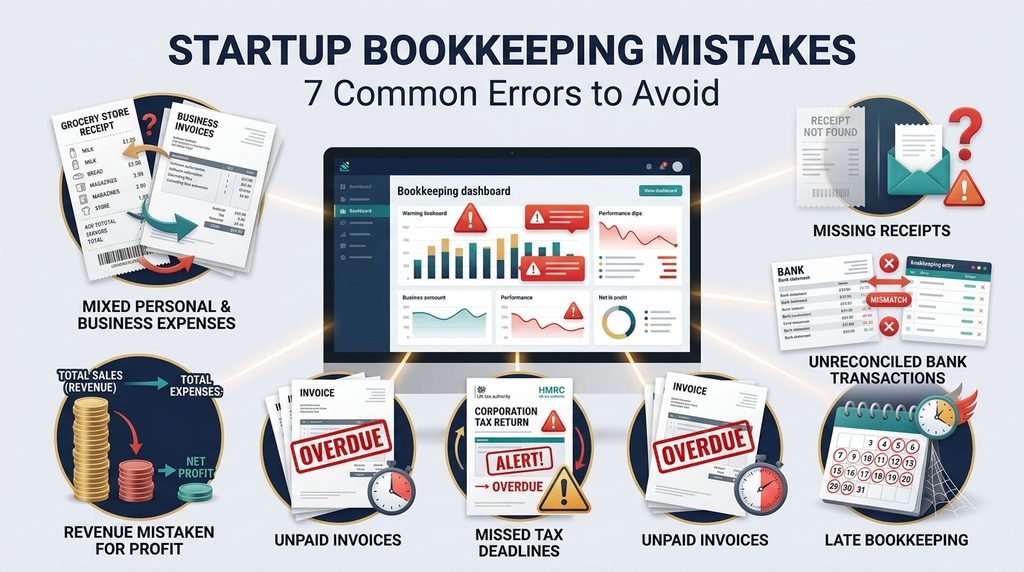
The most common startup bookkeeping mistakes are mixing finances, losing evidence, delaying transaction recording, skipping reconciliations and misunderstanding the difference between revenue and profit.
First, mixing personal and business spending creates unnecessary confusion. For example, a personal restaurant bill paid from the company card may need to be treated differently from a legitimate business meeting expense.
Second, failing to keep receipts and invoices makes it harder to explain or support transactions. For example, an unexplained £300 card payment may require significant time to investigate months later.
Moreover, startups should avoid these mistakes:
- Recording transactions only at year-end
- Ignoring overdue customer invoices
- Forgetting recurring subscriptions
- Missing tax and filing deadlines
- Treating all cash received as available profit
- Waiting too long to ask for professional help
Late bookkeeping reduces visibility at exactly the point when founders need accurate information to make decisions.
When Should a Startup Hire a Bookkeeper or Accountant?
A startup should consider hiring a bookkeeper or accountant when transaction volume, payroll, VAT, tax compliance, funding requirements or financial reporting becomes difficult to manage accurately in-house.
First, a bookkeeper generally focuses on keeping day-to-day records accurate and organised. For example, they may reconcile accounts, process invoices and maintain expense records.
Second, an accountant typically provides broader support involving accounts, tax, reporting and financial advice. For example, an accountant may use your bookkeeping records to prepare statutory accounts and help plan for Corporation Tax.
| Option | Best suited to |
|---|---|
| DIY bookkeeping | Very early-stage businesses with simple transactions |
| Bookkeeper | Startups needing regular transaction processing and reconciliations |
| Accountant | Businesses needing accounts, tax, compliance and financial advice |
| Combined support | Growing startups with complex bookkeeping and reporting needs |
Startups can handle bookkeeping themselves initially but may benefit from professional support as transactions, employees, taxes or reporting requirements become more complex.
For professional support, consider placing outsourced bookkeeping services
How Much Does Startup Bookkeeping Cost?
Startup bookkeeping costs depend on transaction volume, business complexity, payroll, VAT obligations, software and whether the work is completed in-house or outsourced.
First, DIY bookkeeping may have lower direct costs but requires founder time. For example, spending five hours each month on bookkeeping also has an opportunity cost if that time could be spent on sales or product development.
Second, outsourced pricing may vary based on the number of transactions, employees and required services. The cheapest bookkeeping option is not always the most cost-effective if poor records create tax errors, missed deadlines or weak cash visibility.
As such, founders should compare the total workload and risk rather than choosing support based only on a monthly fee.
Can a Startup Do Its Own Bookkeeping?
A startup can do its own bookkeeping when its transactions and compliance requirements are simple and the founder has enough time to maintain records consistently.
First, DIY bookkeeping can work well for an early-stage business with one bank account, straightforward sales and limited expenses. For example, a solo founder with 20 transactions per month may be able to review and reconcile records each week.
That being said, complexity can increase quickly after hiring staff, registering for VAT, raising funding or managing multiple revenue streams. Professional support becomes more valuable when accurate bookkeeping requires more expertise or time than the founder can reasonably provide.
What Tax Records Should UK Startups Keep?
UK startups should keep tax records that support their business income, expenses, VAT, payroll and relevant tax returns for the required retention periods.
First, a limited company will usually need organised records to support its annual accounts and Corporation Tax obligations. For example, keeping supplier invoices and sales records throughout the year makes year-end preparation significantly easier.
Second, startups may also have additional responsibilities for VAT, PAYE or Self Assessment depending on their circumstances. Consider adding Corporation Tax for limited companies and UK business tax deadlines.
Moreover, Making Tax Digital requirements can affect how some businesses maintain and submit tax records. For relevant readers, add Making Tax Digital for Income Tax.
How Does Bookkeeping Help Startups Prepare for HMRC?
Bookkeeping helps startups prepare for HMRC by maintaining organised financial records that can support accurate tax calculations, returns and compliance requirements.
First, regular records reduce the need to reconstruct transactions shortly before a deadline. For example, a founder who reconciles accounts monthly can usually identify missing information quickly.
Moreover, HMRC’s digital tax initiatives make reliable records increasingly important for affected businesses. A startup bookkeeping system should separate business and personal finances, record transactions regularly, reconcile bank accounts and retain supporting financial documents.
For official requirements and current deadlines, founders should check the relevant HMRC guidance or obtain professional advice because obligations vary by business structure and circumstances.
What Is the Best Bookkeeping Software for Startups?
The best bookkeeping software for a startup is the system that matches its transaction volume, reporting needs, tax obligations, budget and expected growth.
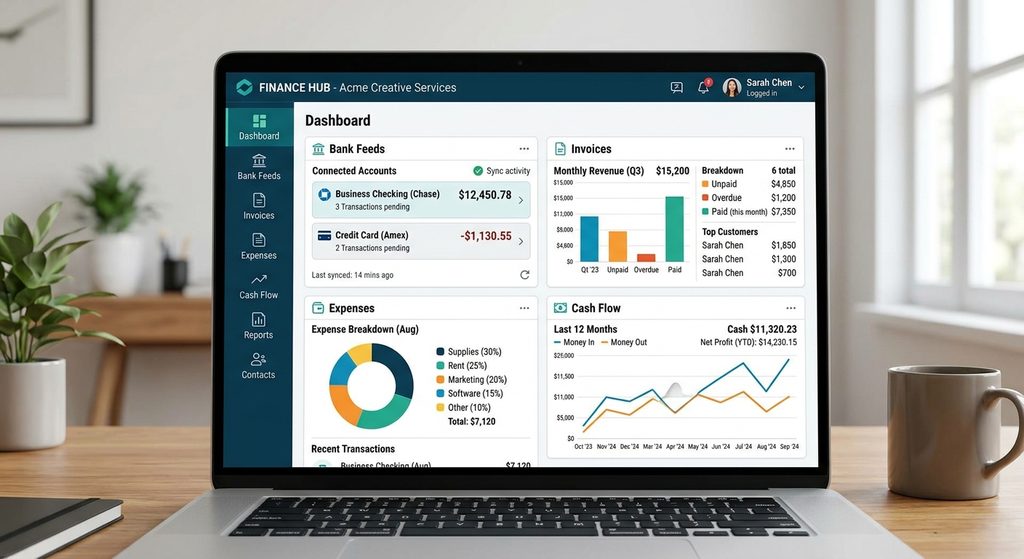
First, cloud accounting software can centralise financial records and reduce repetitive manual work. For example, you can use a platform with bank feeds to import transactions, match payments to invoices and review financial reports.
Popular options include Xero, QuickBooks and Sage, alongside other specialist and free tools depending on your requirements. The right choice should be based on features rather than unsupported claims that one platform is universally “best.”
Look for:
- Bank feeds and reconciliation
- Invoicing and payment tracking
- Expense and receipt capture
- VAT functionality
- Payroll integration where required
- Financial reporting
- Accountant access
- Scalability and pricing
Cloud bookkeeping software can help startups automate transaction recording, bank reconciliation, invoicing, expense tracking and financial reporting.
You can also direct readers to [Internal link: “cloud accounting software” → Guide to cloud accounting and bookkeeping software].
What Should Be Included in a Startup Bookkeeping Checklist?
A startup bookkeeping checklist should include regular transaction recording, expense tracking, reconciliations, cash-flow reviews, document storage and tax preparation tasks.
Let’s take a look at a simple routine you can implement immediately.
Daily
- Record significant sales and payments
- Save invoices and receipts
- Check important cash movements
Weekly
- Categorise new transactions
- Review outstanding invoices
- Record expense claims
- Check recurring costs
Monthly
- Reconcile bank and card accounts
- Review revenue, expenses and profit
- Update your cash-flow forecast
- Check upcoming payroll and tax obligations
Year-End
- Review all balances and outstanding transactions
- Organise tax and supporting records
- Prepare information required for accounts and tax returns
- Discuss planning opportunities with your accountant
A consistent bookkeeping routine creates reliable financial information before you urgently need it.
What’s Next: Create a Simple Startup Bookkeeping Routine
Your next step is to choose a simple bookkeeping process and follow it consistently from day one.
First, open or dedicate the appropriate business account, choose your software or recording system and create clear categories for income and spending. For example, you could schedule 30 minutes every Friday to categorise transactions and one hour at month-end to reconcile accounts.
Second, use the information your bookkeeping produces rather than treating it as an administrative task. By reviewing cash, expenses, outstanding invoices and profitability regularly, you can make faster and more confident business decisions.
Finally, seek help when the workload becomes complex. Good bookkeeping is not about doing everything yourself; it is about ensuring your financial records remain accurate, useful and up to date as your startup grows.
Conclusion: Build Better Financial Foundations From Day One
Bookkeeping for startups gives founders a clear financial foundation for managing cash, monitoring performance and meeting their business obligations.
Ultimately, you do not need an overly complicated system to begin. Start by separating finances, recording transactions regularly, keeping supporting documents and reconciling your accounts on a consistent schedule.
Accurate bookkeeping gives you more than organised records—it gives you visibility. By understanding where your money comes from, where it goes and what obligations are ahead, you can make better decisions and build a stronger startup from day one.
Written by ASK Accountants UK Ltd Content Team, specialising in UK accounting, bookkeeping, tax and financial guidance for businesses.
Reviewed by ASK Accountants UK Ltd Accounting Team, specialising in UK bookkeeping, tax compliance and business financial management.
Disclaimer: This article was initially drafted using AI assistance. However, the content has undergone thorough revisions, editing, and fact-checking by human editors and subject matter experts to ensure accuracy.