
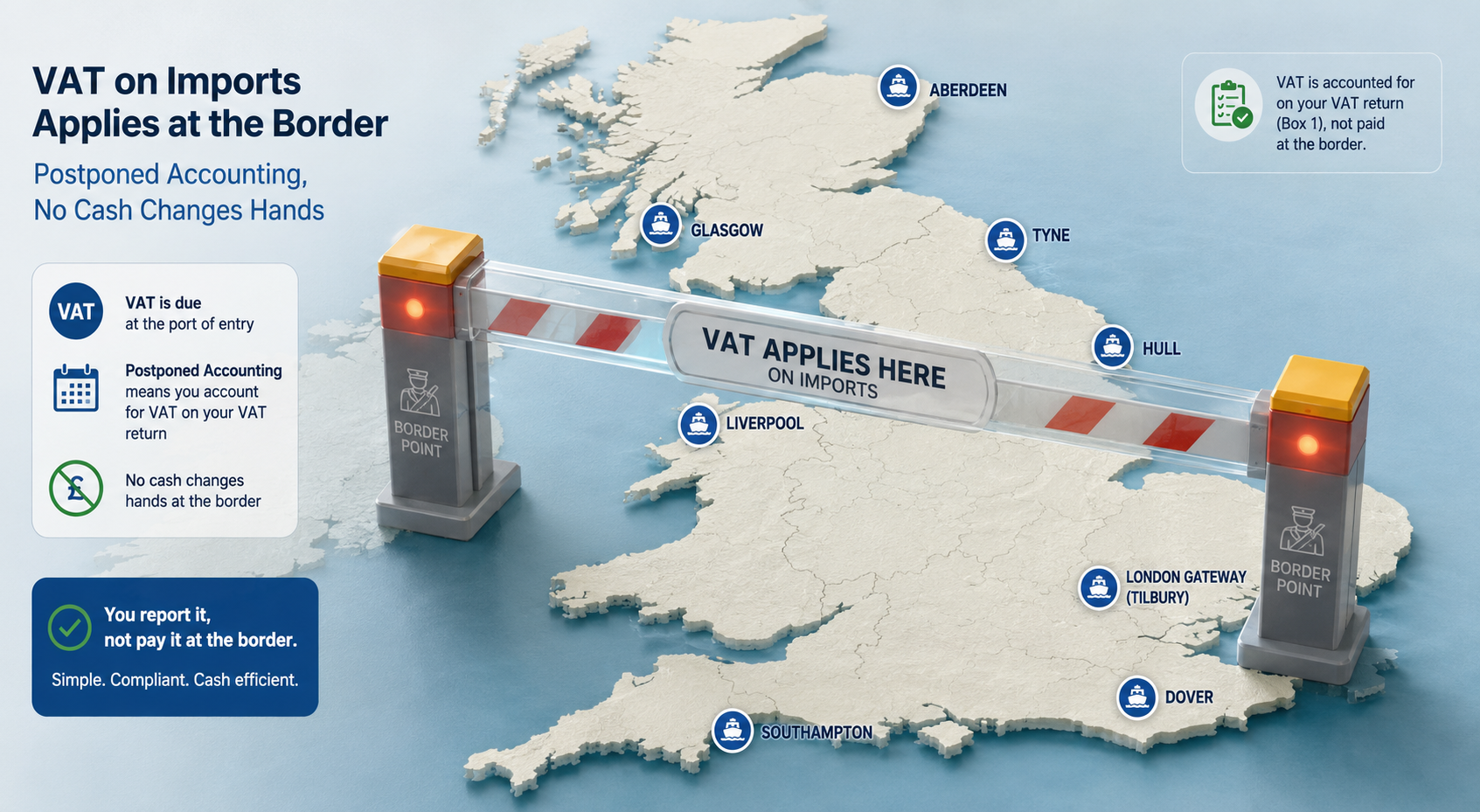
Here’s the thing about VAT on imports that catches out even seasoned business owners: it isn’t just “VAT, but at customs.” It’s a slightly different beast, with its own paperwork, its own deadlines, and its own way of quietly draining cash flow if you don’t understand how the mechanics work. If you bring goods into the UK from anywhere outside the country — Shenzhen, Rotterdam, doesn’t matter — you’re liable for import VAT the moment those goods cross the border. Not sometimes. Not “if you’re big enough.” Every VAT-registered business, and quite a few non-registered ones too.
I’ve sat across the table from importers who genuinely believed VAT on imports was optional if the shipment was small, or that it only applied to goods from outside the EU. Neither is true (well, the EU point used to be more nuanced pre-Brexit, but not anymore). At Ask Accountants UK Ltd, a fair chunk of the calls we get from Wimbledon and further afield boil down to the same confusion: why has HMRC charged me VAT on something I already paid VAT on abroad? So let’s untangle it properly, without the jargon-soup most guides drown you in.
So What Actually Counts as an Import for VAT Purposes?
An import, for VAT purposes, is goods physically brought into the UK from outside the UK’s VAT territory. Since Brexit, that means goods arriving from the EU count as imports too — a genuine shift from the old intra-community acquisition rules, and one that still trips people up years later. Northern Ireland sits in its own slightly odd bracket, treated as part of the EU VAT area for goods (thanks to the Windsor Framework), so movements from the EU into Northern Ireland aren’t imports in the same sense.
Services are a different story entirely — those typically fall under the reverse charge mechanism rather than import VAT, which is a topic for another day (we’ve written about how VAT accounting works for UK businesses if you want the fuller picture).
Practically speaking, VAT on imports applies at the same rate as if you’d bought the equivalent goods domestically — usually 20%, sometimes 5%, occasionally zero-rated. The rate doesn’t change because the goods came from abroad; what changes is when and how you pay it.
The Bit Everyone Gets Wrong: Paying vs Accounting
Before January 2021, most businesses paid import VAT physically at the border (or through a duty deferment account) and reclaimed it later on their VAT return. Cash left the business, sat in limbo for weeks, then came back. Miserable for cash flow, particularly for smaller importers moving stock regularly.
Enter Postponed VAT Accounting (PVA). This is genuinely one of the more sensible reforms HMRC has introduced in recent memory, and it’s still underused. PVA lets VAT-registered businesses declare and reclaim import VAT on the same VAT return, rather than paying it upfront and waiting. It’s optional and available to any UK VAT-registered business without needing to apply first — you can use it on an import-by-import basis, choosing whatever suits your cash flow at the time.
Here’s roughly how the numbers move through your return:
| VAT Return Box | What Goes In It | Example (£5,000 import VAT) |
|---|---|---|
| Box 1 | VAT due on imports (output tax) | £5,000 |
| Box 4 | VAT reclaimed on imports (input tax) | £5,000 |
| Box 7 | Value of imported goods, excluding VAT | Net value of goods |
Assuming you’re entitled to recover the full amount of input VAT, boxes 1 and 4 cancel each other out. Net cash impact: nothing. Zero. That’s the entire appeal of postponed accounting on VAT for imports — you account for it without ever handing over the money and waiting for it back.
Quietly important: Postponed VAT accounting only covers the VAT. You still need to pay customs duty at the border if duty applies — PVA doesn’t touch that at all. People conflate the two constantly, then wonder why they’ve still had a duty bill land.
Getting Your Numbers From HMRC (and Why the Statement Matters More Than You Think)
If you use PVA, you don’t get a paper certificate posted to your door anymore. Instead, HMRC generates a Monthly Postponed Import VAT Statement (MPIVS), accessible through your Customs Declaration Service (CDS) dashboard, generally by the sixth working day of the following month. This is the document your bookkeeper — or accountant, if you’d rather not wrestle with CDS logins yourself — uses to fill in Box 1 and Box 4 correctly.
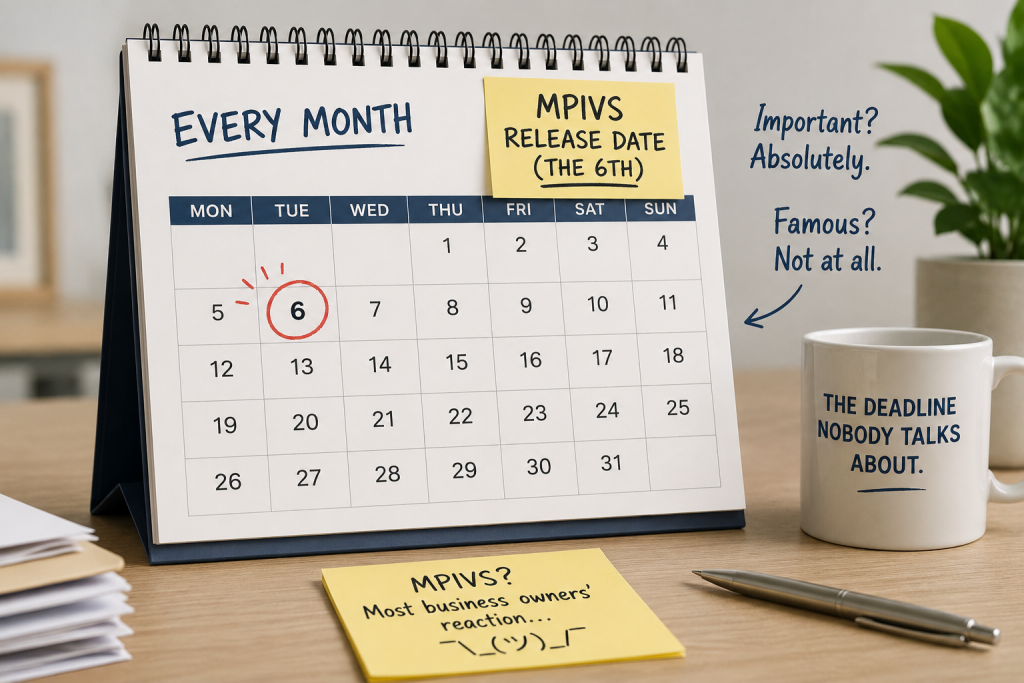
Miss it, guess the figure, or copy last month’s number because you couldn’t be bothered logging in? That’s how VAT return errors happen, and errors on import VAT have a habit of snowballing into HMRC queries. We cover the wider compliance angle in our piece on VAT accounting and compliance for UK businesses, which is worth a read if this is new territory for you.
If your customs declarations are deferred (simplified declarations, essentially), you won’t see those imports on your PVA statement straight away. You’ll need to estimate the VAT on that VAT return and correct the figure on the next one. Fiddly, yes. Avoidable if you plan ahead — also yes.
Small Parcels, Big Confusion: The £135 Threshold
Here’s where a lot of online sellers and smaller importers get genuinely caught out. Goods valued at £135 or less follow different VAT rules entirely — supply VAT is usually charged at the point of sale rather than at import, which shifts the compliance burden onto the seller (or the online marketplace, in many cases) rather than the buyer.
Above £135, standard import VAT rules apply, and postponed accounting becomes relevant. It’s a fiddly line to sit on if you’re importing mixed consignments — some parcels above the threshold, some below — and honestly, this is exactly the kind of detail that benefits from a proper VAT registration review rather than guesswork.
What About the C79 (and Why It Still Matters If You’re Not Using PVA)
If you’re not using postponed accounting — some businesses still pay VAT upfront through a duty deferment account, particularly if their VAT recovery position is complicated — HMRC issues a C79 certificate monthly. This document is your evidence for reclaiming that VAT as input tax. Lose it, misfile it, or fail to reconcile it against your customs declarations, and HMRC can (and does) challenge the deduction.
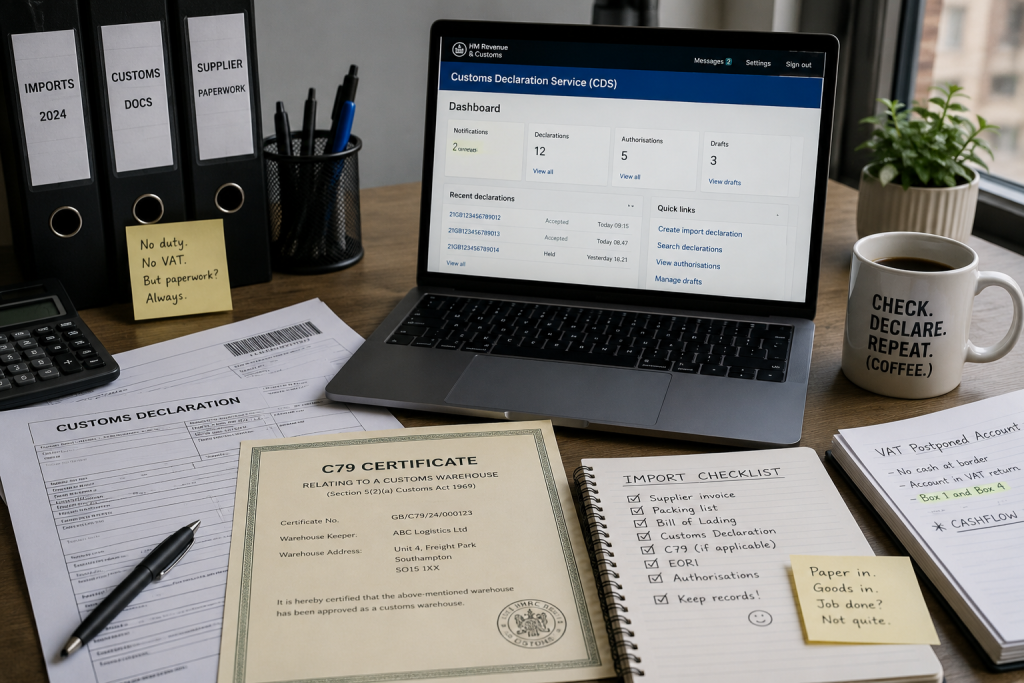
Verifying the C79 or MPIVS data against the actual commercial invoice each month isn’t glamorous work. Nobody puts “reconciled import VAT statements” on a LinkedIn highlight reel. But it’s the sort of unglamorous diligence that keeps a VAT inspection short instead of stressful — something we see play out repeatedly in the HMRC investigations work we do.
Reclaiming Import VAT: The Rules Aren’t as Generous as People Assume
A common misconception: “I paid VAT on imports, so I automatically get it back.” Not quite. You can only reclaim import VAT to the extent your business makes taxable supplies. Partially exempt businesses (think: financial services, some property businesses, certain healthcare providers) may only recover a proportion. Non-VAT-registered businesses can’t reclaim it at all — it simply becomes an extra cost baked into the price of the goods.
There’s also a timing element. Input VAT needs to be claimed within the normal four-year window, and it needs to relate to your business activity — sole traders occasionally try to sneak through personal imports, and HMRC’s systems are better at spotting that than people assume. Our guide on reclaiming VAT for business savings goes into the eligibility detail if you want the fuller mechanics.
Northern Ireland: The Exception Nobody Explains Properly
Because of the Windsor Framework, Northern Ireland operates under a hybrid arrangement — goods moving from Great Britain into Northern Ireland, and from the EU into Northern Ireland, follow different rules to goods entering GB. If your business trades across this particular line, honestly, don’t try to wing it from a blog post (even this one). Get specific advice; the penalties for getting NI movements wrong tend to be disproportionate to how easy the mistake is to make.
A Rough (and Slightly Messy) Comparison of Your Options
| Method | When VAT is Paid | Cash Flow Impact | Paperwork |
| Postponed VAT Accounting | On next VAT return | Minimal — often net zero | MPIVS monthly |
| Duty Deferment Account | Monthly, direct debit | Delayed, but predictable | C79 certificate |
| Pay at border | Immediately | Worst — cash tied up | Import declaration + receipt |
| Goods under £135 | At point of sale (supply VAT) | N/A — different mechanism | Seller/marketplace handles it |
(Yes, that last row breaks the pattern of the table slightly — it’s not really comparable to the other three since it’s a different VAT mechanism altogether, not a payment timing choice. Left it in because people ask about it constantly, and pretending it fits neatly would be dishonest.)
Common Mistakes We See on Real VAT Returns
- Forgetting to download the MPIVS at all, and simply omitting import VAT from the return (understating both Box 1 and Box 4 — usually cash-neutral but still technically wrong, and HMRC notices patterns like this)
- Double-counting VAT already paid at the border alongside a postponed figure
- Applying the wrong VAT rate because a commodity code was misclassified — this one’s sneaky, and worth checking against gov.uk’s commodity code guidance before you commit to a declaration
- Confusing customs duty with import VAT and assuming PVA covers both (it doesn’t)
- Sole traders using postponed accounting for goods that aren’t actually for business use
Some of these are genuinely easy fixes once flagged. Others require amending a previous return, which is its own small headache. If cloud accounting software is already part of your setup, reconciling MPIVS data becomes considerably less painful — something we talk through in our piece on Making Tax Digital for VAT.
Frequently Asked Questions About VAT on Imports
Do I have to register for VAT before I can use postponed VAT accounting? Yes — postponed VAT accounting is only available to UK VAT-registered businesses. If you’re not registered, import VAT becomes a straightforward cost rather than something reclaimable.
Is VAT on imports charged on the goods price alone, or does shipping count too? Import VAT is calculated on the customs value of the goods, which typically includes the cost of the goods, shipping, insurance, and any duty payable — not just the sticker price.
What happens if I don’t use postponed accounting? You pay import VAT at the point the goods enter the UK, either directly or via a duty deferment account, then reclaim it later using your C79 certificate, subject to the usual input VAT rules.
Does postponed VAT accounting apply to imports from the EU as well as the rest of the world? Yes. Since 1 January 2021, VAT on imports applies to goods from all countries, EU and non-EU alike, and postponed accounting is available for both.
Can I reclaim 100% of the VAT on imports? Only if your business makes fully taxable supplies. Partially exempt or non-VAT-registered businesses face restrictions or can’t reclaim it at all.
Where to Go From Here
If you’re importing regularly and still paying VAT at the border out of habit rather than strategy, it’s worth a proper review — the cash flow difference between paying upfront and using postponed accounting isn’t trivial once your import volumes grow. This is genuinely one of those areas where a short conversation with someone who deals with VAT on imports weekly saves far more time (and money) than muddling through CDS statements alone.
Ask Accountants UK Ltd works with importers across London on exactly this — VAT compliance, bookkeeping, and the less thrilling but essential admin that keeps HMRC satisfied. If you’d rather hand the reconciliation headache to someone else, you can reach the team at 178 Merton High St, London SW19 1AY, or call 020 8543 1991.