

If you’ve typed when should I switch accountants into Google late on a Sunday, mug of tea going cold beside you, this one’s for you. Here’s the topic in plain terms before we go anywhere else: this is a guide to the warning signs that tell you it’s time to move on from your current accountant, the right moment in the tax year to do it, and how the handover actually works without the chaos you’re probably bracing for.
The short answer? You should switch the moment your accountant stops moving your business forward — when chasing a reply eats more of your week than the books ever did. The longer answer takes a bit more unpicking, because the signs are rarely loud. They creep.
I’ll be straight with you. Most people I meet stayed with their old accountant about two years past the point they should have left. Not out of loyalty, exactly. More out of inertia, plus a low hum of dread that moving will mean lost paperwork, frosty emails, and a missed deadline somewhere in the middle. It won’t. But I understand the fear — it’s why the question when should I switch accountants gets asked so quietly, so late.
The relationship isn’t broken. It’s just gone quiet.
Think about how it usually ends. Not with a row. With silence.
You email a question in March about whether you can claim something. You hear back in April. The answer is three words and a shrug. Your accounts get filed on the last possible day, every year, like clockwork — and you only ever hear from them when something’s due or overdue. There’s no advice. No nudge. No “have you thought about…”. Just compliance, delivered grudgingly, at a price that somehow keeps nudging upward.
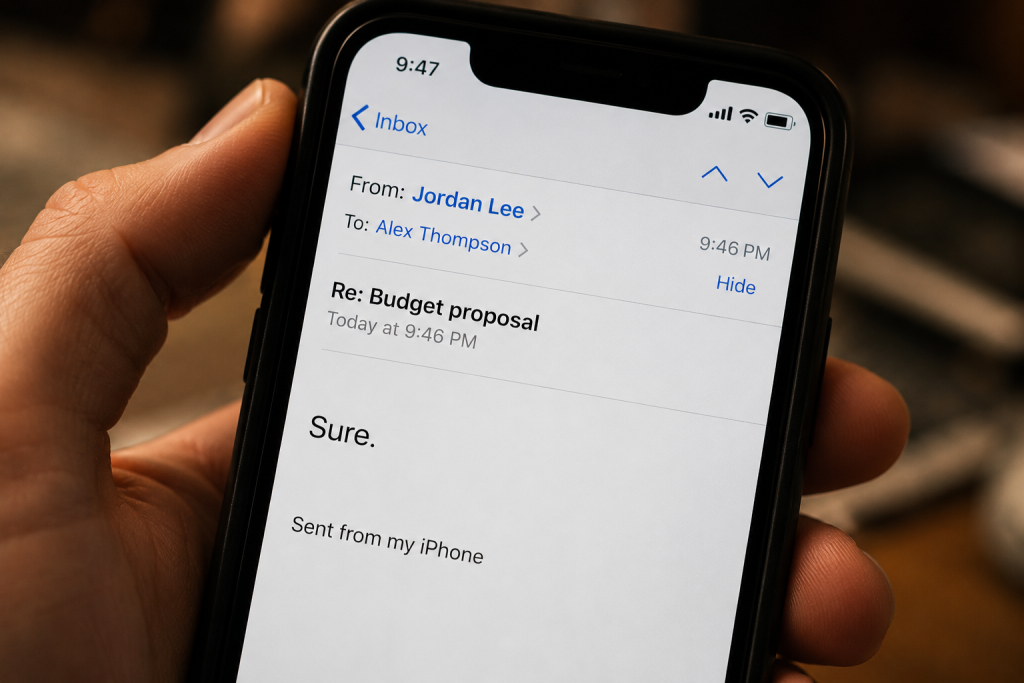
That’s the version nobody warns you about. A bad accountant isn’t usually a fraudster. A bad-fit accountant is frequently just… absent. Competent, technically. Present, occasionally. Useful? Less and less.
And here’s the thing that catches people out: a firm that was perfect for you as a sole trader scribbling receipts into a shoebox can be hopelessly wrong once you’re a limited company with payroll, VAT, and three people on the books. You grew. They didn’t grow with you. That mismatch is one of the most common — and most overlooked — reasons people start asking when should I switch accountants in the first place.
So, when should I switch accountants? Five gut-checks that rarely lie
Forget the tidy ten-point checklists. Most of it comes down to five honest questions you can answer in about a minute.
- Do they ever ring you first? Proactive advice — a heads-up about a tax change, a suggestion you hadn’t considered — is the whole point of paying a professional. If everything is reactive, you’re paying premium rates for a filing service.
- Can you actually reach a human? Some firms hide behind portals and ticketing systems so completely that you’ve never spoken to the person doing your accounts. For a sole trader, fine. For a growing business, that distance costs you.
- Are the fees a mystery? Surprise invoices for “additional work” you didn’t know was happening is a quiet red flag. (We dig into what fair pricing looks like in our piece on the cost of an accountant for a limited company.)
- Have they missed a deadline — even once? A late filing penalty caused by their slip, not yours, is rarely a one-off. It’s a symptom.
- Do they get your industry? A landlord, a CIS subcontractor, and an e-commerce seller all need different things. Generalist isn’t always bad. Clueless about your sector is.
If you answered “no”, “no”, “yes”, “yes”, “no” — you already know. You’ve known for a while. There’s a fuller rundown of the danger signals in our guide to the red flags to watch for when picking an accountant, and it’s worth a read before you commit either way.
Here’s a quick sense-check I give clients who ring us unsure:
| What’s happening | Probably fine — for now | Time to start looking |
|---|---|---|
| Reply times | A day or two during busy season | Weeks of silence, no apology |
| Advice | Answers when you ask | Never offers anything unprompted |
| Fees | Clear, agreed upfront | Surprise charges, vague invoices |
| Deadlines | Filed comfortably early | Always last-minute, or missed |
| Technology | Cloud software, you can see your numbers | Spreadsheets emailed once a year |
That last row matters more every year. With Making Tax Digital widening its net, an accountant still allergic to cloud software is quietly becoming a liability. If your firm hasn’t even raised it, that’s its own answer — and our take on why London businesses are making the switch to cloud accounting explains what you’re missing.
💡 A slightly contrarian tip: don’t switch over one bad week. Everyone has a rough January. The signal isn’t a single slip — it’s the pattern. Three frustrations stacked on top of each other usually means the foundation’s gone.
When should I switch accountants in the tax year? Timing matters
Now, the practical bit people forget to ask: when in the year should the move happen?
You can switch accountants on any day you like. There’s no lock-in, no notice period set in stone (check your engagement letter, mind — some have one). But just because you can leave mid-VAT-quarter doesn’t mean it’s clever.
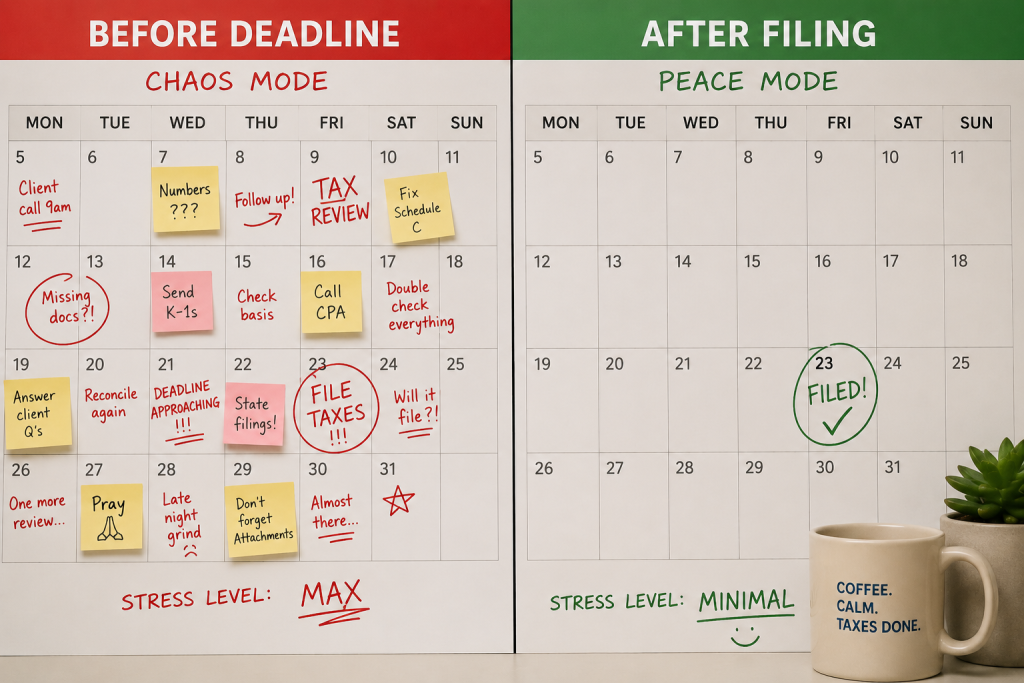
The smoothest moment is right after a key filing is done and dusted. Just submitted your company accounts? Perfect. Self Assessment season behind you? Even better. You’re handing your new firm a clean, complete set of records with no half-finished return dangling in the air. The clumsiest moment, predictably, is three weeks before a deadline with a year of unreconciled transactions and a panicking new accountant. Don’t do that to anyone.
That said — and I’ll contradict myself a little — sometimes you shouldn’t wait for the tidy moment. If you’ve just had an HMRC enquiry letter land and your current accountant has gone strangely quiet, waiting is the riskier move. In a situation like that, getting the right people in fast matters more than tidy timing; this is exactly the sort of thing our HMRC investigations team handles, and the clock is rarely your friend.
How to switch accountants without the drama (it’s less work than you fear)
Right. The fear of the mechanics keeps more people stuck than the fear of the fees. So let me demystify it, because once you see the steps, the whole thing deflates into admin.
You barely lift a finger. Honestly. Your new accountant does most of the lifting through a process called professional clearance.
- You tell your current accountant you’re leaving. A short, civil email does it. Leaving on good terms genuinely greases the wheels — burn the bridge and the handover gets sticky.
- Your new firm writes a professional clearance letter. This goes to your old accountant asking whether there’s any professional reason they shouldn’t take you on, and requesting your records. It’s courtesy and ethics, not a request for permission. It’s a formality in the vast majority of cases.
- Your old accountant issues a disengagement letter. This lists the work completed and flags anything outstanding — say, a return mid-flight.
- The new firm runs anti-money-laundering checks and sends you an engagement letter. Read it. Properly. It sets out exactly what they’ll do and what it costs.
- You authorise the new firm with HMRC. This is the only bit that touches HMRC directly, and it’s usually a digital handshake or the 64-8 form. The official route is laid out on GOV.UK’s guide to appointing someone to deal with HMRC, with the agent-authorisation detail here.
Start to finish, plan for a few weeks. Here’s a rough shape — and I’ve left it deliberately a bit untidy, because real timelines never line up as neatly as a spreadsheet pretends:
| Step | Who does it | Roughly how long |
|---|---|---|
| Notify old accountant | You | 10 minutes |
| Professional clearance letter | New firm | a few days, sometimes longer if they’re slow to reply |
| Records handed over | Old firm → New firm | 1–2 weeks |
| AML checks + engagement letter | New firm & you | around a couple of days |
| HMRC agent authorisation | You (digital handshake) | often same day — but allow up to a week |
⚠️ The one snag worth knowing about: if you owe your old accountant money, things can stall fast. Some firms can hold back certain documents until outstanding fees are settled, and they’ll usually disclose any unpaid balance to your new accountant during clearance. Settle up before you move. It saves a fortnight of awkwardness.
What switching accountants should actually get you
A change of accountant shouldn’t be a sideways shuffle. If you’re going to the bother, the new relationship ought to give you something the old one didn’t — sharper self-assessment support, proper bookkeeping that’s actually kept up to date, advice that arrives before you ask rather than after the deadline.
This is where I’ll mention us, briefly, because it’s relevant rather than because I’m meant to. At Ask Accountants UK Ltd on Merton High St in Wimbledon, the work we do most — accounts and tax, business advice, CIS refunds, payroll, personal tax planning, cloud accounting — tends to be the work people felt was missing at their last firm. If you’re still weighing it up, our short read on what a small business accountant actually does is a fair starting point, no commitment required.

And if you’re not sure whether you’ve outgrown your current setup at all? That’s a perfectly reasonable place to be. If you’re still quietly asking yourself when should I switch accountants, a quick, no-pressure chat usually settles it faster than another month of stewing. You can reach the team on 020 8543 1991 or through the contact page — bring your questions, even the awkward ones.
A few questions people actually ask
When should I switch accountants if I’ve just received a penalty that was their fault? Soon — but don’t switch in a blind panic mid-crisis. Get the immediate problem under control first (ideally with help), then make the move once the dust settles. A penalty caused by their error is one of the clearest signals the relationship has run its course.
Will switching accountants flag anything with HMRC? No. Changing your agent is routine admin. HMRC sees it constantly and reads nothing into it. The only thing that matters to them is that your returns keep being filed correctly and on time.
Can my old accountant refuse to hand over my records? They must pass on statutory information and your own company records, and they can’t withhold them out of spite. Outstanding fees are the usual exception that causes delay — so clear the balance. Their professional body’s code of ethics requires them to act honestly during the handover.
How long does switching accountants take, really? Usually two to four weeks end to end, most of which is waiting on paperwork rather than doing anything yourself. Time it for just after a filing deadline and it’s barely noticeable.
I’ve only been with my accountant a year. Is it too soon to switch? There’s no minimum term. If the fit’s wrong, a year is plenty of evidence. Better to move now than sink another three years into a relationship that was never going to work — and our guide to finding a genuinely good local accountant can help you get the next choice right.
So — when should I switch accountants? When the silence outweighs the service, when the fees outpace the value, or when you read this far nodding. Trust that. You usually knew before you started reading.